Views: 0 Author: Site Editor Publish Time: 2026-01-27 Origin: Site


If you have ever walked through a high-end bathroom showroom or browsed renovation photos online, you have likely paused to admire a large, arched faucet mounted directly onto the wide rim of a bathtub. It looks elegant, substantial, and undeniably expensive. But often, homeowners are unsure of what this fixture is actually called or how it functions.
This fixture is known as a Roman tub faucet. While the name might conjure images of ancient bathhouses, these fixtures are a staple in modern luxury bathroom design. However, there is a significant amount of confusion surrounding them. Are they just for looks? Can you install one on any bathtub? Do they work differently than the standard spout protruding from your wall?
The real question isn’t just about aesthetics; it is about whether a Roman tub faucet is the right engineering choice for your specific bathroom layout. Installing one requires specific plumbing conditions, a particular type of bathtub, and a budget that accommodates more than just the hardware.
This guide will walk you through everything you need to know about Roman tub faucets. We will explore how they function, the installation requirements that trip up most homeowners, and how to decide if this upgrade is worth the investment for your 2026 renovation.
To understand if this fixture belongs in your home, you first need to understand what separates it from standard bathroom hardware. It is not just a style preference; it is a structural difference.
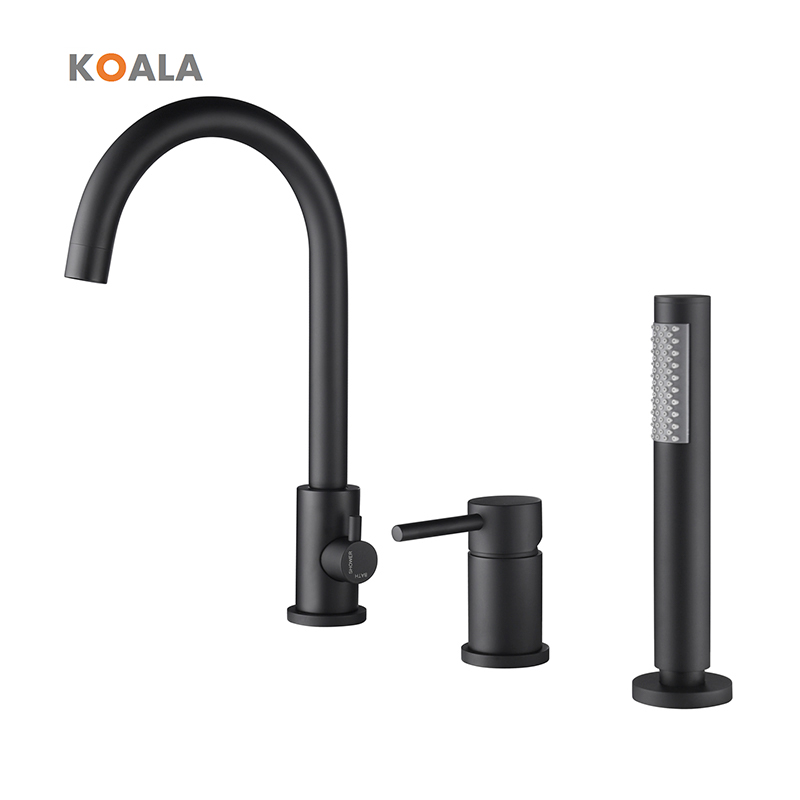
A Roman tub faucet is a deck-mounted fixture designed specifically for filling large soaking bathtubs. Unlike a standard tub spout that mounts to the wall or a freestanding filler that rises from the floor, a Roman faucet is installed on a horizontal surface. This surface is usually the wide rim (deck) of the bathtub itself or a tiled platform surrounding the tub.
The defining characteristic of these faucets is their placement. If the plumbing comes up through the “floor” of the tub deck rather than the wall or the subfloor, you are likely looking at a Roman tub faucet. They are designed to act as a bridge, filling the gap between the deck and the basin with an elegant arch.
While they look simple on the surface, a Roman tub faucet system consists of several distinct parts that differ from a standard shower-tub combo:
The Spout: This is typically an arched, gooseneck shape. The height isn’t just for drama; it provides the necessary clearance to ensure water flows into the tub without splashing onto the deck.
The Valves: In a wall-mounted faucet, the valves are hidden behind the drywall. In a Roman setup, the rough-in valves are hidden underneath the tub deck. This is a critical distinction for installation and maintenance.
High Flow Rate: One of the most functional differences is the flow rate. Roman tub faucets are designed to output significantly more gallons per minute (GPM) than standard bathroom faucets. Because Roman tubs are often larger and deeper (holding 60 to 80 gallons), a standard spout would take twenty minutes to fill them. A Roman faucet is engineered to fill a large basin rapidly so the water doesn’t cool down before you get in.
You will generally see these faucets installed in one of three ways:
Deck-Mounted on the Rim: The faucet is drilled directly into the acrylic, cast iron, or stone rim of the bathtub. This requires a tub with a wide, flat ledge.
Platform-Mounted: If the tub is a drop-in style (where the tub sits inside a framed enclosure), the faucet is installed on the tiled or stone countertop surrounding the tub.
Wall-Mount Hybrid: While technically a “Roman style,” some manufacturers offer wall-mounted versions that mimic the arched look. However, a true Roman tub faucet is defined by its horizontal deck mounting.
Before you fall in love with a specific matte black or brushed gold design, you need to determine if your bathroom can physically support a Roman tub faucet. Use this decision framework to see if it is a match.
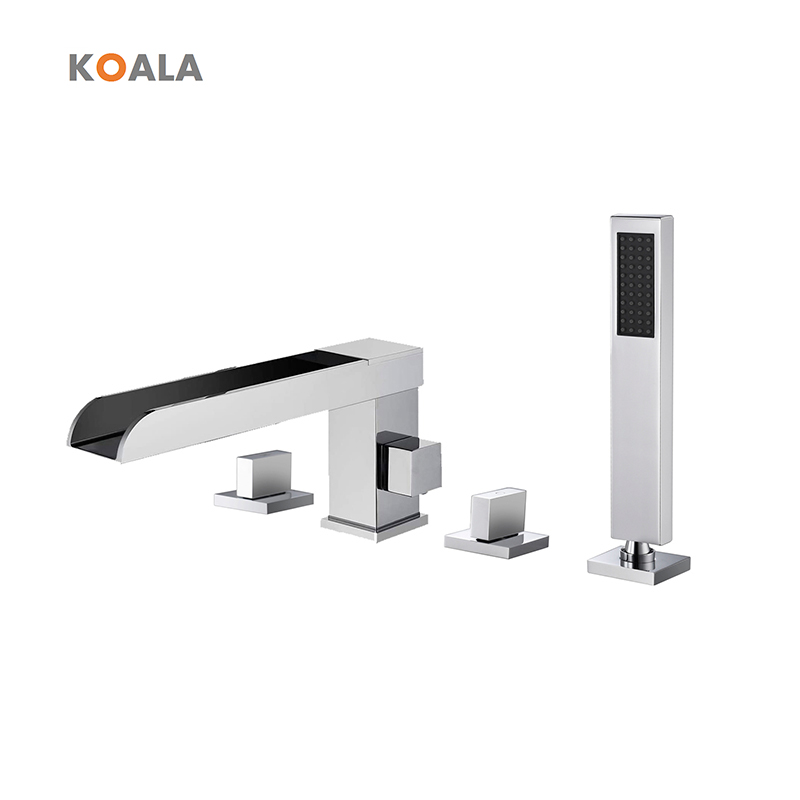
Compatibility is the biggest hurdle. You cannot install a Roman faucet on just any tub. It requires a “deck” or a rim wide enough to house the hardware (usually at least 3 to 4 inches of flat surface).
Ideal Matches: Drop-in tubs, undermount tubs surrounded by a tiled podium, and alcove tubs with wide ledges.
Poor Matches: Thin-rimmed freestanding tubs, clawfoot tubs, or standard shower-tub combos where there is no horizontal ledge.
Beyond the rim width, you need to consider the “rough-in” space. Since the valves sit below the faucet, you need ample clearance underneath the deck for the plumber to connect the hot and cold water lines. If your tub is set tightly against three walls with no access panel, installing (and later repairing) a Roman faucet becomes a major construction project.
Ask yourself how you use your bathroom. If this is a family bathroom where kids take quick baths or you mostly shower, a Roman tub faucet might be overkill. However, if you are designing a master suite sanctuary intended for long, deep soaks, the Roman faucet is superior. Its high flow rate fills the tub quickly, ensuring your bath is hot and ready when you are.
In 2026, the cost of materials and labor continues to rise. Roman tub faucets are generally more expensive than wall-mounted diverters. You are paying for the heavier brass construction and the specialized valves. Furthermore, because installation requires building a deck or drilling into a tub rim, the labor costs are higher than simply sweating pipes behind a wall.
Roman faucets offer a “built-in” look that feels custom and high-end. They keep the walls clean and uninterrupted by plumbing fixtures, which is great for minimalist designs or bathrooms with windows behind the tub. However, from a practical standpoint, they take up surface area on the tub rim which could otherwise be used for soap, candles, or a book.
Remember the high flow rate mentioned earlier? You need to ensure your home’s water heater can keep up. If a Roman faucet dumps 10 gallons per minute, it can drain a small water heater before the tub is even full. A Roman tub setup often necessitates upgrading to a larger tank or a tankless water heater system.
Bathrooms remain one of the top ROI rooms for home renovations. A well-executed Roman tub setup signals luxury to future buyers. However, if the installation is clumsy or makes the plumbing inaccessible for repairs, it can become a liability during a home inspection.
If you have determined that your bathroom is compatible, you now have several style and functional choices to make.
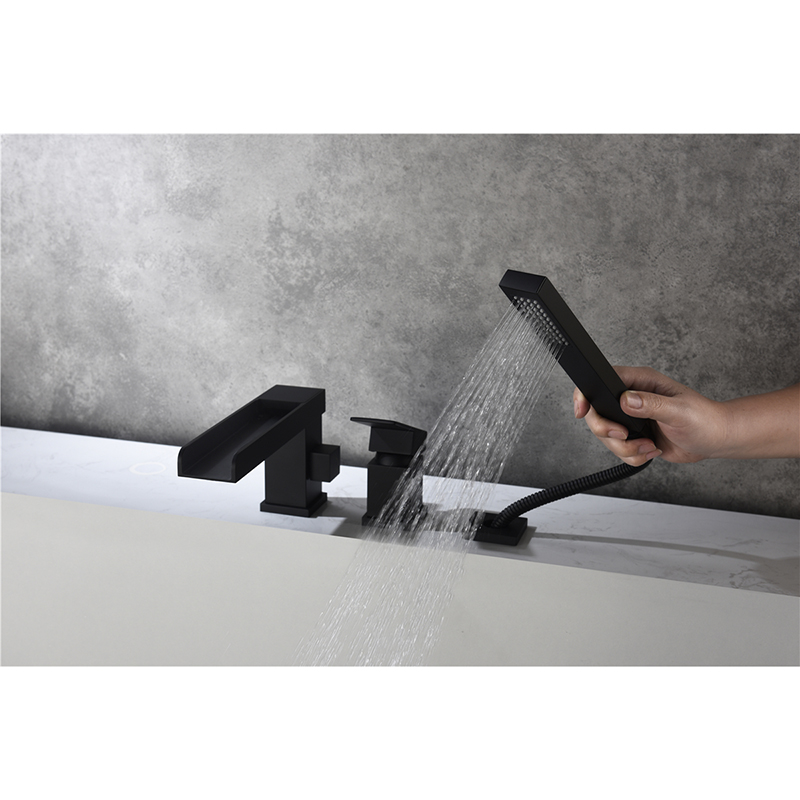
Double-Handle: This is the classic configuration. You have the spout in the center, a handle for hot water on the left, and cold on the right. It offers precise temperature control and a symmetrical, traditional look.
Single-Handle: A more modern approach, the single-handle lever controls both flow and temperature. It requires fewer holes to be drilled in your deck (usually two instead of three) and offers a cleaner, minimalist aesthetic.
This is the most popular upgrade homeowners choose. A handheld sprayer pulls out from the deck, connected by a flexible hose.
Why you want it: It makes cleaning a large tub significantly easier. It is also excellent for washing hair or rinsing off bubble bath residue.
The trade-off: It requires an extra hole in your tub deck and a “diverter valve” underneath, adding to the installation cost and complexity.
Traditional: Think cross handles, porcelain indices, and elaborate, curved spouts that mimic Victorian or Edwardian styles.
Modern: In 2026, we are seeing a trend toward “waterfall” spouts (where water cascades out of an open channel) and sharp, geometric lines in finishes like matte black or unlacquered brass.
To make a final decision, it helps to compare the Roman faucet directly against its competitors.
A freestanding (or floor-mounted) faucet is the main alternative for modern renovations.
The difference: Freestanding faucets are anchored to the floor and tower over the tub rim.
Pros of Freestanding: You can place the tub anywhere in the room; you don’t need a deck.
Pros of Roman: Sturdier (no wobbling), no pipes coming out of the floor (easier to clean the floor), usually fills the tub faster.
The difference: Wall-mounted faucets protrude from the vertical wall above the tub.
Pros of Wall-Mount: Saves deck space; easier to clean around the tub rim.
Pros of Roman: Allows you to place the tub under a window (where there is no wall for plumbing); provides a more integrated look.
The difference: Standard spouts are typically small, functional diverters used in shower/tub combos.
Pros of Standard: Cheap, easy to install, ubiquitous.
Pros of Roman: Luxury appearance, high water volume output, separate controls.
| Feature | Roman Tub Faucet | Freestanding Faucet | Wall-Mounted Faucet |
|---|---|---|---|
| Best For | Drop-in & Undermount Tubs | Clawfoot & Standalone Tubs | Alcove & Shower Combos |
| Cleaning | Harder to clean around handles | Easy floor cleaning | Easiest (clear deck) |
| Install | Complex (under deck) | Moderate (floor connection) | Moderate (in-wall) |
| Fill Speed | Very High | High | Standard/Low |
| Cost | $$$ | $$$$ | $$ |
Installing a Roman tub faucet is rarely a DIY job unless you have advanced plumbing experience.
The complexity lies in the access. Because connections are made below the deck, plumbers often have to work in tight, dark spaces. If you are building a new tiled podium, the rough-in plumbing must be done before the tile is laid. Miscalculating the thickness of the tile and backer board can result in the valves being set too deep, meaning the handles won’t attach properly.
The Faucet: Prices range widely. A budget model might cost $300, while designer brands like Kohler, Moen, or Delta can range from $800 to $2,500+.
The Valves: Often sold separately. Expect to pay $150–$400 for a high-flow rough-in valve kit.
Labor: Because of the complexity, expect to pay a licensed plumber $500 to $1,500 for installation, depending on access difficulty and local rates.
The most common surprise cost is the access panel. Building codes generally require access to the plumbing connections. If you tile your tub in completely, you might have to cut a hole in the drywall of the adjacent room (like a closet or hallway) to create an access point. If that isn’t possible, you may need to install a visible access panel on the side of the tub surround, which requires careful aesthetic planning.
Rapid Fill: No waiting 20 minutes for a bath; the water stays hot.
Aesthetic Continuity: It blends the tub with the surrounding architecture.
Accessibility: Having controls on the deck is often easier to reach for children or seniors compared to reaching across a tub to a wall.
Repair Difficulty: If a leak develops at the valve, you need that access panel.
Space Hog: It requires a large tub deck, eating into bathroom square footage.
Inflexibility: Once holes are drilled in your tub or stone countertop, you can’t easily change the faucet style later without covering holes.
Do not choose a Roman faucet if you are working with a standalone acrylic tub that has a very thin rim. The weight of the brass fixture can stress the material. Also, avoid this route if you cannot create plumbing access; if a pipe bursts inside a tiled-in enclosure with no access, you will have to demolish the tile to fix it.
Homeowners often buy a faucet because it looks beautiful, only to find the “spread” (the distance between the handles) doesn’t match the pre-drilled holes in their tub. Always measure your hole configuration if the tub is pre-drilled. Standard spreads are often 8 to 16 inches, but they vary.
Buying a trim kit (the visible handles and spout) without the compatible rough-in valve is a classic mistake. Unlike standard faucets, Roman tub valves are not universal. You must buy the specific valve designed for your specific trim kit brand and series.
Failing to install an access panel is the biggest regret homeowners face. Five years down the road, if a washer wears out or a leak starts, the difference between a $200 repair and a $2,000 repair is whether or not the plumber can reach the pipes.
A Roman tub faucet acts as the jewelry of the bathroom. It signals intention—a declaration that this room is built for relaxation, not just utility. For luxury-oriented master bathrooms with drop-in or podium-style tubs, there is no better choice for performance and style.
However, they are not a universal solution. If you are retrofitting a small bathroom, working with a tight budget, or installing a freestanding tub with thin rims, a Roman faucet may create more problems than it solves.
The right choice depends on a balance of your tub type, available space, and budget. Before you make a purchase, confirm you have the deck space, check your water heater capacity, and ensure you have a plan for plumbing access. By taking a structured approach to this decision, you can ensure your new bathroom offers a spa-like experience for years to come.
Shenzhen Koala Kitchen & Bath Co., Ltd. is your reliable bathtub faucet manufacturer. With 13+ years of production experience and trusted by European and American brands, we deliver durable, innovative, and customizable bathtub faucets. Explore our collection or contact us for OEM/ODM solutions.