Views: 0 Author: Site Editor Publish Time: 2026-01-19 Origin: Site


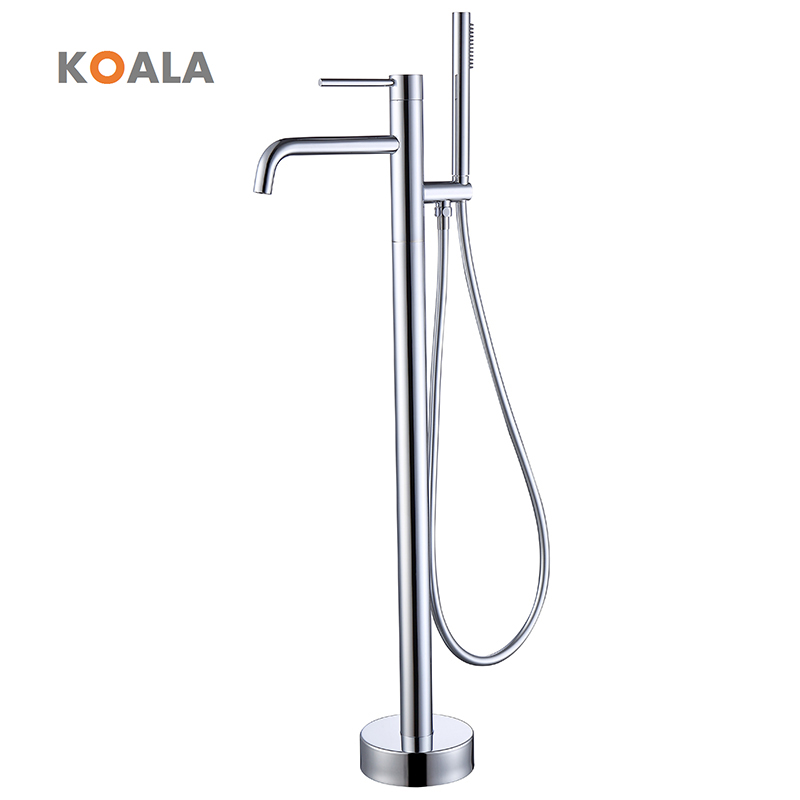
A freestanding bathtub is the ultimate statement piece in a modern bathroom. It signals luxury, relaxation, and a departure from the utilitarian vibe of standard shower-tub combos. However, the tub itself is only half the equation. To make that deep soaking tub functional, you need the right hardware, and choosing a freestanding bathtub faucet is often more complex than homeowners anticipate.
As we move into 2026, the market for bathroom fixtures has evolved. We are seeing a shift toward smarter water control, sustainable materials, and finishes that are designed to last decades rather than years. But with these advancements comes a dizzying array of choices. You have to navigate plumbing compatibility, spout reach, floor anchoring, and flow rates—all while trying to match your design aesthetic.
The wrong choice can lead to splashing water, wobbly fixtures, or a tub that takes forty minutes to fill. This buying guide cuts through the noise. We will break down exactly how to choose a freestanding bathtub faucet, compare the different installation types, analyze the costs involved, and highlight the technical features that separate a budget purchase from a long-term investment.
When shopping for fixtures, it is easy to get distracted by beautiful finishes and sleek curves. However, functionality must come first. Before you fall in love with a specific model, run it through this practical decision framework to ensure it actually works for your bathroom.
Your tub determines your faucet. If you have a classic clawfoot tub with a rolled rim, you need a faucet with a spout height and reach that clears the lip of the tub comfortably. Modern pedestal tubs often have thinner rims, allowing for shorter spout reaches.
Rolled Rim/Clawfoot: often requires a taller faucet or a deck-mount adapter if the tub has pre-drilled holes.
Modern Flat-Bottom: Works best with sleek, floor-mounted fillers that curve over the edge.
Drop-In Styles: While usually deck-mounted, these can be paired with floor-mounted faucets for a dramatic look, provided the spout reach is long enough to clear the wide deck.
This is where most installation nightmares begin. A floor-mounted bathtub faucet requires water lines to run underneath the finished floor.
Concrete Slabs: If you are on a slab foundation, installing a floor-mounted faucet involves trenching the concrete. This is expensive and invasive. A wall-mounted option might be better here.
Wood Subfloors: Much easier for floor-mounted installations, as plumbers can access pipes from below (if there is a crawl space or basement).
Space Requirements: Ensure there is at least 4 to 6 inches of clearance between the tub and the wall for the faucet hardware.
You generally have three options: floor-mounted, wall-mounted, or deck-mounted.
Floor-Mounted: anchored to the floor, standing tall beside the tub. This is the most popular choice for 2026 renovations.
Wall-Mounted: The faucet protrudes from the wall. This requires the tub to be placed close to the wall, which can limit that “freestanding” aesthetic.
Deck-Mounted: installed directly onto the rim of the tub. This only works if your tub has pre-drilled faucet holes.
The material of the faucet body dictates its lifespan.
Solid Brass: The gold standard. It is resistant to corrosion and holds up well in high-moisture environments. It is heavier and more expensive, but worth the investment.
Stainless Steel: A good alternative, specifically 304-grade stainless steel. It is durable and lead-free.
Zinc Alloy: Common in cheaper models. It is prone to pitting and corrosion over time. Avoid this for a primary bathroom.
In 2026, a simple spout is rarely enough. Look for a hand shower attachment. This is crucial for rinsing off after a bath, washing pets, or cleaning the tub itself. Also, check for a high-quality diverter valve that switches water smoothly between the spout and the hand wand without leaking.
Bathtubs require a lot of water. A standard bathroom sink faucet has a flow rate of about 1.2 to 1.5 Gallons Per Minute (GPM). If you use that flow rate for a 60-gallon soaking tub, you will be waiting 40 minutes for a bath, and the water will be cold by the time it fills.
Look for a freestanding tub faucet with a flow rate between 6 GPM and 10 GPM. This ensures your tub fills quickly, keeping the water hot.
A cheap faucet ($200 range) often lacks a stabilizing rough-in valve, meaning it might wobble over time or leak under the floor. A mid-range to premium faucet ($600–$1,500) includes a secure mounting tripod or rough-in box, ceramic cartridges, and a warranty. Calculate the cost of ownership, not just the purchase price.
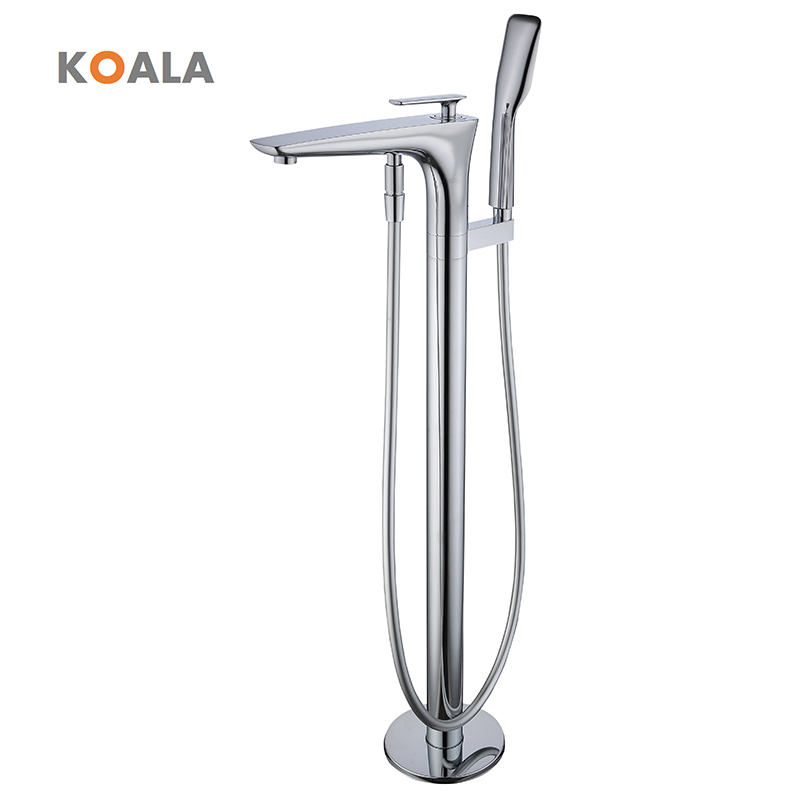
Understanding the specific types of fillers available will help you narrow down your search based on your specific renovation needs.
Also known as a tub filler, this is the most common companion for freestanding tubs. It consists of a tall pipe (or pipes) anchored to the floor that curves over the tub rim.
Best for: Tubs placed in the center of the room or away from walls.
Pros: Creates a stunning visual focal point; offers the most flexibility in tub placement.
Cons: Most expensive to install; requires underfloor plumbing access.
While the tub is freestanding, the faucet is not. The plumbing is hidden behind the wall, and only the spout and handles are visible.
Best for: Small bathrooms where floor space is tight, or installations on concrete slabs.
Pros: Saves floor space; easier to clean around the tub base; generally cheaper than floor-mounted units.
Cons: The tub must be close to the wall; spout reach must be carefully calculated.
These are installed on the “deck” or rim of the bathtub itself.
Best for: Acrylic or cast iron tubs that come with pre-drilled holes.
Pros: Very compact; plumbing is often hidden within the tub’s void space or exposed risers (for clawfoot tubs).
Cons: Limits your tub choice (must have holes); can clutter the look of a sleek modern tub.
Single-Handle: Offers a modern look and easy one-handed temperature control. Ideal for contemporary, minimalist bathrooms.
Double-Handle: Features separate hot and cold taps. This offers more precise temperature mixing and fits perfectly with vintage, Victorian, or transitional aesthetics.
Beyond the shape and finish, the internal engineering determines whether you will love or hate your faucet in two years.
The cartridge is the engine of the faucet. In 2026, you should strictly look for ceramic disc cartridges. Unlike rubber washers that wear out and drip, ceramic discs are nearly diamond-hard and can withstand friction and hard water debris for years without leaking.
While manual levers are standard, thermostatic controls are gaining popularity. A thermostatic valve allows you to set the water temperature precisely (e.g., 100°F). If someone flushes a toilet elsewhere in the house, the valve automatically balances the pressure to prevent scalding or freezing shocks.
How does the faucet look after 500 cleanings? That depends on the coating.
Electroplating: The standard for chrome. It is durable but can chip if hit hard.
PVD (Physical Vapor Deposition): The premium choice for finishes like Brushed Gold, Nickel, or Matte Black. PVD bonds the finish at a molecular level, making it incredibly resistant to scratching and tarnishing.
Anti-Fingerprint: Essential for matte black or brushed finishes to keep them looking clean.
A tall floor-mounted faucet acts like a lever; if you lean on it, you generate a lot of torque at the base. Cheap models use simple screws into the subfloor. High-quality models use a rough-in valve system or a heavy-duty tripod mounting bracket that is installed under the floor. This provides rigid stability so the faucet doesn’t wobble when you pull the hand shower.
Budgeting for this fixture requires looking at the total project cost, not just the sticker price on the box.
Entry-Level ($200 - $450): Usually zinc alloy bodies, standard finishes, and basic floor mounts. Risk of wobbling and lower flow rates.
Mid-Range ($500 - $1,200): Solid brass construction, ceramic cartridges, PVD finishes, and stable mounting systems. This is the sweet spot for most homeowners.
Premium ($1,300 - $3,000+): Designer brands, thermostatic valves, custom finishes, and advanced water shaping.
Installation is the hidden budget-killer.
Standard Install: If pipes are already in place, a plumber may charge $300–$600.
New Plumbing: Moving water lines to the center of the room and installing a new rough-in valve can cost $1,000–$2,000+, especially if floor tiles need to be removed and replaced.
Ceramic cartridges eventually need replacing (usually every 10-15 years). High-end brands offer lifetime warranties on parts, meaning your maintenance cost is zero. Cheaper “no-name” brands often have no spare parts available, meaning a simple leak requires ripping out the entire unit and replacing it.
Rough-in Valve: Some faucets are sold as “trim only,” meaning you must buy the internal valve separately ($100–$300).
Floor Patching: If moving plumbing, you will need a tile setter.
Supply Lines: For deck-mounted clawfoot tubs, exposed supply lines are often sold separately.
Wall-mounted faucets are excellent space savers and easier to clean around, as there are no pipes coming out of the floor. However, they force the tub against the wall. Freestanding faucets offer luxury and layout freedom but require more cleaning (dust gathers around the base) and complex installation.
Deck-mounted faucets are generally the most affordable and easiest to plumb if the tub supports them. However, they break the clean lines of a modern soaking tub. Freestanding faucets preserve the sculptural integrity of the tub.
If you have a large bathroom (master suite), a floor-mounted faucet anchors the space and fills the visual void. In a compact urban bathroom, a floor-mounted unit can make the space feel cluttered; a wall-mount is the smarter ergonomic choice.
Floor-mounted faucets are more susceptible to being bumped or leaned on, which can loosen connections over time if not properly anchored. Wall and deck mounts are generally more protected and stable.
The most common return reason is spout reach. If you buy a tub with a wide, curved lip and a faucet with a short spout, the water will splash onto the rim rather than into the bowl. Measure the distance from the intended faucet location to the inside wall of the tub before buying.
Buying a floor-mounted faucet when you have a post-tension slab foundation is a disaster. Always consult a plumber about the feasibility of moving drain and supply lines before purchasing the fixture.
A $250 faucet on Amazon might look like the $1,200 Kohler model, but the internals are different. When a cheap valve leaks under your floorboards, it can cause thousands of dollars in water damage. Stick to reputable brands that offer warranties and have customer support.
Faucets have moving parts. Eventually, you will need a new hose for the hand shower or a new handle screw. Established brands keep these parts in stock for decades.
We are seeing the integration of digital valves that allow you to say, “Fill the tub to 102 degrees.” These units automatically stop the water when the tub is full, preventing overflows.
The trend for 2026 is moving away from ornate curves toward stark, architectural lines. Thin, tubular spouts and joystick handles are dominating high-end design.
Manufacturers are focusing on lead-free brass and aerators that provide the sensation of high volume while using slightly less water, balancing luxury with environmental responsibility.
Homeowners want unique hardware. We are seeing more “split finish” faucets (e.g., a matte black body with a gold handle) and knurled textures on handles for a tactile, industrial feel.
The perfect freestanding bathtub faucet is a marriage of engineering and art. It needs to stand up to daily use, deliver water efficiently, and look beautiful while doing it. By understanding your bathroom’s plumbing constraints, prioritizing solid brass construction with ceramic cartridges, and matching the faucet scale to your specific tub, you can avoid the common pitfalls of renovation.
Don’t just buy for the look. Buy for the build quality and the warranty. A freestanding tub is a long-term commitment to relaxation; your faucet should be built to last just as long.
Shenzhen Koala Kitchen & Bath Co., Ltd. is your reliable freestanding bathtub faucet manufacturer. With 13+ years of production experience and trusted by European and American brands, we deliver durable, innovative, and customizable bathtub faucets. Explore our collection or contact us for OEM/ODM solutions.