
Views: 0 Author: Site Editor Publish Time: 2026-01-12 Origin: Site


When planning a bathroom renovation, the bathtub often steals the spotlight. Whether it’s a deep soaking tub or a classic clawfoot, the vessel itself dictates the room’s layout. However, the hardware you pair with it—specifically the bathtub faucet—plays an equally critical role in both functionality and aesthetics. Choosing the wrong fixture can lead to plumbing nightmares, water damage, or simply a daily experience that feels awkward and disjointed.
As we move into 2026, bathroom design is shifting toward a blend of hyper-functionality and personalized luxury. Faucets are no longer just utilitarian spouts; they are architectural statements that define the character of the space. From floor-mounted fillers that scream modern elegance to deck-mounted classics that maximize utility, the options are vast.
This guide will break down the essential types of bathtub faucets available in 2026, comparing their installation requirements, pros and cons, and design compatibility. By understanding the structural differences and emerging trends, you can make a strategic choice that enhances your bathroom’s value and your daily relaxation ritual.
Understanding the structural differences between faucet types is the first step in avoiding costly installation errors. The “best” faucet isn’t just about style; it’s about what your plumbing and bathroom architecture can support.
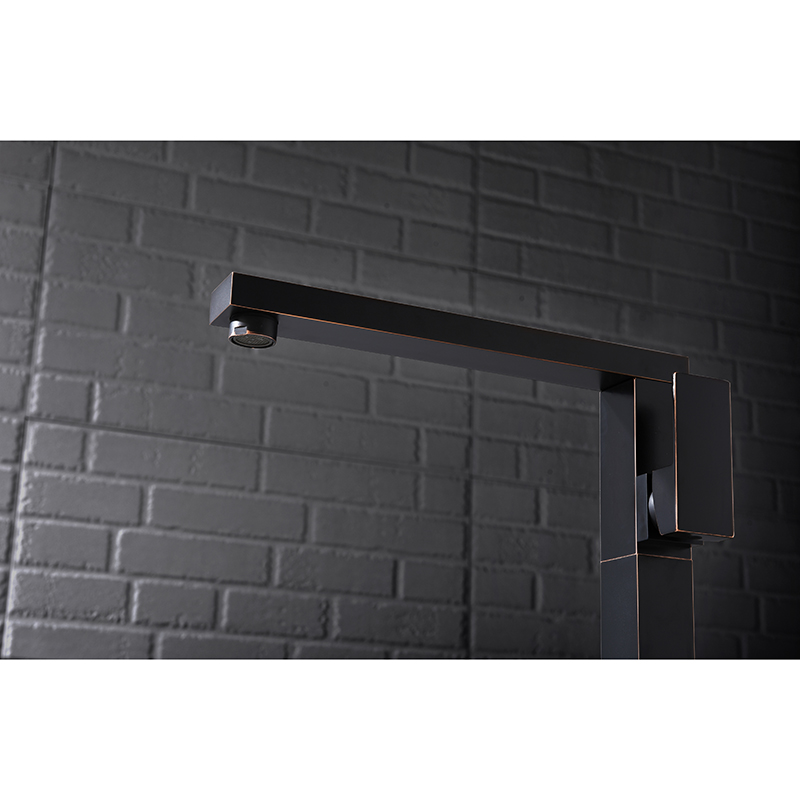
Wall-mounted faucets connect directly to the water supply behind the bathroom wall, extending over the tub’s rim. This configuration is a staple in both minimalist modern designs and compact bathrooms where space is at a premium. By removing the hardware from the tub’s rim or the floor, you gain visual breathing room and simplify cleaning.
This type is ideal for alcove tubs or freestanding tubs positioned close to a wall. However, precise rough-in measurements are non-negotiable; if the spout isn’t long enough to clear the tub’s rim properly, water will splash onto the deck rather than filling the basin.
Deck-mounted faucets are installed on the flat rim (the “deck”) of the bathtub or on a tiled surround. This is one of the most common installations for drop-in and soaking tubs. The plumbing lines run underneath the tub deck, keeping the floor clear and the wall unbroken.
While they offer a stable and integrated look, they have limitations. The bathtub itself must have adequate rim width to accommodate the faucet holes and hardware. In modern bathroom trends for 2026, deck-mounted options are evolving with sleeker profiles to avoid the bulky look of traditional setups.
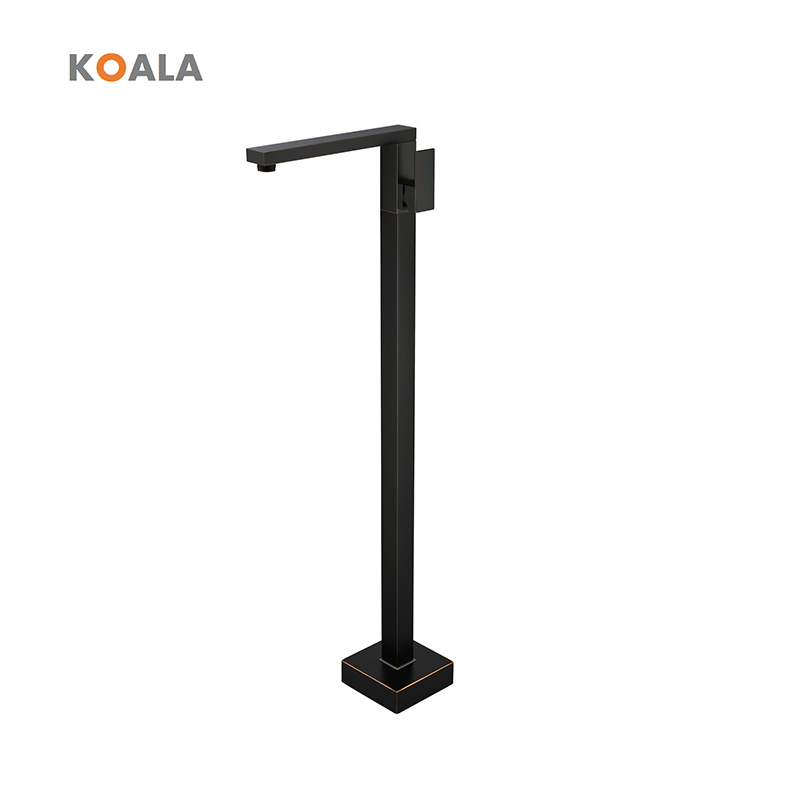
Also known as floor-mounted fillers, these are the crown jewels of luxury bathrooms. Anchored to the floor, they rise up alongside the tub, featuring long spouts that curve over the edge. This design is strictly for freestanding tubs—whether modern resin vessels or vintage cast iron clawfoots.
Freestanding faucets require underfloor plumbing access, which can make them more expensive and complex to install during renovations on concrete slabs. However, they offer unparalleled flexibility in placement, allowing you to position the filler anywhere around the tub’s perimeter to suit your aesthetic preference.
Distinct from standard wall-mounts, tub wall-mount faucets are installed on the vertical inner wall of the bathtub itself. This is a classic configuration often seen on vintage-style clawfoot tubs or acrylic freestanding tubs designed with a reinforced flat section for hardware.
The hole spacing is typically standard (often 3-3/8 inches), but variations exist. This type bridges the gap between the stability of a deck mount and the aesthetics of a wall mount, but it restricts you to tubs specifically manufactured with pre-drilled vertical holes.
Roman tub faucets are characterized by an arched spout and a deck-mounted installation that usually requires three or more holes (one for the spout and two for separate hot and cold handles). If a hand shower is added, a fourth hole is necessary.
These fixtures are designed for rapid filling, often featuring wider valves that allow for a higher flow rate (GPM) compared to standard faucets. They are synonymous with large soaking tubs and whirlpools, offering a grand, spa-like aesthetic that serves as a focal point on a tiled tub deck.
For bathrooms where space efficiency dictates a shower-tub combo, this integrated system is the standard. It utilizes a diverter valve to switch water flow between the lower tub spout and the upper showerhead.
In 2026, these are moving away from basic, utilitarian designs toward sleek, coordinated systems where the valve trim, spout, and showerhead offer a cohesive, high-end look. They remain the most practical choice for family bathrooms and guest suites.
The landscape of faucet design is rapidly evolving. We are seeing a surge in thermostatic systems, which automatically maintain your preferred water temperature to prevent scalding—a key safety feature for families. Smart faucets are also gaining traction, offering voice-activated filling and precise volume control so you can walk away while the tub fills. Aesthetically, minimalist designs with hidden aerators and waterfall spouts that deliver a sheet of water are defining the luxury sector.
Selecting a faucet involves weighing trade-offs. Here is how the main contenders stack up against each other across critical categories.
Deck-Mounted: Moderate difficulty. Requires precise drilling of the tub or deck, but plumbing access is usually straightforward if the tub has an access panel.
Wall-Mounted: High difficulty for renovations. Requires opening the wall to adjust plumbing rough-ins. The spacing and depth must be exact to match the finished tile work.
Freestanding: High difficulty. Requires running water lines under the finished floor. If you are renovating on a concrete slab, this involves jackhammering and significant labor.
For small bathrooms, wall-mounted faucets are superior as they free up rim space and floor area. Deck-mounted options are space-neutral but require a wide enough tub rim. Freestanding faucets are space-hogs; they require a dedicated footprint on the floor and enough clearance around the tub for cleaning and installation, making them suitable only for medium-to-large bathrooms.
Initial Cost: Freestanding fillers are generally the most expensive due to their size and the materials required, followed by complex Roman tub sets. Wall-mounted and deck-mounted options cover a wide range of price points, from budget-friendly to premium.
Maintenance: Wall-mounted faucets are the easiest to clean around, as there is no base plate collecting grime on the tub. Deck-mounted faucets often accumulate hard water deposits and soap scum at the base handles, requiring more frequent detailing.
From an experience standpoint, Roman tub faucets often provide the fastest fill times, getting you into a hot bath quicker. Freestanding faucets offer the highest “wow” factor but can be wobbly if not anchored correctly. Wall-mounted faucets provide a clean, uncluttered visual that aligns perfectly with modern minimalist trends, but the reach of the spout must be carefully calculated to avoid splashing.
Don’t just pick the prettiest hardware in the showroom. Use this framework to ensure your choice is technically sound.
Your tub dictates your faucet.
Alcove Tubs: Almost exclusively require wall-mounted or tub-and-shower combination faucets.
Drop-in Tubs: Best suited for deck-mounted or Roman tub faucets installed on the tiled surround.
Freestanding Tubs: The natural partner for floor-mounted fillers, though wall-mounted options work if the tub is placed near a wall.
Clawfoot Tubs: Often require tub wall-mounts or deck-mounts with specific drilling centers (often 7 inches or 3-3/8 inches).
Look at your existing plumbing. Moving pipes from the wall to the floor is a major expense. If you are doing a cosmetic refresh, stick to the existing mounting type (e.g., replace a deck mount with a deck mount). If you are doing a gut renovation, you have the freedom to move plumbing, but be aware that floor access is required for freestanding models.
Consider the total cost of ownership. A cheap zinc-alloy faucet may save money upfront but will likely corrode or leak within five years. Investing in solid brass construction ensures longevity. Additionally, factor in the installation cost—a floor-mounted filler might cost $500, but the plumbing labor to install it could be double that.
For 2026, mix-and-match metals are acceptable, but coherence is key.
Modern/Minimalist: Matte black or brushed nickel wall-mounts with clean lines.
Luxury/Spa: Polished gold or brass floor-mounted fillers with hand showers.
Industrial: Exposed pipe designs in unlacquered brass.
Traditional: Oil-rubbed bronze deck-mounts with cross handles and porcelain indices.
Beyond the mounting type, several technical specifications will affect your daily satisfaction with the product.
Single-Handle: Offers ease of use, allowing you to control flow and temperature with one hand. It creates a sleek, modern look.
Double-Handle: Allows for precise temperature mixing and offers a classic symmetry.
Thermostatic: The gold standard for 2026. These valves maintain a set temperature even if someone flushes a toilet elsewhere in the house, preventing thermal shock.
A hand shower is no longer a luxury add-on; it is a necessity for cleaning the tub and washing pets or children. Modern diverters are integrated smoothly into the design. Ensure the hose length is sufficient (usually 60 inches) to reach all corners of the tub.
The body material determines the faucet’s lifespan.
Solid Brass: The most durable and resistant to corrosion. Heavy and expensive but worth the investment.
Stainless Steel: Excellent durability and resistance to tarnish.
Zinc Alloy: Common in budget faucets. prone to pitting and corrosion over time. Avoid these for long-term homes.
Bathtub faucets are not restricted as heavily as sink faucets because the goal is to fill a basin, not wash hands. Look for a flow rate of at least 4 to 7 GPM (Gallons Per Minute). Anything lower will result in the water cooling down before the tub is full. Roman tub faucets typically offer the highest flow rates.
Even experienced renovators make errors when selecting hardware. Avoid these pitfalls.
Falling in love with a matte black floor-mounted filler without checking if your water pressure can support it—or if you have a concrete subfloor that makes installation impossible—is a classic mistake. Function and infrastructure must come before form.
Failing to measure the “spout reach” is a frequent error. If the spout doesn’t extend far enough into the tub, water will dribble down the side wall. Conversely, a spout that is too long might obstruct your movement in the tub.
Buying a deck-mounted faucet for a freestanding tub with thin rims (that cannot be drilled) is a disaster. Always check the manufacturer’s spec sheet for the tub to see compatible faucet types before buying the hardware.
Complex designs with many crevices trap soap scum. Unlacquered finishes (living finishes) will patina and change color over time. If you want a faucet that looks brand new forever with minimal effort, choose PVD finishes (Physical Vapor Deposition) which are incredibly resistant to scratching and tarnishing.
To simplify your choice, here are specific recommendations based on common user needs.
Wall-Mounted Faucet. It maximizes usable space and keeps the visual clutter off the tub deck. Look for a model with a folding spout if space is extremely tight.
Freestanding Filler with Hand Shower. Nothing says “custom home” like a sculptural floor-mounted faucet. Pair it with a resin or stone soaking tub for the ultimate focal point.
Deck-Mounted with Hand Shower. The stability of the deck mount is safer for kids who might grab onto the spout. The hand shower is essential for rinsing hair and cleaning up after bath time. Thermostatic control is highly recommended here to prevent burns.
Tub Wall-Mount or Deck-Mount (Retrofit). If you are replacing an old tub, sticking to the existing hole configuration saves significant money on plumbing labor.
As we look further into the decade, technology and sustainability will drive innovation.
We are entering the era of the “connected bath.” Expect faucets that integrate with home assistants (Alexa, Google Home) allowing you to say, “Fill the tub to 102 degrees.” These systems prevent water waste by stopping the flow exactly when the tub reaches the desired level.
The visible hardware is shrinking. “Hidden” faucets, where water fills the tub from the overflow drain or a slit in the tub wall, are becoming popular in ultra-luxury minimalist designs, eliminating the spout entirely.
Manufacturers are moving toward lead-free brass alloys and PVD finishes that are produced with less environmental impact than traditional plating. While flow rates for tubs remain high, the efficiency of the delivery and heat retention is improving.
Modular faucet handles—where you can swap out the knob texture (knurled, marble, crystal) without changing the valve—are a growing trend. This allows homeowners to update the look of their bathroom without plumbing work.
The best bathtub faucet is not simply the one that catches your eye in a catalog; it is the one that aligns with your bathroom’s architecture, your plumbing infrastructure, and your daily habits.
A floor-mounted filler might offer luxury, but a wall-mounted unit offers space. A Roman tub filler offers speed, but a hand-shower combo offers versatility. By understanding the types—from deck mounts to smart systems—you can make a purchase that balances form and function.
As you plan your 2026 bathroom project, remember to prioritize brass construction for longevity, verify your installation constraints early, and consider the long-term maintenance of the finish. The right faucet is a small detail that makes a massive splash in the quality of your home life.

Shenzhen Koala Kitchen & Bath Co., Ltd. is your reliable bathtub faucet manufacturer. With 13+ years of production experience and trusted by European and American brands, we deliver durable, innovative, and customizable bathtub faucets. Explore our collection or contact us for OEM/ODM solutions.


