Views: 0 Author: Site Editor Publish Time: 2026-11-11 Origin: Site


Many people assume modern plumbing fixtures are inherently safe right out of the box. You install a new fixture, turn the handle, and expect pristine drinking water. However, uncertified fixtures carry hidden compliance risks. The term "lead-free" frequently acts as a marketing buzzword rather than a guaranteed technical specification. Buyers now face a flooded market. You will easily find endless low-cost options displaying unverifiable safety claims. How do you separate factual safety from clever advertising? Evaluating a fixture requires looking past bold marketing copy. You must rely on standardized, third-party certifications instead. Labels from recognized bodies ensure actual health compliance and mechanical reliability. In this guide, we break down what these critical certifications mean. You will learn how to verify safety claims effectively. We also help you avoid cheap alloys and select the right fixtures for residential or commercial projects.
A legally defined "Lead-Free Kitchen Faucet" does not mean 0.00% lead; it means a maximum weighted average of 0.25% lead across wetted surfaces.
NSF/ANSI 61 guarantees the fixture will not leach harmful contaminants into drinking water.
A cUPC Certified Faucet ensures compliance with North American plumbing codes for mechanical integrity and safety.
Combining health certifications with the WaterSense label ensures both water safety and operational cost-efficiency.
Buyers must verify certification marks on the product or via official databases, rather than trusting unverified marketplace listings.
Under the US Safe Drinking Water Act (SDWA), installing non-compliant plumbing materials is illegal. The law provides a strict mathematical standard. To legally qualify as a Lead-Free Kitchen Faucet, the fixture must meet specific criteria. It cannot contain a weighted average of more than 0.25% lead. This rule applies to all wetted surfaces across pipes, pipe fittings, and plumbing fittings. Manufacturers calculate this by measuring the surface area of components touching drinking water.
We must address the "100% lead-free" myth. Many buyers mistakenly believe compliant fixtures contain zero trace elements of lead. Manufacturing realities make 0.00% lead almost impossible in traditional brass alloys. Small trace amounts help machinability. Lead makes brass softer and easier to cut during production. The 0.25% limit restricts harmful leaching while allowing manufacturers to shape the metal efficiently. You should view "lead-free" as a strict regulatory threshold rather than an absolute zero.
Choosing non-compliant fixtures brings severe business impact. Contractors, builders, and homeowners face massive liabilities. Installing uncertified faucets often results in failed municipal inspections. You risk direct health hazards for building occupants. Failed inspections ruin project timelines. They also mandate expensive replacement costs and potential legal action. Always prioritize verified compliance over upfront cost savings. A cheap, uncertified fixture often becomes a massive financial liability later.
When evaluating health and material safety, NSF/ANSI 61 is the gold standard. This certification focuses entirely on what the fixture might release into your water. An NSF/ANSI 61 Kitchen Faucet undergoes rigorous extraction testing. Laboratories fill the faucet with pH-adjusted water. They let the water sit for specific intervals. Technicians then analyze the water for heavy metal leaching. They test for lead, arsenic, mercury, and other dangerous contaminants.
The industry constantly improves these safety benchmarks. Recent tightening of NSF/ANSI/CAN 61 standards demonstrates this commitment. The allowable limits for lead leaching dropped significantly in recent updates. Manufacturers had to re-engineer their internal components to pass. This continuous improvement ensures modern certified fixtures offer better protection than older models. You can trust this certification because independent scientists conduct the testing.
While NSF focuses on water purity, cUPC focuses on mechanical performance. The Uniform Plumbing Code (UPC) governs plumbing installations across North America. A cUPC Certified Faucet ensures strict code compliance. The International Association of Plumbing and Mechanical Officials (IAPMO) administers this certification. They test fixtures against rigorous structural standards.
Evaluation criteria include durability, pressure tolerance, and temperature stability. Laboratories subject the faucet to extreme burst pressures. They test the internal cartridges through hundreds of thousands of on-off cycles. This ensures the handle will not leak after a few months of use. They also verify temperature stability to prevent scalding hazards.
Your shortlisting logic should be simple. A faucet must typically meet both NSF and cUPC standards. NSF protects your health. The cUPC mark protects your property from catastrophic leaks. Together, they deem a fixture a safe, code-compliant investment.
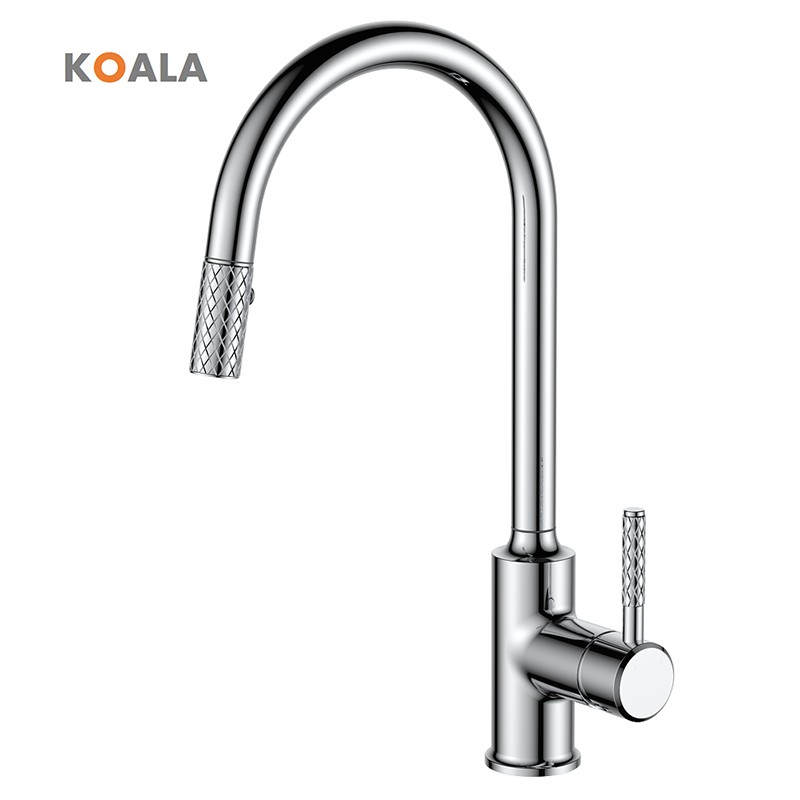
Modern plumbing requires moving beyond baseline safety into operational efficiency. Solution categorization now includes water conservation. The EPA backs the WaterSense program to promote efficient water usage. A WaterSense Kitchen Faucet guarantees a significant flow rate reduction. Standard older faucets often use 2.2 gallons per minute (GPM). WaterSense models typically restrict flow to 1.5 GPM or lower.
This feature-to-outcome relationship is highly beneficial. You achieve a 20% or greater reduction in water usage. Importantly, you do this without sacrificing functional performance. Manufacturers use advanced aerators to mix air into the water stream. This maintains the feeling of high pressure. You can still wash dishes and fill pots efficiently.
WaterSense serves as the deciding factor for long-term utility savings. Lower water usage directly reduces your monthly water bills. It also reduces the energy required to heat the water. This certification ensures environmental compliance in green building projects. Many LEED-certified buildings mandate WaterSense fixtures. You protect the environment while keeping operational expenses low.
Understanding material approaches helps you make better purchasing decisions. Manufacturers use several common compliant materials to meet lead-free standards. Each material offers distinct advantages and potential drawbacks.
Table 1: Common Compliant Faucet Materials
Material Type | Pros | Cons | Best Application |
|---|---|---|---|
304/316 Stainless Steel | Naturally lead-free, highly durable, resists corrosion. | Higher upfront cost, limited finish options. | Commercial kitchens, high-end residential. |
PEX/Polymer-Lined Waterways | Water never touches metal, highly cost-effective. | Internal plastic parts may wear out faster than solid metal. | Budget-friendly residential remodels. |
Compliant Low-Lead Brass | Excellent machinability, supports complex designs and finishes. | Still contains trace lead (≤0.25%), requires strict quality control. | Standard residential and decorative fixtures. |
You must watch out for the "cheap alloy" risk. The market is full of direct-to-consumer faucets from unverified overseas sellers. These sellers often falsify certification stamps. They use cheap brass alloys containing high levels of lead and zinc. High zinc content leads to dezincification. The water leaches the zinc out of the alloy over time. The faucet literally crumbles from the inside out. You face sudden catastrophic leaks and severe water damage.
Implementation reality also requires careful planning. You must address the compatibility of new faucets with older home plumbing. Installing a pristine, certified faucet solves only half the problem. You must ensure your supply lines and angle stops are also lead-free. Older homes often have outdated shut-off valves containing high lead levels. Upgrading the faucet requires inspecting the entire localized plumbing connection.
You cannot trust a product description alone. You need a systematic approach to verify safety claims. Follow this buyer's checklist to shortlist reliable fixtures.
First, perform a visual verification. You should look for physical stamps on the product. Manufacturers usually place these marks in specific locations.
Escutcheon Plate: Check the base plate or the back of the faucet body for laser-etched logos.
Supply Hoses: Look for tags attached to the braided supply lines. They often display cUPC or NSF marks.
Packaging: Authentic products display clear certification logos on the retail box.
Second, conduct database lookups. Physical stamps can be counterfeited. You must cross-reference product model numbers online. Use official databases to confirm active certifications.
Visit the official NSF International website and search their certified products directory.
Use the IAPMO directory to verify cUPC compliance.
Check the EPA WaterSense product search tool for efficiency ratings.
Finally, take the right next-step action. Recommend selecting brands that transparently publish their compliance specification sheets. Reputable manufacturers provide downloadable PDF spec sheets for every model. They also offer robust warranties. A lifetime limited warranty indicates the manufacturer trusts their materials. Avoid brands hiding their testing data or offering unusually short warranty periods.
Verifiable certifications remain the only objective measure of a lead-free faucet. Marketing claims and sleek designs mean nothing without independent testing. NSF/ANSI 61 ensures your drinking water stays free of heavy metals. The cUPC mark guarantees the fixture will withstand daily mechanical stress. WaterSense certification adds crucial efficiency to lower your utility bills.
We encourage buyers to prioritize certified fixtures above all else. Protect your family's health by rejecting unverified marketplace listings. Ensure code compliance to avoid failed inspections and costly rework. By demanding transparency and checking official databases, you avoid long-term liability. Invest in quality, certified plumbing fixtures for lasting peace of mind.
A: Technically yes by material composition, but lacking the certification means there is no independent proof of safety. Without NSF testing, you rely entirely on the manufacturer's word. Uncertified products often skip rigorous quality control. Certification provides the necessary third-party validation to guarantee health compliance.
A: While stainless steel is naturally lead-free, the internal valves, cartridges, and solders must still pass leaching tests. A stainless steel body does not guarantee safe internal components. Manufacturers sometimes use non-compliant rubber O-rings or cheap brass cartridges inside. The entire assembly must pass NSF testing.
A: Guide on looking for the "NSF-61", "cUPC", or "Lead-Free" markings on the fixture body or supply line tags. You can usually find these laser-etched on the back of the spout. You should also check the tags on the braided hoses under the sink. Cross-reference the model number online.
A: Clarify the difference between lower flow volume and pressure; aerators maintain the feeling of high pressure while using less water. The faucet restricts the gallons per minute, not the force of the spray. Advanced internal engineering ensures you still get a powerful stream for washing dishes.