Views: 0 Author: Site Editor Publish Time: 2026-11-08 Origin: Site


Upgrading a bathroom often feels like a massive compromise. You must choose between settling for basic fixtures or enduring a messy, expensive renovation. Many homeowners desperately want a spa-like experience. However, tearing into walls to reroute pipes stops most projects before they even start. Enter the surface-mounted Shower Column. This ingenious fixture consolidates multiple water delivery points into a single vertical unit. It allows you to modernize your daily routine easily. You completely bypass the high costs and demolition risks of traditional plumbing overhauls. In this guide, we evaluate exactly how these multi-outlet systems work. We explain why they are rapidly replacing standard single-head setups. You will learn how to assess component quality and evaluate functional modes. Finally, we map out the technical realities of installation. This ensures you make a confident, well-informed purchase decision.
Retrofit Efficiency: Shower columns offer a high-impact upgrade with lower installation overhead compared to fully concealed, in-wall shower systems.
Core Components: A standard unit features a main rail, a diverter, and increasingly, a built-in thermostatic valve for exact temperature control.
Pressure Dependencies: Upgrading to a multi-outlet system requires verifying existing home water pressure (PSI) and flow rate (GPM) to avoid performance drops.
Material Matters: Long-term durability relies heavily on avoiding plastic-heavy builds in favor of solid brass or commercial-grade stainless steel components.
Traditional shower setups limit users severely. You typically get a single fixed head protruding from the wall. If you want a handheld wand or overhead rain feature, standard plumbing demands a full remodel. Concealed multi-head systems require extensive wall demolition. Plumbers must build custom rough-ins behind the tile. They route separate pipes to each distinct water outlet. High labor costs quickly inflate your remodeling budget.
You can avoid this exact scenario. The modern shower column operates as an all-in-one, surface-mounted bridge. It attaches directly to the finished bathroom wall. It connects effortlessly to your existing water supply. Depending on the model, it attaches via the existing shower arm outlet or the lower valve connection. The hardware then routes the water externally through a sleek metal profile. You gain immediate access to multiple spray functions.
We must evaluate the cost-to-benefit ratio here. You trade a completely hidden plumbing system for visible external hardware. However, this visible hardware acts as a striking design feature. In exchange, you reduce installation time from several days down to a few hours. You eliminate the massive plumbing risks associated with opening wet-area walls. You never have to patch drywall or match discontinued tiles.
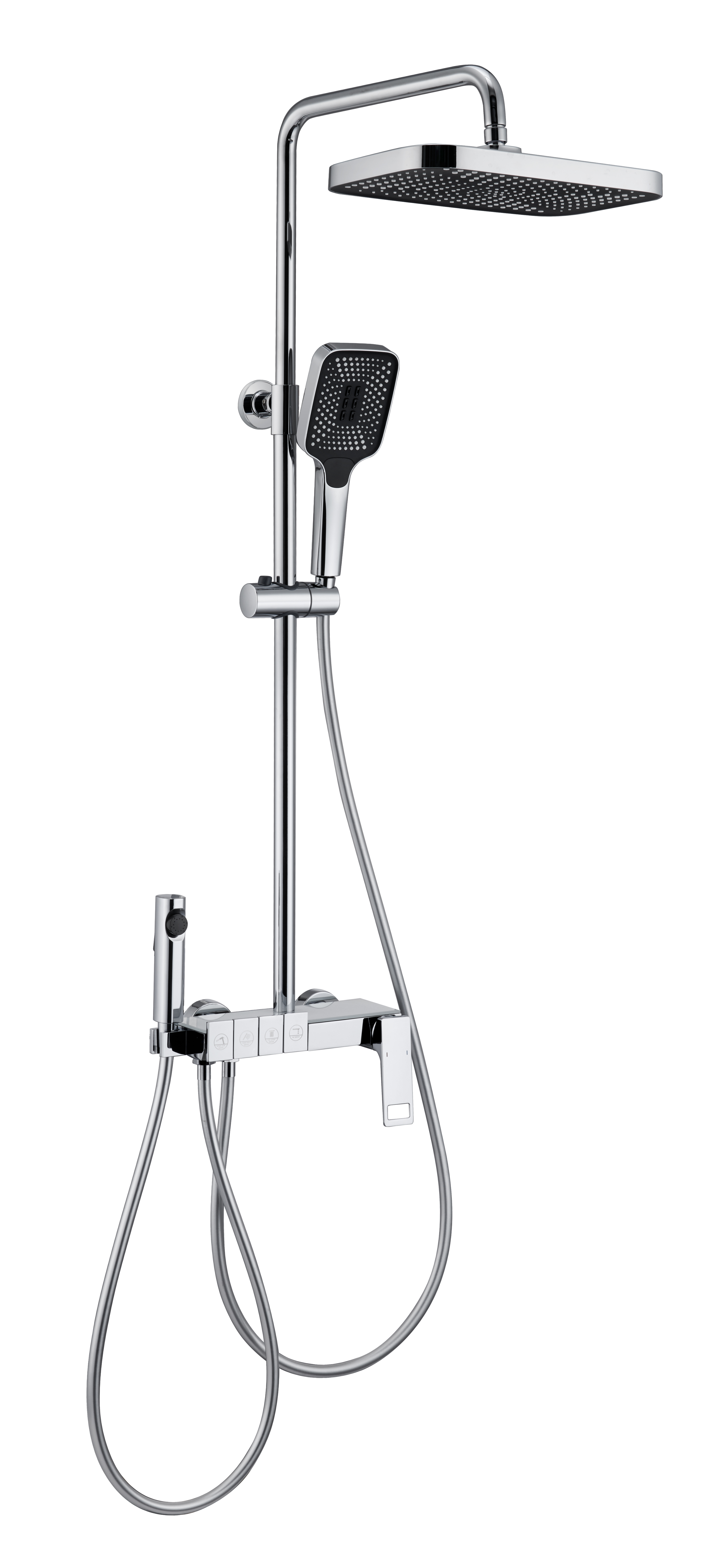
Understanding the physical build of these systems helps you identify quality. You need hardware built to withstand constant moisture and daily mechanical stress. Let us deconstruct the primary components.
The Extruded Rail or Bar: This serves as the physical backbone. It mounts directly to your tile or acrylic surround. Many high-quality units feature telescopic rails. Telescopic functionality allows you to adjust the overall height during installation. You must use rigid wall anchoring. Flimsy mounting brackets will eventually fail under the constant pull of the handheld hose.
The Diverter Valve: This component acts as the mechanical switch. It directs water flow between the overhead head, the wand, and any lower spouts. You should strictly seek out ceramic disc cartridges. Ceramic discs handle thousands of turns without degrading. Standard rubber or plastic diverters warp over time. They inevitably cause frustrating leaks or stuck knobs.
The Temperature Controller: A premium Thermostatic Shower Mixer is often the core component of modern units. We highly recommend this upgrade for family safety.
Let us explain the mechanics of a thermostatic cartridge. It automatically balances hot and cold water inputs. It reacts instantly if external water pressure drops. For example, if someone flushes a toilet, cold water pressure plunges. Older pressure-balancing valves might let scalding hot water through. A thermostatic valve instantly chokes the hot water supply. It maintains your exact preset temperature within a fraction of a degree. This offers vastly superior safety compared to outdated mechanical valves.
Most buyers upgrade specifically for better water delivery. You want options tailored to different cleaning needs. Let us explore the functionality of these various modes.
Overhead gravity-fed water delivery remains highly sought after. Integrating a dedicated Rainfall Showerhead transforms basic routines into a luxurious soak. You must, however, understand flow restriction realities. Regulations cap residential flow rates (GPM limits). A massive 12-inch head spreading 1.8 GPM will feel weaker than a smaller 8-inch head. Look closely at the nozzles. You absolutely need flexible silicone nozzles. Limescale builds up quickly in hard water areas. Silicone allows you to simply rub the nozzles to clear mineral blockages.
Handheld wands provide crucial functional utility. They make cleaning the glass enclosure remarkably easy. They offer targeted rinsing for pets or young children. Pay strict attention to hose quality. Standard kink-resistant PVC works well in modern designs. However, double-interlocking metal hoses drape much better. They resist tangling and offer superior longevity.
Some premium setups expand into a complete 4-Function Shower System. These units incorporate body jets and lower tub spouts. You must address a major implementation risk here. A common misconception exists. Many buyers believe all four functions can run simultaneously at full blasting pressure. Standard residential plumbing cannot support this. The diverter uses flow-sharing mechanics. If you activate the overhead rain and the body jets together, the system splits the available water volume. The pressure drops significantly at each dedicated outlet. You will mostly use one or two functions at a time.
System Flow Distribution Summary Chart
Active Outlets | Water Volume Allocation | Perceived Pressure Impact |
|---|---|---|
Single Function (e.g., Rainfall only) | 100% to primary outlet | Maximum pressure output |
Dual Function (e.g., Rainfall + Handheld) | 50/50 split between outlets | Noticeable pressure reduction |
Multi-Function (3+ features active) | Divided equally across all zones | Low pressure; generally not recommended |
You cannot simply buy a unit based on appearance. Your bathroom's current infrastructure dictates what you can actually install. Use this sequential checklist to assess your space before purchasing.
Assess Plumbing Compatibility: Look at your existing setup. Do you have an exposed valve on the wall? Or do you just have a single shower arm high up? This dictates your hardware category. You either need a complete system containing a mixing valve, or you need a simple retrofit rail. Retrofits attach solely to the top water outlet. They utilize your existing hot/cold wall handles.
Verify Water Pressure Requirements: Multi-function hardware demands adequate power. You need a minimum acceptable pressure of 40 to 50 PSI. Check your home's flow rate. A system trying to run multiple jets will perform miserably on 30 PSI. A plumber can easily test your baseline PSI at the tub spout.
Measure Spatial and Clearance Constraints: Ceiling height matters immensely. Overhead fixtures require vertical clearance above your tallest family member. Tub-shower combos often have lower plumbing outlets. Basement bathrooms typically feature low drop ceilings. Telescopic rails help, but you must calculate the maximum extension height before ordering.
Determine DIY vs. Professional Installation: Define the line between simple upgrades and serious plumbing. Simple retrofit attachments are highly DIY-friendly. You just unscrew the old head and attach the new diverter column. Conversely, installing a completely new thermostatic block requires opening the wall slightly. It demands precise hot/cold supply line rough-ins. This mandates hiring a licensed professional plumber.
The market is flooded with visually identical products varying wildly in price. You must know how to inspect the specification sheets. Quality materials dictate how long the fixture will actually survive.
First, expose the chrome-plated plastic risk. Many budget columns look like metal but feel suspiciously light. Manufacturers use ABS plastic to cut costs. Hot water cycles cause plastic to expand and contract. Over time, plastic threaded connections crack and leak. We strongly recommend demanding solid brass cores for the internal valves. You should insist on 304 stainless steel for the extruded rail and outer bodies. These materials ensure absolute longevity.
Next, evaluate finish durability. Standard electroplating applies a thin metallic layer. It looks great initially but scratches easily. Hard water deposits can pit electroplated chrome. You should seek out PVD (Physical Vapor Deposition) finishes. PVD bonds the color at a molecular level. It is essential for matte black, brushed nickel, or brushed gold finishes. PVD resists hard water stains and prevents aggressive scratching.
You must also check for compliance and certifications. Confirm the unit carries cUPC certification. This is a critical legal requirement for North American plumbing codes. Plumbers will often refuse to install uncertified fixtures. Additionally, check for WaterSense compliance. This guarantees the unit meets strictly regulated flow rates for environmental conservation.
Finally, avoid common warranty traps. Marketing materials frequently boast about "lifetime" guarantees. Look strictly beyond this broad language. Read the fine print carefully. Manufacturers often cover the stainless steel pipe for life but restrict coverage on moving parts. The diverter cartridges and thermostatic mixers endure the most wear. Ensure these specific mechanical components carry at least a five-year replacement warranty.
Material and Finish Comparison Matrix
Component Category | Budget Grade | Premium Grade | Expected Lifespan |
|---|---|---|---|
Internal Valve Body | ABS Plastic / Zinc Alloy | Solid Cast Brass | 2-3 years (Plastic) vs. 15+ years (Brass) |
Main Rail / Column | Thin Aluminum / Plastic | 304 Stainless Steel | Prone to denting vs. Highly rigid |
Surface Finish | Basic Electroplating | PVD (Physical Vapor Deposition) | Fades quickly vs. Scratch/tarnish resistant |
Diverter Cartridge | Rubber Washers | Ceramic Disc | Leaks easily vs. 500,000+ cycle rating |
A surface-mounted shower column clearly provides the most efficient path to a premium bathing experience. It delivers multi-outlet functionality without the crushing expense of invasive remodeling. You avoid tearing down tile while drastically upgrading your daily routine.
Take specific actions before browsing product catalogs. Grab a tape measure. Accurately measure your floor-to-ceiling clearance right now. Locate a gauge and check your home's baseline water pressure. Finally, determine your exact plumbing starting point. Decide whether you need a full valve-included model or a simple retrofit attachment. Gathering these three metrics guarantees you will select hardware that installs smoothly and performs brilliantly.
A: It depends strictly on the specific diverter design and your available water pressure. Some premium diverters allow simultaneous function. However, they share the total water flow. This effectively halves the pressure sent to each individual outlet. For the best experience, run them independently.
A: No. Hardware cannot artificially create pressure. It can only distribute what your home's plumbing already provides. If you suffer from low PSI, installing larger fixtures often makes the pressure feel even worse because the water spreads too thinly across more nozzles.
A: If you are replacing an existing exposed mixer, no tile work is needed. If you are converting from a single in-wall valve, minor tile work may occur. Fortunately, many manufacturers provide specific retrofit adapter plates that cleverly cover the old valve hole without requiring new tile.
A: Panels are typically wide, fully enclosed units made of glass or metal. They hide complex internal hoses and often feature built-in body jets. Columns are much more minimalist. They feature exposed vertical pipes and rails, focusing primarily on overhead and handheld functions without wide enclosures.