Views: 0 Author: Site Editor Publish Time: 2026-11-13 Origin: Site


We rarely think about a bathroom fixture until it breaks. Yet, this simple device goes far beyond basic hand hygiene. It serves as a critical mechanical fixture balancing operational reliability, liquid compatibility, and aesthetic durability. Commercial facilities and residential homes face a very similar problem. Cheap units frequently fail. You regularly see constant leaks, annoying clogs, and rapid internal spring corrosion. These ongoing issues create unsightly, slippery messes on countertops. They waste expensive, specialized soap formulas. Furthermore, they drive up frustrating replacement overhead for facility managers and homeowners alike. We wrote this comprehensive guide to solve these exact mechanical problems. It provides an engineering and procurement-level breakdown of liquid displacement mechanics. We evaluate various reservoir materials and share proven, actionable maintenance protocols. You will learn how atmospheric pressure drives these mechanisms. We also cover the specific chemical vulnerabilities of different plastics and metals. Understanding these hidden factors informs much smarter commercial and residential purchasing decisions.
Mechanical Principle: Most manual dispensers rely on a positive displacement piston pump featuring two one-way check valves (inlet ball valve and outlet valve) operating via atmospheric pressure and mechanical spring recoil.
Viscosity Sensitivity: Liquid soap viscosity (typically 1,000–5,000 cPs) directly dictates dip tube diameter, spring resistance, and pump lifespan; mismatching soap formulas causes premature seal blowouts or priming failure.
Material Selection Matters: Grade 304 or 316 stainless steel, heavy-duty ABS, and glass prevent chemical leaching, stress cracking, and internal spring degradation from alkaline or acidic formulations.
A positive displacement mechanism drives the standard Liquid Soap Pump. It relies heavily on a robust compression spring. When decompressed, this spring forces the internal piston upward. This upward movement expands the primary pump chamber. The physical expansion drops internal chamber pressure well below ambient atmospheric levels. This creates a powerful vacuum effect inside the sealed unit. The lower check valve then responds directly to this pressure shift. Manufacturers often use a small stainless steel or nylon ball bearing for this valve. The vacuum lifts this tiny ball off its resting seat. Liquid soap then rushes up through the dip tube. Meanwhile, the upper discharge valve remains tightly shut. Negative pressure holds it closed securely. This smart design prevents outside air from entering through the spout during the suction phase.
You initiate the next operational phase manually. Your hand pushes the top actuator downward. This manual force drives the piston directly into the fluid-filled metering chamber. Internal fluid pressure spikes almost immediately. This sudden pressure forces the lower inlet check valve downward. The internal ball bearing wedges tightly into its sealed seat. It completely blocks any backflow into the main reservoir container. The trapped fluid must find a viable exit path. It pushes past the upper valve seal. Fluid then travels smoothly through the nozzle. Most commercial pumps deliver a precise, measured dose per stroke. You typically get between 0.8 mL and 1.5 mL of liquid.
Air must replace the recently displaced liquid. Without replacement air, a dangerous vacuum forms inside the sealed reservoir. A strong internal vacuum would eventually halt the pump entirely. Manufacturers integrate micro-vent seals to solve this specific issue. These tiny vents allow ambient air to enter the container safely. They equalize the pressure during repeated, rapid dispenses. Engineers must balance this venting mechanism carefully. A vent must allow air in but keep liquid out. If the vent hole runs too large, soap leaks quickly when you tilt or shake the unit. Precision engineering prevents these common leak paths.
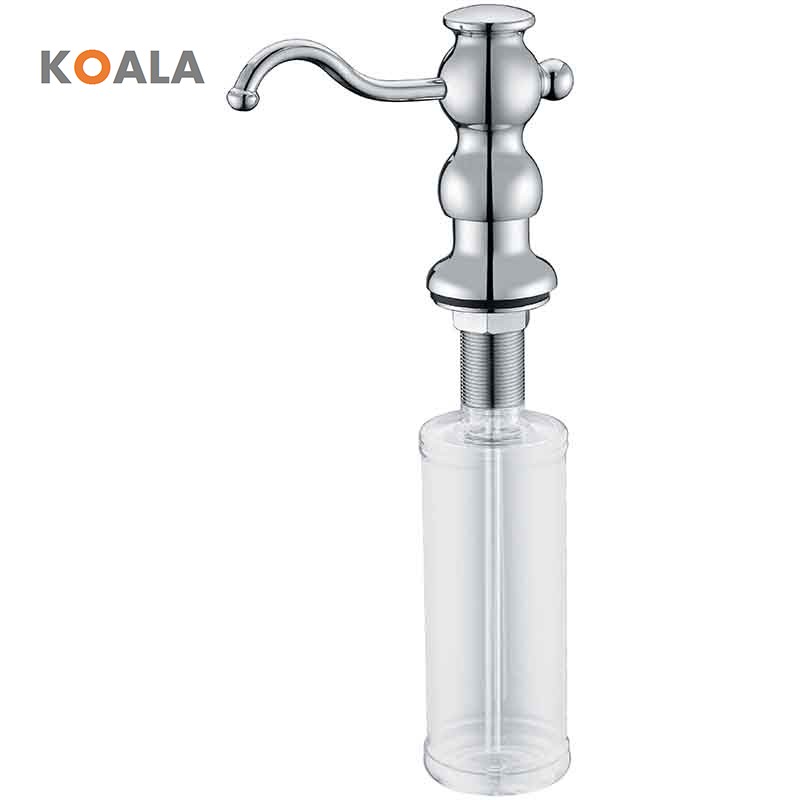
A reliable Refillable Soap Dispenser requires exceptionally robust structural components. Reservoir volume sizing involves distinct trade-offs. Compact 250 mL units save valuable counter space. High-capacity 1000 mL tanks suit busy commercial restrooms perfectly. Base materials dictate long-term longevity. You can choose heavy glass, solid brass, marine-grade stainless steel, or high-density plastics.
Dip tube dimensions also matter greatly. The internal bore diameter impacts fluid flow resistance directly. Thick gel formulas require wider tubes. You will find both rigid and flexible tube options on the market. Installers must maintain proper bottom clearance tolerances. A tube resting completely flush against the bottom causes immediate suction choking.
Spring construction directly affects expected lifespan. Submerged springs sit directly in the harsh liquid chemicals. They require marine-grade stainless steel to resist inevitable rust. Alternatively, isolated dry-spring designs keep the metal outside the fluid chamber entirely. This superior design eliminates corrosion risk.
Seals ensure everything remains watertight and functional. Engineers evaluate several elastomer types for seal integrity:
Nitrile (NBR): Offers good general resistance but degrades under heavy oil exposure.
Silicone: Provides excellent temperature flexibility and handles thick gels well.
EPDM: Delivers superior resistance to strong sanitizers and harsh alcohol bases.
Table: Reservoir Material Compatibility and Durability
Material Type | Chemical Resistance | Durability | Ideal Application |
|---|---|---|---|
Standard Polycarbonate | Low (Prone to cracking) | Moderate | Light residential use |
Heavy-Duty ABS Plastic | High | High | Commercial public restrooms |
Grade 304 Stainless Steel | Very High | Excellent | High-end hospitality |
Thick Tempered Glass | Ultimate (Inert) | Fragile if dropped | Luxury home bathrooms |
Chemical degradation ruins many cheap units prematurely. Strong active surfactants and synthetic fragrances attack low-grade polycarbonates aggressively. They cause a phenomenon called environmental stress cracking. Over time, the clear plastic turns cloudy and brittle. Corrosion zones present another major structural vulnerability. Threaded neck connections often trap ambient moisture and salt. Spout weld points can rust heavily if improperly finished. Non-passivated metal internal components will degrade rapidly. Highly acidic soap formulas accelerate this metallic breakdown. You must select premium materials to avoid these expensive structural failures.
Standard pumps use a direct liquid displacement method. They rely entirely on fluid pressure to push gel out. In sharp contrast, foaming models use a complex dual-chamber architecture. The Bathroom Soap Dispenser forces both liquid and ambient air together forcefully. They travel through a very fine mesh screen simultaneously. This mixes air and liquid at a strict, controlled ratio. You typically see a 10:1 air-to-liquid ratio in commercial units. This aeration process generates rich, luxurious micro-bubbles. However, foaming pumps demand highly specific, low-viscosity formulas. Thick liquids will destroy the internal mesh. Non-abrasive surfactants work best to prevent catastrophic mesh blockages.
Manual plungers offer maximum mechanical reliability. They carry a significantly lower upfront cost. You can fully disassemble and clean them easily. They depend entirely on user pressure control, making them simple and predictable.
Automated infrared units offer a modern, touchless alternative. They use solenoid or gear-driven pumps combined with micro-sensors. They provide massive advantages in cross-contamination control. Users never actually touch the physical fixture. However, they carry distinct maintenance risks. Battery failure happens frequently in busy restrooms. Sensors cloud over quickly from erratic soap splatter. Furthermore, high humidity environments cause higher electronic failure rates over time.
Commercial spaces demand extreme equipment durability. Facilities managers specifically look for commercial rating benchmarks. A reliable unit undergoes rigorous testing for 100,000+ continuous strokes. Residential models usually prioritize superficial decor over actual duty cycles. They fail quickly under heavy, repeated public use.
Public accommodations must also strictly meet ADA standards. Ergonomic compliance remains critical for all wall-mounted fixtures. The force-to-activate must remain very low. Accessibility guidelines require under 5 pounds of downward pressure. This ensures comfortable accessibility for everyone.
Dried soap accumulation serves as a primary culprit. Viscous residue solidifies right inside the tiny nozzle tip. This causes unpredictable, directional spurting across the sink. In worse cases, it causes complete structural blockage.
Air locks also cause major operational issues. A unit might suddenly lose its prime completely. This happens when microscopic tears develop in the plastic dip tube. A worn piston seal can also allow ambient air directly into the pressure chamber. This unwanted air completely neutralizes the mechanical suction effect.
Valve seating failures stop pressure from building properly. Hard particulates or crystallized soap wedge the inlet ball valve open. The ball cannot seal the lower chamber tightly. Fluid just flows backward into the reservoir.
Dripping and weeping spouts frustrate many users daily. This usually stems from basic thermal expansion. Warm air inside the sealed reservoir expands. It pushes residual soap past a weakened outlet check valve.
Regular flushing prevents most unexpected clogs. We highly recommend warm water cycling protocols. Pumping hot water dissolves internal surfactant crystallization effectively. It cleans the internal pathways thoroughly without degrading lubricated elastomer seals.
Follow these quick steps for a deep clean:
Disassemble the modular head assemblies carefully.
Soak the components in a basin of very warm water for twenty minutes.
Apply a safe descaling agent if you live in a hard water zone.
Pump clean water through the tube until the stream runs perfectly clear.
Viscosity optimization extends the lifespan significantly. You should always follow guidelines for diluting high-viscosity gels. Match the liquid thickness to the standard pump operating thresholds. Thinning out overly thick soaps reduces internal mechanical stress. It protects the springs and seals from excessive, premature wear.
Start by evaluating viscosity and fluid compatibility closely. Match your pump specs strictly to your selected bulk refills. Decide early if you need liquid, gel, foam, or alcohol-based sanitizer outputs.
Next, consider the physical mounting configuration. Deck-mounted units hide large reservoirs neatly under the counter. Wall-mounted units save valuable vanity space. Freestanding countertop models offer excellent relocation flexibility.
Refill workflows matter deeply for maintenance teams. Top-fill systems save hours of labor. Screw-off under-counter reservoirs require much more physical effort. Lockable outer housings protect valuable liquid assets in hospitality or public facilities. Superior vandal resistance is absolutely essential for high-traffic zones.
Component modularity saves significant money over time. Look for units offering simple replacement pump cartridges. Replaceable nozzles help you avoid total, expensive fixture replacement.
Finish longevity determines long-term aesthetic success. PVD (Physical Vapor Deposition) coatings resist daily wear beautifully. They easily outperform basic chemical electroplating. Brushed raw finishes hold up incredibly well in high-humidity, chlorine-rich environments.
You should also consider cohesive visual design. A complete Bathroom Soap Dispenser Set integrates perfectly into luxury spaces. You can match your soap, lotion, and tumbler hardware seamlessly. You achieve excellent interior design aesthetics without sacrificing vital engineering component specs.
Use this convenient checklist when comparing commercial or residential models:
Verify the exact stroke volume calibration suits your intended usage profile.
Confirm the presence of a true dry-spring or corrosion-proof spring mechanism.
Check warranty coverage specifically on moving parts like the internal piston and seals.
Ensure the manufacturer warranty goes beyond just the cosmetic outer shell.
Test the downward force required to activate the plunger manually.
A highly successful handwashing station requires thoughtful, careful planning. We explored how proper alignment between complex pump mechanics, soap viscosity, and material quality dictates overall longevity. Atmospheric pressure and precision-engineered valves do all the heavy lifting. High-grade stainless steel and resistant elastomers protect the unit against harsh chemical decay.
When making your final purchasing decision, prioritize easily serviceable parts. A robust internal valve architecture matters much more than superficial exterior styling. This pragmatic approach lowers daily operational friction. It prevents slippery messes and reduces frustrating, expensive maintenance calls.
Take action today. Review the technical specifications of your current sink fixtures. Verify your liquid compatibility closely before ordering massive bulk refills. Select thoughtfully engineered dispensing solutions. Choose highly coordinated sets built specifically for long-term, high-volume cycling.
A: Pressure loss usually stems from three distinct mechanical failures. You might have a micro-crack in the plastic dip tube. The threaded connection at the main pump housing may have loosened over time. Alternatively, a stuck inlet check valve could prevent liquid retention in the upper compression chamber.
A: No, standard liquid soap remains far too viscous for dual-chamber mesh foaming pumps. Standard thick soaps will quickly clog the fine aeration mesh. You must dilute standard soap with warm water. A 1:3 to 1:5 ratio typically prevents catastrophic clogging and generates proper micro-bubbles.
A: Dripping usually relates directly to thermal expansion. Warm air inside the sealed container expands naturally, pushing residual soap out the open spout. Alternatively, dried soap residue might be wedged firmly in the upper discharge valve. This hard debris prevents the valve from seating completely flush.
A: Start by soaking the entire pump assembly in a bowl of hot water. Next, pump hot water continuously through the mechanism to dissolve all internal crystallization. Never use mineral oil or industrial chemical lubricants. These harsh chemicals will degrade the internal elastomer seals extremely rapidly.