Views: 0 Author: Site Editor Publish Time: 2026-06-27 Origin: Site


Sourcing a plumbing fixture for a multi-unit development is fundamentally different from a single-family residential purchase. The decision scales rapidly across hundreds of installations. A mere 5% failure rate in a 300-unit apartment complex means significant maintenance overhead, frustrated tenants, and severe long-term brand damage. Property developers cannot afford to treat these selections lightly.
A natural tension often exists between design intent and operational reality. Interior designers want sleek aesthetics to attract prospective residents. Facility managers need reliable, leak-free performance to minimize daily maintenance tickets. Bridging this gap requires a highly strategic approach to product selection.
Selecting the right fixture demands a rigorous evaluation of lifecycle durability, core material resilience, strict compliance standards, and the overall reliability of your manufacturing partner. By prioritizing internal engineering over superficial styling, project managers ensure consistent performance across every unit. You will learn how to balance modern design trends with the heavy-duty specifications required for large-scale rollouts.
Prioritize internal components (like ceramic disc cartridges) over exterior aesthetics to minimize post-installation maintenance costs.
Standardizing on a commercial kitchen faucet grade ensures ADA compliance and supports LEED/water-saving certifications.
When evaluating a wholesale kitchen faucet supplier, assess their spare-parts availability and warranty terms, not just unit pricing.
Leveraging an OEM kitchen faucet manufacturer allows developers to align plumbing fixtures with specific brand guidelines without inflating the budget.
Evaluating upfront specifications represents only a fraction of the actual procurement process. Developers must analyze comprehensive lifecycle performance metrics. You must factor in installation speed, daily water consumption, and the projected operational lifespan of the unit. A fixture might look beautiful on a specification sheet, but if it takes contractors twice as long to install, it delays the entire project schedule. High-efficiency aerators drastically reduce water volume over time. This single component positively affects overall building sustainability goals. Focusing on longevity minimizes disruptions and keeps facility management teams focused on preventive maintenance rather than emergency repairs.
Understanding the functional difference between residential and commercial fixtures is critical for high-density environments. A true commercial kitchen faucet handles significantly higher daily usage cycles. Manufacturers engineer these units specifically for rigorous environments. They require stricter testing for valve endurance, handle fatigue, and finish resilience. Residential models often feature lighter bodies and consumer-grade cartridges suitable for occasional family use. Commercial-grade alternatives utilize thicker sidewalls and reinforced handle set-screws. They withstand the aggressive handling typical in hospitality settings and transient rental units.
Standardizing components across an entire property portfolio prevents disastrous delays during large-scale rollouts. Select models featuring standard rough-in dimensions and universal connection hoses. Plumbers move much faster when every unit requires the exact same mounting procedure. Furthermore, standardization streamlines future inventory management. Maintenance teams carry a single type of replacement cartridge or aerator key. This universal compatibility resolves work orders quickly. It eliminates the need to cross-reference multiple part numbers across different floors or building wings.
The foundation of any reliable fixture begins with its base material. Solid brass remains the industry standard for durability. It resists dezincification and provides excellent structural integrity for heavy components. Conversely, a stainless steel kitchen faucet offers exceptional corrosion resistance. Developers often prefer stainless steel for modern or industrial architectural builds. It naturally repels hard water stains and requires minimal maintenance to retain its appearance.
You must strictly avoid zinc-alloy bodies for primary sink usage. While zinc feels heavy initially, it presents severe long-term pitting risks. Constant exposure to moisture degrades zinc alloys over time. This deterioration leads to microscopic pinhole leaks through the body itself. These leaks ruin surrounding cabinetry and flooring.
Material Comparison for Multi-Unit Projects | |||
Material Type | Primary Advantage | Durability Rating | Best Application |
|---|---|---|---|
Solid Brass | Exceptional structural strength | High | Premium hotels, luxury apartments |
Stainless Steel (304/316) | High corrosion resistance, lead-free | High | Modern rentals, industrial lofts |
Zinc Alloy | Easy to mold into complex shapes | Low to Medium | Avoid for primary usage |
Internal valves dictate the actual functional lifespan of the fixture. Ceramic disc valves are absolutely non-negotiable for multi-unit projects. They utilize two fired-ceramic plates sliding against each other to control water flow. These plates achieve a watertight seal without relying on wearable rubber washers. Ceramic mechanisms prevent the constant drip-related maintenance tickets common in older buildings. Look for components subjected to rigorous 500,000-cycle endurance tests. Such standards ensure the handle operates smoothly for decades.
Surface treatments determine how well a fixture survives aggressive cleaning protocols. Standard electroplating works reasonably well for chrome finishes. However, Physical Vapor Deposition (PVD) represents the gold standard for finish durability. The PVD process binds metallic vapors to the fixture inside a vacuum chamber. This molecular bond creates a surface highly resistant to scratching, tarnishing, and harsh chemical cleaners. Always recommend PVD-coated fixtures for hotels and high-turnover apartments where housekeeping staff use industrial-strength disinfectants daily.
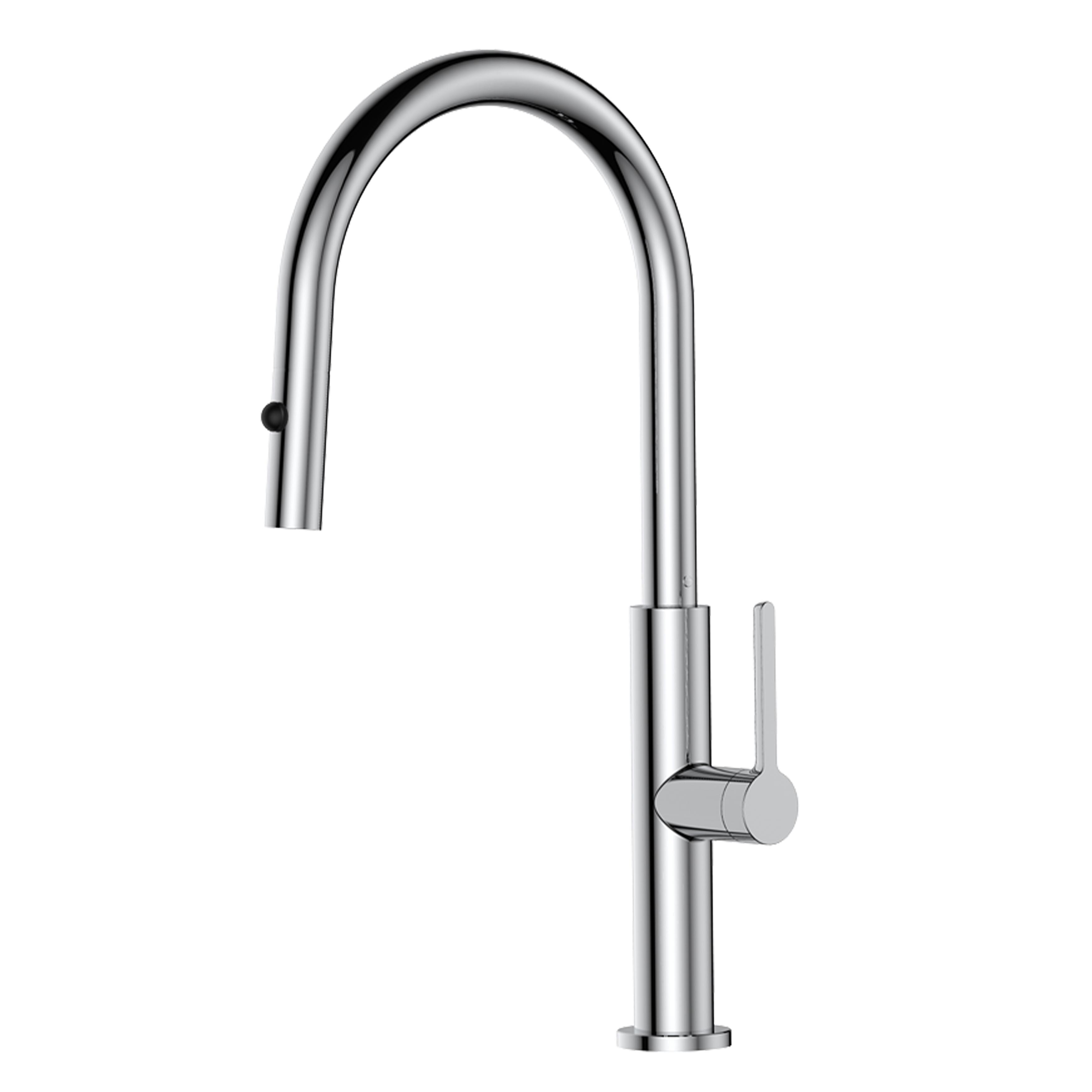
The physical layout of the spray head drastically impacts usability. Pull-down models feature a high-arc spout, making them ideal for filling deep pots and cleaning large pans. Pull-out models maintain a lower profile, working perfectly beneath overhanging cabinets or low shelving. When specifying either option, prioritize weighted retraction systems. Mechanical weights ensure the hose snaps back securely into the spout. Spring-loaded retractors often weaken over time, leading to frayed hoses and drooping spray heads.
Handle configuration also matters immensely. Single-handle designs remain universally preferred over dual-handle setups. A single lever allows users to adjust water temperature and volume simultaneously using one hand. This streamlined motion improves efficiency and aligns perfectly with accessibility standards.
Installing non-compliant fixtures exposes property developers to significant legal liabilities. The North American market demands strict adherence to certified standards.
Certification Standard | Purpose & Requirement |
|---|---|
cUPC / UPC | Validates structural integrity, flow rates, and safe mechanical operation. |
NSF/ANSI 61 | Ensures all wetted internal parts do not leach harmful chemicals into drinking water. |
NSF/ANSI 372 | Verifies the entire fixture meets strict lead-free mandates (weighted average lead content ≤ 0.25%). |
ADA Compliance | Requires lever operation using less than 5 lbs of force, without tight grasping or twisting. |
Water resource management directly impacts building operation overhead. Evaluate internal aerators and specify precise Gallons Per Minute (GPM) flow rates. Traditional models push 2.2 GPM. Modern high-efficiency fixtures restrict flow to 1.5 or 1.8 GPM while using air-injection technology to maintain perceived pressure. Specifying WaterSense-certified fixtures actively supports building certifications like LEED. This environmental focus lowers municipal utility usage across thousands of daily interactions.
Finding a reliable wholesale kitchen faucet provider requires thorough due diligence. You must look far beyond glossy product catalogs. Investigate their internal Quality Control (QC) protocols. Do they perform 100% air-pressure testing on every unit before packaging? Transparency matters. Reputable suppliers proudly share their factory audit reports and ISO 9001 certifications. A transparent supply chain guarantees consistent metal sourcing and protects your project from unexpected defects.
Sometimes standard catalog items fail to meet strict architectural visions. Specifying an OEM kitchen faucet bridges this gap. Original Equipment Manufacturing allows developers to modify spout heights, implement custom PVD finishes, or add laser-etched branding. You must discuss the break-even point for custom tooling with your partner. Once you hit the required Minimum Order Quantity (MOQ), custom molds become highly viable. This route perfectly aligns plumbing hardware with exact interior design specifications without compromising on structural integrity.
A project does not end at the ribbon-cutting ceremony. The true test of a manufacturer is their after-sales support. You must demand guarantees regarding spare part availability. Cartridges, aerators, and retraction weights must remain accessible for 5 to 10 years post-project completion. Replacing an entire fixture simply because a proprietary aerator broke is unacceptable. Ensure your chosen partner maintains dedicated inventory reserves for your specific project components.
Contractor fatigue inevitably leads to installation errors. Traditional nut-and-bolt mounting hardware requires installers to work blindly on their backs inside dark cabinets. This process takes excessive time. Recommend fixtures featuring top-mount installation technology or quick-connect supply hoses. These engineered systems allow plumbers to secure the unit from above the counter. Saving just five minutes per unit translates into weeks of saved labor across a massive development block.
High-rise apartments present unique hydraulic challenges. Municipal water enters the building, and booster pumps push it vertically. This creates drastic pressure drops or sudden surges depending on the floor level. Cheap internal hoses burst under these extreme fluctuations. You need a robust project kitchen faucet equipped with pressure-compensating aerators. These specialized aerators deliver a steady, predictable stream regardless of whether the unit sits on the 2nd floor or the 42nd floor.
Never commit to a bulk order based solely on digital renderings. Physical testing prevents catastrophic design clashes.
Order Samples: Secure prototype units directly from the manufacturer.
Test Sink Clearance: Verify the spout height accommodates the largest pots intended for the space.
Check Splash Radius: Turn the water on full blast. Ensure the stream hits the drain center, not the sink basin slopes, which causes excessive counter splashing.
Verify Handle Rotation: Check the lever movement. Does it hit the wall or backsplash when pushed fully backward? Forward-rotating handles solve tight clearance issues easily.
Successful procurement bridges the challenging gap between aesthetic appeal and rigorous operational demands. Every fixture placed in a multi-unit property serves as a frontline asset. By prioritizing robust internal mechanics and demanding strict environmental certifications, developers create spaces that perform flawlessly for years.
When shortlisting options, adopt a disciplined filtering logic. First, eliminate any model lacking cUPC or NSF certifications. Second, filter by core material quality and ceramic cartridge endurance. Finally, narrow down the remaining choices based on visual design and finish options.
Do not wait until the final construction phases to secure plumbing fixtures. Request detailed specification sheets immediately. Order a sample unit to install in your physical mock-up room. Reach out to a dedicated project specialist today to schedule a comprehensive procurement consultation and streamline your entire supply chain.
A: Typical timelines require careful forecasting. Standard bulk orders generally take 30 to 60 days to process and ship. Custom OEM projects require 60 to 90 days or more to accommodate bespoke tooling, finish matching, and specific quality control approvals.
A: Both offer excellent viability depending on the desired aesthetic. Solid brass is heavier and traditionally highly durable. Stainless steel strongly resists hard water spots, peeling, and corrosion, making it incredibly resilient for high-turnover rentals.
A: Legal compliance usually mandates cUPC or UPC for structural and mechanical safety. NSF/ANSI 61 ensures wetted parts are safe, and NSF/ANSI 372 verifies the fixture is lead-free. ADA compliance is required for designated accessible units.
A: Yes. Customization scales with your Minimum Order Quantity (MOQ). Options range from simple logo laser-etching on the handle to entirely bespoke brass molds and highly specific custom PVD finishes to match exclusive brand guidelines.