Views: 0 Author: Site Editor Publish Time: 2026-05-15 Origin: Site


Upgrading a kitchen sink faucet represents a functional commitment, not just a stylistic choice. Your decision directly dictates daily food prep efficiency, cleaning speed, and long-term maintenance needs. Buyers often face a frustrating dilemma. They feel torn between the engineered flexibility of modern pull models and the bulletproof reliability of traditional fixed setups. This forces you to weigh classic aesthetics against modern convenience.
This guide bypasses aesthetic marketing altogether. We evaluate both architectures based on mechanical longevity, ergonomics, water pressure physics, and sink compatibility. You will learn how docking mechanics fail, why water pressure matters, and how sink depth impacts splash zones. By the end, you will understand exactly how to match a spout design to your specific workflow. This comprehensive assessment will help you finalize your purchase confidently.
Flexibility vs. Durability: Pull faucets offer superior reach and wash-zone control, while fixed kitchen faucets eliminate hose-wear and docking failures.
Sink Matching is Non-Negotiable: A deep single-bowl sink practically mandates a pull-down model; shallow or corner sinks pair better with fixed or horizontal pull-out designs to mitigate splash zones.
Ergonomics Matter: Heavy home cooks favor single handle kitchen faucet configurations with integrated pull-heads for quick, one-handed operation during messy food prep.
Infrastructure Limits: High-arc pull-down faucets require adequate water pressure and substantial under-sink clearance for their hose-retraction weights to function without snagging.
To make an informed choice, you must first understand the structural baseline of each design. The physical shape of your faucet dictates how you move around your sink.
A fixed model operates with a completely static spout. It relies entirely on a natural, gravity-fed water trajectory. Because the neck does not move, you must wash items within a strict central zone. These setups may include a separate side-sprayer mounted on the sink deck. However, the main waterway itself remains rigid. This simplicity creates a highly reliable structure.
Pull models changed kitchen workflows by integrating a flexible hose directly into the spout. You can grab the aerator head, pull it outward, and direct the flow exactly where you need it. Manufacturers divide these into two primary categories:
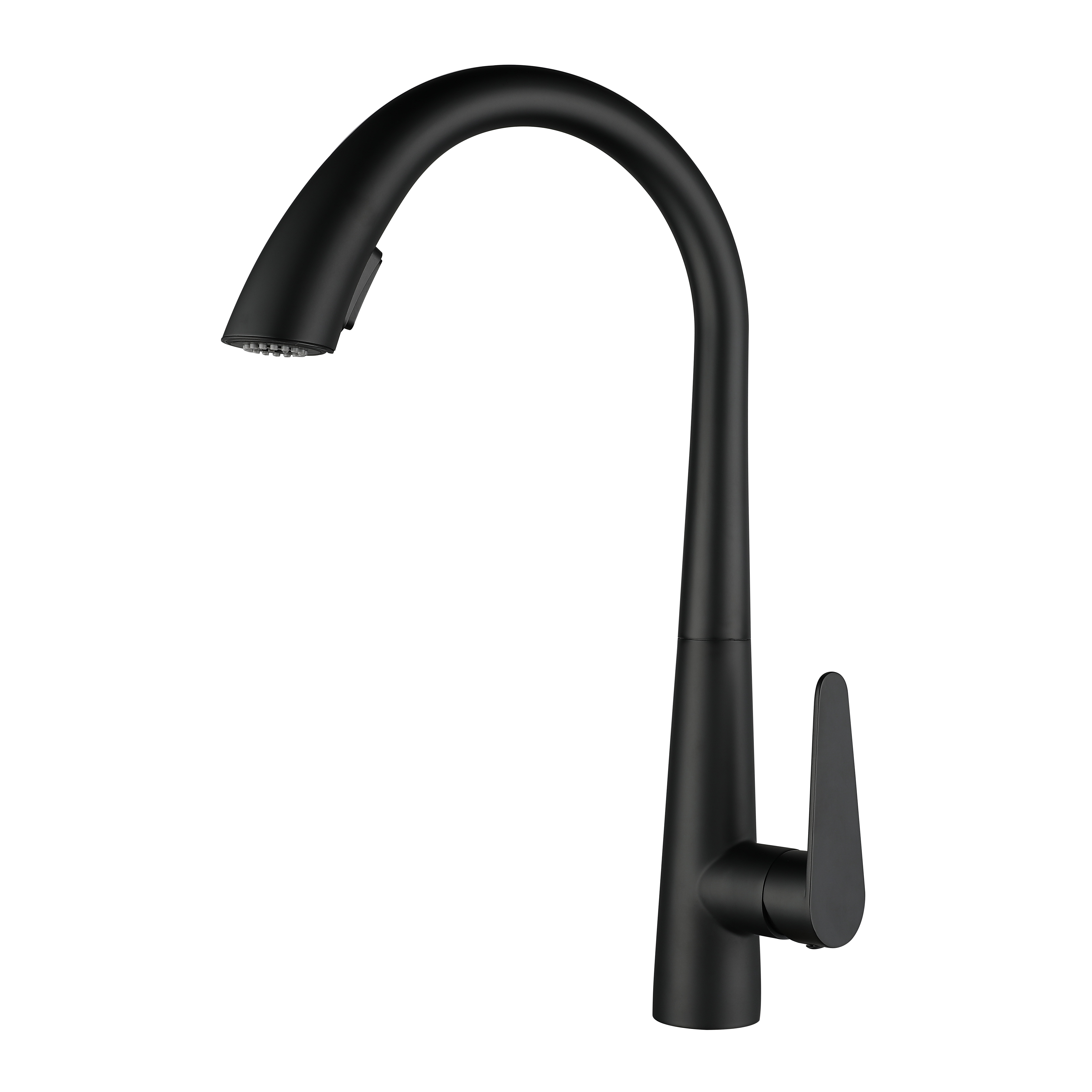
Pull-Down Variants: These feature a high-arc gooseneck profile. You pull the spray head vertically downward. They provide excellent clearance for heavy, oversized cookware.
Pull-Out Variants: These feature a much lower profile. You pull the spray head horizontally toward you. They accommodate tight overhead clearances easily. They also offer an extended hose reach for filling pots on adjacent countertops.
The operational workflow differs dramatically between the two styles. Fixed models require bringing the dish directly to the water stream. This often forces awkward angles when rinsing large baking sheets. Pull models flip this dynamic. They allow you to bring the water to the dish. You can stretch the hose to fill a coffee maker. You can rinse down the far corners of the sink basin. This active mobility drastically speeds up daily cleaning routines.
Every moving part introduces a potential point of failure. You must evaluate the hidden mechanics operating beneath your countertop before committing to a design.
A pull down kitchen faucet relies on a complex retraction system. A heavy gravity weight clamps onto the hose loop underneath the sink. When you pull the sprayer, the weight lifts. When you release it, gravity pulls the weight down, retracting the hose.
This creates specific mechanical vulnerabilities. Gravity weights easily snag on under-sink plumbing pipes, garbage disposals, or stored cleaning supplies. When the weight catches, the spray head droops loosely into the sink. Additionally, low-end magnetic docking collars degrade over time. If the friction tabs wear out, the sprayer will refuse to seat properly in the spout.
Pull models introduce a continuous flex-point. Every time you extend the sprayer, you bend the inner nylon or braided-steel hose. Constant friction against the metal spout interior eventually causes microscopic tears. Over several years, this flex-point can rupture, leading to under-sink flooding. Fixed faucets feature zero moving parts below the deck. Solid brass waterways channel the water. This translates to significantly lower maintenance requirements and near-zero risk of hidden hose ruptures.
Physics play a crucial role in your decision. High-arc pull models require higher baseline water pressure. The system must push water vertically up a tall gooseneck, then force it through a restrictive, multi-function spray head. If you live in an older home with galvanized pipes, you likely suffer from low water pressure. In these environments, pull-down sprayers deliver weak, frustrating flow rates. Fixed models lack these restrictive internal hoses. They generally maintain much stronger flow rates in low-pressure plumbing systems.
Kitchen chores demand physical effort. The right hardware geometry reduces muscle strain and minimizes countertop messes.
Water splashing happens due to high-drop distances. When water falls from a high arc onto a hard ceramic plate, it deflects violently. Pull models solve this elegantly. They allow users to lower the spray head deep into the sink. This creates a "soft landing" for the water stream, virtually eliminating splash-out. Conversely, if you pair a fixed high-arc spout with a shallow basin, you will create a constant splash zone. You will likely soak your shirt every time you wash a spoon.
Consider real-world cooking scenarios. Imagine your hands are covered in raw poultry juices or sticky dough. You need water immediately, but you want to avoid cross-contaminating your fixtures. A single handle kitchen faucet with an integrated pull-head dominates this test. You can bump the lever open with your forearm. You can then grab the sprayer to blast debris down the drain. A traditional fixed bridge model fails here. It requires two hands to balance hot and cold temperatures, plus a third hand to activate an independent side sprayer.
Basin maintenance requires daily attention. A pull model easily extends to reach all four corners of an oversized farmhouse sink. You can actively chase food particles directly into the disposal. A fixed model lacks this reach. It relies strictly on the natural slope of the basin floor. You will find yourself manually scraping debris toward the drain with a sponge.
Buying a beautiful fixture means nothing if it does not physically fit your workspace. Sink compatibility remains the most critical barrier to entry.
Vertical space dictates your options immediately. Pull-down models often require 15 to 25 inches of vertical clearance. If your sink sits below low-hanging cabinets, a tall gooseneck will hit the woodwork. If you have a low window sill behind the sink, a tall spout might block the shutters. A fixed kitchen faucet or a horizontal pull-out model easily bypasses this constraint. They keep a low profile while still delivering excellent functionality.
You must match the spout reach to your basin depth. Mismatched components cause ergonomic headaches.
Sink Configuration | Best Faucet Match | Reasoning |
|---|---|---|
Deep Single-Bowl (9+ inches) | Pull-Down | Deep basins provide ample room for high-arc vertical sprayers. Splash is contained deep within the bowl. |
Shallow / Bar Sinks (Under 7 inches) | Fixed / Pull-Out | Keeps the water drop distance short. Prevents severe splash-out onto surrounding countertops. |
Double-Bowl Sinks | Pull-Out / Fixed | Horizontal models move easily over the central divider. Moving a rigid, tall pull-down head back and forth can feel cumbersome. |
Common Mistake: Never install a heavy commercial pull-down model onto a thin drop-in stainless steel sink. The weight of the high arc will cause the thin metal deck to flex every time you turn the water on.
Modern kitchens demand multi-functional zones. Technology integration separates basic fixtures from premium workstations.
Dedicated fixed taps have long been the standard for reverse osmosis or under-sink filters. You drill a second hole in the deck and install a small beverage tap. However, many homeowners hate deck clutter. To solve this, manufacturers now produce hybrid models. They integrate a water filter kitchen faucet directly into the main channel. These 3-in-1 designs feature separate internal waterways. You get unfiltered hot/cold water for washing, and purified drinking water from a single spout. Note that you cannot attach a bulky screw-on filter to a pull-out sprayer. The extra weight will instantly break the magnetic docking mechanism.
Smart home upgrades heavily prioritize pull models. Capacitive touch and motion sensor technology dominate the modern market. You can activate the water flow simply by tapping the spout with your wrist. This technology shines when combined with a pull-out function. You maintain full mobility over the wash zone without ever transferring germs to the handle. Fixed designs rarely receive these high-tech sensor upgrades from major manufacturers.
Analyzing the pull faucet vs fixed kitchen faucet debate comes down to matching your lifestyle. Use the following framework to finalize your decision.
You prioritize decades of leak-free reliability over ultimate maneuverability.
Your kitchen features a distinct vintage, farmhouse, or traditional bridge-style aesthetic.
You are installing it in a secondary prep zone, a butler's pantry, or a small bar sink.
You suffer from very low household water pressure and need maximum flow restriction removal.
You have tight over-sink cabinets that prohibit tall gooseneck designs.
You own a deep, oversized modern sink that requires active manual rinsing.
You frequently wash large stockpots, clean wide sheet pans, or fill appliances on the adjacent counter.
You want to eliminate the deck clutter of a separate side sprayer to achieve a minimalist look.
You do heavy cooking and need the ergonomic speed of a one-handed, targeted spray pattern.
Best Practice: Always check the manufacturer's specification sheet for the "Spout Reach" measurement. The water stream should hit directly over the sink drain. If it falls too close to the back rim, you will constantly bump your knuckles against the basin wall while washing dishes.
The debate between pull vs fixed models ultimately comes down to a trade-off between wash-zone maneuverability and mechanical simplicity. Fixed models offer an incredibly durable, low-maintenance lifespan. They fit beautifully into traditional designs and handle low water pressure with ease. Conversely, pull models act as dynamic tools. They speed up prep work, accommodate massive cookware, and offer modern sensor integrations.
Actionable Next Steps: Before you check out, measure your overhead cabinet clearance. Verify that your under-sink storage will not impede a retraction weight. Finally, confirm your existing household water pressure can support your desired arc height. By checking these three physical constraints, you guarantee a flawless installation.
A: Yes, they inherently carry a higher risk of failure. Pull models feature continuous flex-points in the internal hose. Daily bending causes wear, which can eventually lead to leaks. Additionally, docking mechanisms and retraction weights experience fatigue over time. Fixed spouts have zero moving parts below the deck, offering superior stationary durability.
A: Generally, no. Standard screw-on filters rarely fit the proprietary threading of pull-out spray heads. Furthermore, the filter's weight will break the magnetic dock, causing the hose to droop. You must install an under-sink filtration system with a secondary fixed tap or purchase an integrated 3-in-1 hybrid fixture.
A: This usually happens when the under-sink gravity weight gets caught. If you store tall cleaning bottles or have bulky plumbing under the sink, the weight hits them and stops moving. Without gravity pulling the weight downward, the hose cannot retract, preventing the friction dock from sealing properly.