Views: 0 Author: Site Editor Publish Time: 2026-06-29 Origin: Site


A kitchen sink fixture acts as the most heavily used appliance in your home. You likely turn the water on and off dozens of times every single day. This constant daily usage makes mechanical reliability just as critical as aesthetic appeal. Sadly, many buyers focus purely on finish and style during their remodel. They only realize their oversight when they encounter sagging spray heads, leaking hoses, or handle clearance issues within the first year.
We know how frustrating a faulty fixture can be. This guide strips away flashy marketing claims. We focus strictly on the objective hardware that dictates long-term performance. You will discover exactly how valve materials, retraction mechanics, and spatial constraints impact your daily routine. Before you commit to a new fixture, you must evaluate these specific functional parameters. They will ensure seamless compatibility and lasting durability in your home.
Prioritize ceramic disc valves and solid brass construction to prevent the most common leakage failures.
Verify handle clearance against backsplashes, a frequent installation trap for single handle kitchen models.
Evaluate the retraction mechanism; magnetic docking combined with counterweights prevents the notorious "sagging spray head" issue.
Match spout reach and height strictly to your sink dimensions to avoid severe splashing or poor ergonomics.
Before evaluating specific mechanical parts, you must confirm your baseline product category. Manufacturers categorize retractable fixtures into two distinct ergonomic styles. Understanding this functional difference ensures you select a solution suited to your specific washing habits and cabinet layout.
The primary difference lies in the spout geometry and how the user interacts with the spray wand. A standard pull out kitchen faucet features a much lower profile. The spray head extends straight out toward the user. This design requires less vertical overhead clearance. It works exceptionally well in shallow sink basins. It also accommodates kitchens with low-hanging upper cabinets.
Conversely, the high-arc gooseneck model optimizes vertical space. It accommodates deep sinks effortlessly. You gain superior clearance for filling tall stockpots or rinsing large baking sheets. If your overhead space remains unobstructed and your sink depth exceeds eight inches, the high-arc model offers vastly superior ergonomics.
Feature | High-Arc (Gooseneck) | Low-Profile (Straight Extension) |
|---|---|---|
Spout Arc Height | Typically 14 to 20 inches | Typically 8 to 12 inches |
Best Sink Depth | Deep sinks (8+ inches) | Shallow sinks (Under 8 inches) |
Overhead Requirement | Requires clear vertical space | Ideal under low cabinets |
Primary Use Case | Washing tall pots and large pans | General rinsing and minimizing splash |
Your shortlisting logic should follow a strict spatial assessment. Measure the distance between your countertop and the bottom of your upper cabinets. If you have ample room, prioritize the high-arc design. This baseline decision dictates every subsequent hardware choice you make.

External aesthetics provide zero value if the internal mechanics fail. Evaluating a pull down kitchen faucet requires inspecting the valves, the hose material, and the flow compliance. These hidden components determine whether your fixture survives a decade or begins dripping within months.
Ceramic Disc Cartridges: You must mandate ceramic disc cartridges for your internal valves. Older designs rely on rubber or plastic washers. These soft materials degrade quickly under constant friction. They eventually crack and cause drips. Ceramic discs consist of two fired, hardened plates sliding over each other. They slice through mineral buildup easily. Ceramic represents the undisputed industry standard for preventing drips and handling hard water environments.
The Retractable Hose Material: The hidden hose undergoes immense stress. Manufacturers generally offer braided nylon or braided stainless steel. Braided nylon operates quietly. It offers high flexibility and causes less friction wear against the interior spout. Braided stainless steel boasts high tensile strength. However, steel braiding often grinds against the inner brass spout. This constant abrasion creates a loud scraping noise and can degrade internal components over time. Nylon serves as the better practical choice for most residential setups.
Water Flow and Pressure Compliance: Local plumbing codes dictate water consumption limits. Check the Gallons Per Minute (GPM) rating. For example, CALGreen mandates a maximum flow rate of 1.8 GPM. High-quality fixtures maintain strong spray velocity even at lower GPM ratings. They achieve this by utilizing advanced aerators. These aerators mix air into the water stream. This creates a powerful, full-bodied spray while remaining entirely compliant with local conservation standards.
You should never compromise on these three core mechanics. They form the mechanical heart of your water delivery system. Prioritizing solid internal architecture prevents the majority of premature hardware failures.
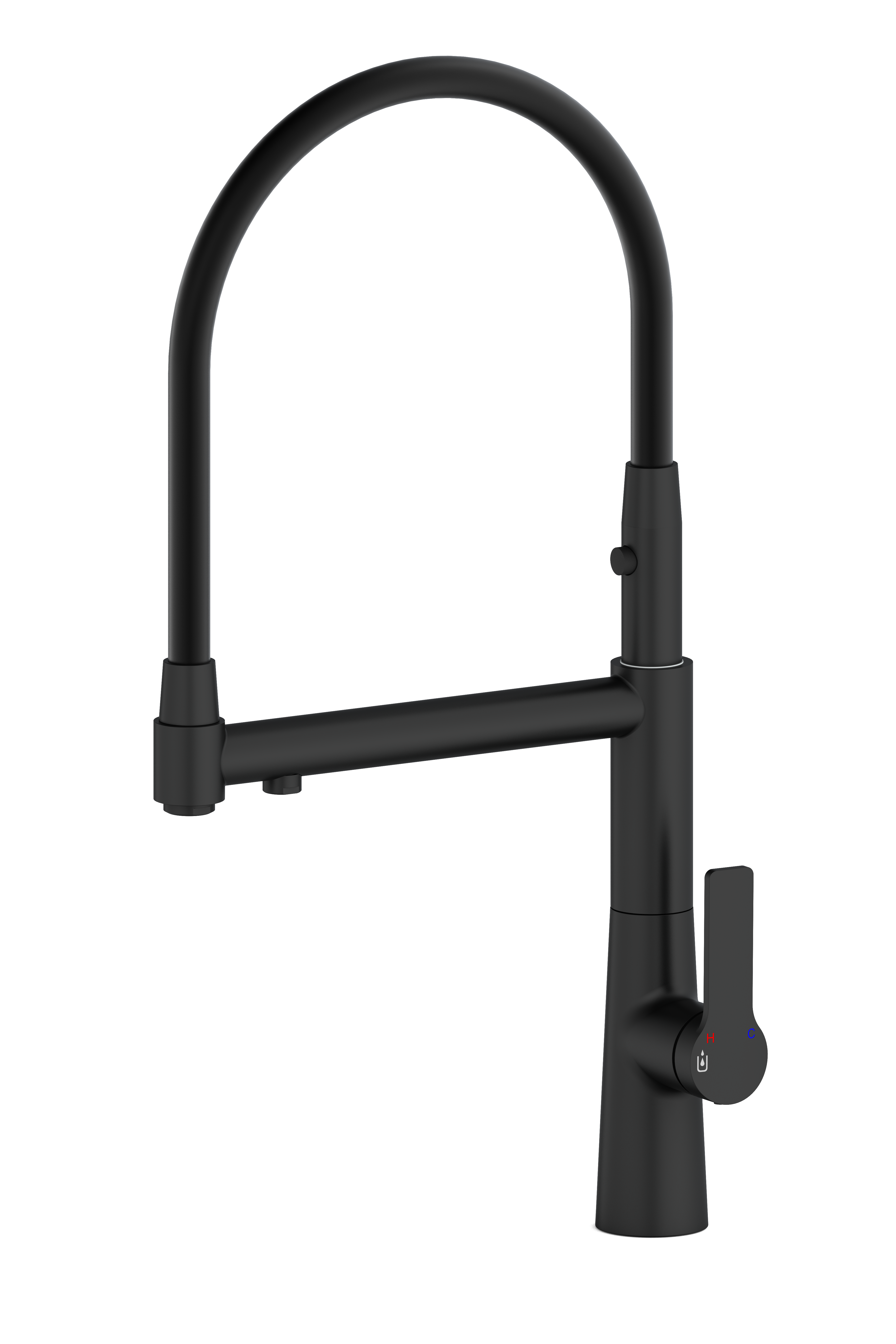
Community forums consistently highlight one specific grievance. Users frequently complain about spray wands that fail to retract properly. After a year of use, the wand begins dangling limply from the spout. This visually ruins the kitchen space. It also causes random splashing. Understanding how a pull faucet docks will save you from this notorious frustration.
Manufacturers solve wand retention using three primary mechanisms. You must assess these methods carefully before purchasing.
Gravity-Weighted Systems: This represents the traditional approach. A heavy lead or steel weight clamps onto the under-sink hose loop. When you release the wand, gravity pulls the weight down. This retracts the hose. However, this system requires completely unobstructed under-sink space. If the weight hits a garbage disposal or a plumbing pipe, the wand stops retracting halfway.
Mechanical Locking Clips: Some entry-level models use physical plastic notches. You push the wand into the spout, and a plastic clip holds it. These plastic notches wear down rapidly. The daily friction of docking and undocking quickly strips the retaining mechanism. Avoid these setups entirely.
Magnetic Docking: Modern designs integrate strong rare-earth magnets into both the spout ring and the spray head. When the wand approaches the spout, the magnets snap it securely into place. This completely neutralizes gravity sag. Magnets do not degrade from physical friction.
We strongly recommend a hybrid approach. Look for systems utilizing both a gravity-weighted hose and a magnetic docking collar. The weight provides the necessary pulling force to bring the hose back through the spout. The magnet then executes the final, secure lock. This redundant reliability guarantees your spray wand will never dangle.
The most severe implementation errors occur during physical installation. Product selection matters little if the unit physically conflicts with your existing kitchen architecture. You must measure three specific environmental constraints before making your final selection.
First, verify your handle clearance. This represents the ultimate trap for a single handle kitchen faucet. Many side-mounted levers require backward rotation to activate hot water. If your sink sits too close to the backsplash, the handle will smash into the wall. You will lose access to hot water entirely. To solve this, mandate a forward-only rotating handle. These levers start vertically for cold water and pull forward toward the user for hot water. They require zero rear clearance.
Second, evaluate the spout reach compared to your drain placement. The water stream should naturally hit directly over the center drain hole. If the spout is too short, you will constantly reach forward, causing back strain. If the spout stretches too far forward, the water pressure will hit the front basin wall. This causes excessive splashing onto your countertops and clothing. Measure the distance from your pre-drilled counter hole to the center of your drain to find your ideal spout reach.
Finally, inspect your existing hole configuration. Older sinks often feature three or four drilled holes. Modern setups usually require just one. If you plan to install a modern kitchen sink faucet into an older basin, you must cover the unused holes. Ensure your chosen model includes a matching deck plate. Plumbers refer to this plate as an escutcheon. A solid metal escutcheon safely bridges the gap and creates a seamless visual upgrade without requiring a brand-new sink basin.
The exterior finish handles daily exposure to acidic foods, abrasive sponges, and hard water minerals. You must differentiate between the internal body material and the exterior coating technology. The best internal bodies utilize solid brass or highly durable zinc alloys. However, the exterior skin dictates how the fixture ages over time.
Standard painted finishes chip easily. Basic electroplating tarnishes under harsh cleaning chemicals. To ensure longevity, you should seek out advanced coating technologies. The industry standard for extreme durability is Physical Vapor Deposition.
Finish Technology Comparison Chart | |||
Coating Technology | Durability Level | Scratch Resistance | Best Application |
|---|---|---|---|
Standard Powder Coating | Low to Medium | Prone to chipping | Low-traffic secondary sinks |
Basic Electroplating | Medium | Moderate | Standard chrome finishes |
PVD (Physical Vapor Deposition) | Exceptionally High | Highly resistant | Heavy daily use, luxury fixtures |
Spot-Resistant Coatings | High | Resists fingerprints | Matte black and brushed nickel |
Physical Vapor Deposition vaporizes the finish material and bonds it at a molecular level to the brass core. This process creates a skin nearly impervious to scratches, corrosion, and tarnishing. Furthermore, if you prefer brushed nickel or matte black, you must insist on spot-resistant coatings. These specific hydrophobic layers actively repel water droplets. They mitigate stubborn hard water stains and oily fingerprints.
You should establish strict cleaning assumptions. Avoid finishes requiring specialized abrasive cleaners. Specify that your daily maintenance should only require mild dish soap and warm water. A premium finish cleans effortlessly with a damp microfiber cloth.
Sourcing fixtures for scalable commercial projects requires a distinct strategy. Contractors, property managers, and volume buyers must look beyond residential aesthetics. Sourcing an OEM pull down faucet demands strict attention to legal compliance and parts standardization.
Certification standards form your absolute baseline for commercial viability. You must verify cUPC certification. This ensures the fixture meets rigorous plumbing performance benchmarks. Additionally, NSF/ANSI 61 compliance is non-negotiable. This standard guarantees the internal waterways remain entirely lead-free, protecting you from massive health liability. Commercial spaces must also prioritize ADA compliance. The lever must operate smoothly with one hand and require less than five pounds of physical force to activate.
Standardization of parts heavily impacts long-term operational efficiency. Large properties experience routine wear and tear. You must assess the availability of universal replacement cartridges, aerators, and hoses. Authentic OEM models must offer highly accessible supply chains for these maintenance parts. When an internal seal eventually fails in an apartment unit, maintenance teams need immediate access to drop-in replacements. Standardized parts ensure property managers can repair fixtures quickly. This strategy severely reduces long-term maintenance delays and keeps operations running smoothly.
A reliable high-arc kitchen fixture relies heavily on invisible mechanics rather than outward aesthetics. Balancing internal mechanical integrity with external spatial compatibility remains the true key to satisfaction. You guarantee success by prioritizing ceramic disc valves, hybrid magnetic docking systems, and PVD finishes.
Your immediate next steps involve active measurement. Grab a tape measure to check your overhead clearance and evaluate your backsplash distance. Count your sink’s pre-drilled hole configuration. Finally, shortlist models offering lifetime mechanical warranties. Taking these actionable steps ensures your investment withstands decades of rigorous daily use.
A: A high-quality fixture should reliably last 10 to 15 years with proper daily maintenance. The internal ceramic disc cartridges dictate this lifespan. They easily endure millions of turning cycles without leaking. However, the retractable nylon or steel hoses undergo constant bending stress. You may need to replace the internal hose assembly around the five-to-seven-year mark.
A: Yes, you absolutely can. You simply need to use a deck plate, commonly called an escutcheon. This metal base plate slides perfectly over the mounting shank. It securely bridges the gap and aesthetically covers the empty outer holes. Many premium models include a matching deck plate specifically for this conversion.
A: This typically happens due to under-sink obstructions. The gravity weight attached to the hose often catches on plumbing pipes, shut-off valves, or garbage disposals. Clear the pathway beneath the sink so the weight travels smoothly. Alternatively, if your fixture uses a plastic mechanical retention clip, the plastic notches may have worn out.
A: The transition is generally straightforward. The primary plumbing connections utilize the same standard 3/8-inch supply lines. However, you must account for the new under-sink spatial requirements. The retractable hose loop and its attached gravity weight need unobstructed vertical space to drop downward. Ensure your cabinet interior accommodates this moving part.