Views: 0 Author: Site Editor Publish Time: 2026-09-24 Origin: Site


Upgrading hotel bathrooms requires balancing premium guest experiences against strict facility maintenance constraints. Planners must also manage stringent capital expenditure limits during renovations. Traditional behind-the-wall plumbing complicates routine repairs heavily. They extend room downtime significantly when internal issues arise. Surface-mounted thermostatic panels are becoming the standard for modern commercial retrofits. They also dominate new builds across the hospitality sector. However, specifying the right unit requires rigorous evaluation of materials, safety compliance, and vendor capabilities.
This guide breaks down the essential technical specifications and compliance requirements you need. We explore the implementation risks architects and procurement managers must evaluate before shortlisting a system. You will learn how to streamline installation workflows. We also provide actionable strategies to secure long-term operational reliability for your property.
Surface-mounted panels drastically reduce out-of-order (OOO) room time by allowing front-access cartridge replacements without wall demolition.
Commercial specification must prioritize 304/316 stainless steel and verifiable ASSE 1016 anti-scald certifications to mitigate liability.
Retrofit feasibility relies on matching existing rough-in plumbing coordinates to the panel’s standard footprint.
Selecting a qualified B2B supplier requires vetting commercial warranties, volume lead times, and parts availability over 5–10 year horizons.
Hospitality facility managers face persistent challenges with legacy plumbing infrastructure. Standard concealed valves suffer from severe pressure fluctuations. Guests often experience the notorious "flushing toilet" temperature drop. This happens when adjacent rooms demand cold water simultaneously. Repairing these traditional systems demands extensive labor. When internal cartridges fail, maintenance teams must often break through expensive tile or marble. This process generates noise, dust, and debris. It renders the guest room unsellable for days. The resulting loss of Revenue Per Available Room (RevPAR) creates significant operational headaches.
To solve these structural flaws, properties now favor unified surface-mounted solutions. A comprehensive hotel shower system consolidates the mixing valve, showerhead, wand, and diverters into a single exterior unit. Plumbers mount this unit directly over existing finished walls. They connect it to the water supply lines through flexible rear hoses. This modular approach eliminates the need for complex behind-the-wall soldering during upgrades.
The primary success criteria for this shift revolve around maximizing operational efficiency and reducing room downtime. We achieve this through reduced installation labor and streamlined maintenance access. Surface-mounted units eliminate localized water damage risks behind the walls. Leaks happen outside the wall barrier, making them immediately visible. Maintenance staff can diagnose and fix issues before catastrophic structural rot occurs. This proactive approach keeps facilities running smoothly and protects the underlying building architecture.
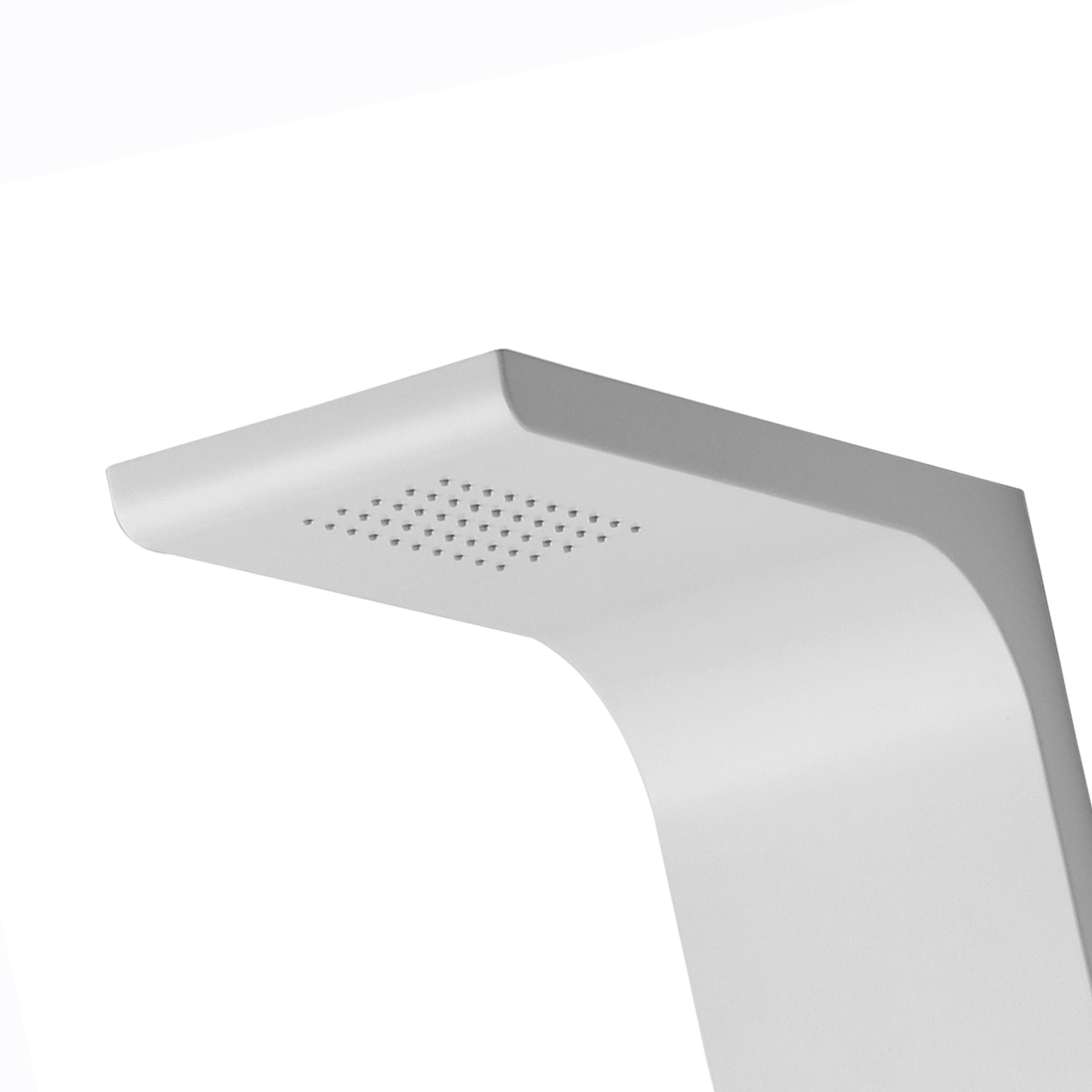
Hospitality environments expose fixtures to extreme wear and tear. You must specify 304 or 316 marine-grade stainless steel shower panel construction. Grade 304 provides excellent baseline corrosion resistance for standard hotel applications. Grade 316 includes molybdenum, making it superior for coastal properties exposed to salt air. Both alloys withstand heavy daily usage without bending or degrading.
You should strictly avoid plastic or thin aluminum housings. They warp under high-traffic commercial use rapidly. Housekeeping staff use aggressive industrial cleaning agents daily. These chemicals degrade inferior materials, causing them to crack, peel, or discolor within the first year. We highly recommend evaluating PVD (Physical Vapor Deposition) finishes for your specified units. PVD coatings bond at the molecular level. They provide exceptional resistance against scratches, fingerprints, and hard-water staining. This finish keeps the bathroom looking pristine while reducing the daily cleaning burden on your housekeeping staff.
The internal mechanics dictate the overall reliability of the fixture. You must define the requirement for a true thermostatic cartridge. A true thermostatic element reacts to actual temperature changes via an internal wax motor. It maintains the output temperature within a strict ±1°C variance. This technology vastly outperforms standard pressure-balancing valves. Pressure-balancing units only react to volume changes. They often fail to deliver a premium, consistent shower experience.
Furthermore, internal plumbing integrity is non-negotiable. Require braided stainless steel or reinforced EPDM (Ethylene Propylene Diene Monomer) internal hoses. Cheap PVC or standard rubber hoses degrade rapidly under constant thermal expansion and contraction. Reinforced hoses prevent catastrophic burst risks behind the panel. They ensure water moves safely from the intake valves to the showerhead and wand.
Best Practices for Internal Components:
Verify ceramic disc valves are rated for at least 500,000 activation cycles.
Ensure internal manifolds utilize lead-free brass rather than zinc alloys.
Check for integrated check valves to prevent cross-contamination between hot and cold water lines.
Specify high-flow cartridge designs to prevent pressure bottlenecks.
It is tempting to select highly complex panels to impress guests. However, you should advise against multi-jet configurations. Body jets increase water usage dramatically. They also cause massive maintenance bloat. Body jets clog easily in areas with hard water. They often lack sufficient water pressure in high-rise hotel applications. Guests frequently find multi-valve systems confusing to operate.
Instead, recommend a streamlined, intuitive setup. A thermostatic shower panel should feature an overhead rainfall shower and a durable handheld wand. Incorporate a simplified diverter to reduce guest confusion. A single knob for temperature and a single knob for function creates the ideal user interface. This streamlined approach minimizes maintenance calls. It also guarantees a luxurious, frustration-free experience for the guest.
Navigating commercial plumbing codes requires strict attention to detail. Ignoring these standards opens the property to severe legal liabilities and failed municipal inspections.
Anti-Scald Liability: Mandatory compliance with ASSE 1016, ASME A112.18.1, and CSA B125.1 is critical. These standards govern performance requirements for automatic temperature control valves. The thermostatic shower system must shut off water flow automatically if the cold water supply fails. Scald injuries pose one of the highest liability risks in the hospitality industry. A certified thermostatic cartridge acts as an absolute safeguard against these incidents. Always demand testing certificates from the manufacturer before specifying a unit.
Water Efficiency (LEED/WaterSense): Corporate ESG (Environmental, Social, and Governance) mandates drive procurement decisions today. You must specify maximum flow rates to meet local plumbing codes. Typically, modern panels restrict flow to 1.5 or 1.75 GPM (Gallons Per Minute). Utilizing advanced air-injection aerators helps achieve these targets. Air-injection mixes ambient air with the water stream. This creates large, voluminous droplets. It satisfies corporate sustainability mandates without compromising the perceived spray pressure for the guest.
ADA Compliance: Accessible guest rooms require highly specific layouts. When specifying panels for ADA (Americans with Disabilities Act) compliant rooms, consider the placement of handheld wand brackets. You often need adjustable slide bars mounted at lower heights. Furthermore, ADA guidelines dictate specific operational forces. Ensure control knobs do not require tight grasping, pinching, or twisting of the wrist to operate. Lever-style handles generally meet these accessibility requirements better than smooth, round knobs.
The installation context heavily dictates your specification parameters. Retrofitting presents entirely different challenges compared to fresh builds.
Retrofitting: You must carefully assess the dimensions of existing plumbing rough-ins. Legacy properties often have wide valve configurations behind the wall. The new panel must be wide and tall enough to cover the old valve holes in existing solid surface or tile walls. If the panel is too narrow, you will need custom escutcheon plates. This adds unwanted time and complexity to the installation. Always measure the distance between the hot and cold supply lines. Ensure the new panel’s flexible intake hoses can reach them without kinking.
Downtime Management: Highlight the massive installation speed advantage of panel systems. Surface mounting circumvents the need for specialized tile masons. A trained maintenance technician can often complete the installation in under two hours per room. This rapid turnaround allows the hotel to return the room to the active inventory on the same day.
Project Type | Plumbing Alignment | Downtime Impact | Key Consideration |
|---|---|---|---|
Retrofit | Must match existing rough-in spread. | Low (1-2 hours per room). | Panel width must cover legacy wall damage. |
New Construction | Standardized during the framing phase. | Seamless integration into build schedule. | Requires coordination with waterproofing teams. |
You must require systems with straightforward front-panel access. Facility teams operate under strict time constraints. They must be able to perform routine maintenance without pulling the fixture off the wall. The ideal design features a removable faceplate or easily accessible cartridge housing.
Standard Maintenance Protocol for Commercial Panels:
Line Flushing: Technicians must flush lines periodically to remove sediment. Access ports should be easily reachable.
Filter Cleaning: Inline mesh filters trap debris before it enters the thermostatic cartridge. These filters require quarterly inspection and cleaning.
Cartridge Replacement: When wax elements fail, technicians should slide the old cartridge out from the front. They insert the new one without breaking the wall seal.
Surface Descaling: Housekeeping applies mild descaling agents to silicone nozzles to maintain optimal flow patterns.
By enforcing these accessibility requirements, you empower your maintenance staff. They can resolve guest complaints in minutes rather than days.
Procuring hardware for a 100+ room property involves significant logistical risks. Selecting a qualified B2B vendor requires looking past the glossy product brochure.
Manufacturing & Phased Rollouts: Assess the shower panel supplier’s capacity to handle phased delivery schedules. Hotels rarely renovate all rooms simultaneously. They renovate floor by floor to maintain revenue streams. Your vendor must guarantee synchronized deliveries that align with your construction milestones. Evaluate their raw material sourcing and manufacturing bandwidth. You cannot afford supply chain delays stalling your project.
Commercial Warranties: You must differentiate between residential and commercial warranties. Many suppliers offer "lifetime" residential warranties. However, they void these agreements immediately upon installation in a hospitality setting. Demand strict commercial warranties. These policies should cover high-cycle usage explicitly. Look for comprehensive coverage on finish degradation, cartridge failure, and structural warping.
Parts Continuity: Verify the supplier guarantees replacement part availability for a minimum of 5 to 10 years. Hotel renovations operate on long cycles. If a diverter knob breaks in year four, you need an exact replacement. If the supplier sunsets the product line without supporting legacy parts, you face forced obsolescence. You will have to replace the entire panel due to a single failed component.
Customization: Evaluate the supplier's ability to modify standard product lines. Commercial architecture often features unique constraints. You might need shorter panels to accommodate low drop ceilings. You might require custom PVD finishes to match existing vanity hardware. A capable B2B supplier employs in-house engineering teams. They adapt standard dimensions or finishes to fit your specific architectural design constraints seamlessly.
Specifying the right thermostatic panel requires looking past surface-level aesthetic design. You must prioritize internal component quality and rigorous compliance standards. Maintenance accessibility stands out as a critical operational necessity. High-grade materials and verified anti-scald mechanisms protect both your guests and your facility. Furthermore, partnering with a proven commercial supplier mitigates long-term supply chain and warranty risks.
We advise decision-makers to take a methodical approach to procurement. Request a detailed technical spec sheet and precise CAD files from your shortlisted vendors. Always order a physical sample first. Build a "mock-up room" to conduct a thorough pilot test. Let your maintenance and housekeeping teams evaluate the unit extensively. Gather their feedback on installation ease and cleaning efficiency before committing to a property-wide purchase order.
A: Yes. You can install them seamlessly provided the hot and cold supply lines align with the panel’s flexible intake hoses. You must also ensure the mounting brackets can anchor securely into structural backing behind the wall. Appropriate drill bits and commercial-grade waterproof sealants are required to protect the existing tile finish.
A: They typically last 3 to 5 years in high-traffic hotel environments. This lifespan depends heavily on local water hardness and routine maintenance schedules. You will need a reliable supplier that offers easily accessible replacement parts to maintain system longevity without replacing the entire panel.
A: Pressure-balancing valves react only to water volume changes. A thermostatic valve reacts to actual temperature fluctuations using an internal wax motor. This offers superior scald protection. It provides precise guest control, ensuring the temperature remains constant even if toilets flush nearby.