Views: 0 Author: Site Editor Publish Time: 2026-09-02 Origin: Site


Rising consumer demand for point-of-use home water filtration currently drives massive B2B market growth. Modern households increasingly rely on advanced under-sink filtration systems. This shift creates a significant business opportunity for distributors and retailers worldwide. However, importers face a highly complex core challenge today. You must successfully source a reliable water filter kitchen faucet for your catalog. This product must balance rigorous health compliance alongside attractive aesthetic market appeal. You also require robust manufacturing quality to prevent costly return rates.
Failing to secure these elements damages brand reputation quickly. Therefore, buyers need a practical method to vet products before committing capital. This article provides a pragmatic, evidence-based evaluation framework. We help you thoroughly assess critical product specifications. You will also learn how to evaluate manufacturing partners effectively. Armed with these insights, you can confidently secure bulk orders of high-quality filtration fixtures.
Compliance is paramount: Validated NSF/ANSI 61 and 372 (lead-free) certifications are non-negotiable to mitigate legal and reputational risks.
Material integrity drives ROI: Solid brass or 304/316 stainless steel waterways with high-grade ceramic cartridges drastically reduce leak-related product returns.
Aesthetic compatibility sells: End-users prioritize drinking water faucets that perfectly match their primary single handle kitchen faucet in finish and style.
Supplier capability matters as much as the product: A reliable kitchen faucet supplier must demonstrate transparent QC processes, from raw material casting to final pressure testing.
You cannot ignore regional drinking water safety standards. In the United States, the Safe Drinking Water Act dictates strict material guidelines. The United Kingdom relies on WRAS regulations to ensure public water safety. These frameworks establish the baseline legal requirements for all plumbing fixtures. They protect public health by strictly regulating internal material composition. Importers must understand these regional codes thoroughly before procuring inventory. Selling non-compliant fixtures exposes your business to immediate regulatory action.
Lead contamination remains a critical global health concern. Regulatory bodies strictly enforce mandates limiting heavy metal exposure. Importers must comply completely with NSF/ANSI 372 standards. This specific standard requires internal waterways to contain less than 0.25% weighted average lead. You must request verifiable third-party testing reports from your manufacturer. Do not accept unverified internal factory documents. Independent laboratories like IAPMO or CSA provide the necessary legal verification. Verifying these documents protects your customers and your business.
Internal components pose hidden water contamination risks. Rubber O-rings, assembly lubricants, and internal hoses must meet NSF/ANSI 61 standards. This crucial standard ensures internal parts do not leach volatile organic compounds. Toxins entering the filtered water supply pose severe health hazards. You must verify every single component contacting the drinking water. Even a small non-compliant silicone gasket can fail a laboratory test. Strict adherence ensures the filtration system delivers truly clean water.
Importing uncertified white-label products is incredibly risky. Falsely certified items carry massive financial penalties for importers. Legal actions from regulatory bodies can easily bankrupt a growing business. Product recalls destroy consumer trust almost instantly. Competitors will leverage your compliance failures to capture your market share. Always prioritize authentic certifications over superficial unit cost savings. The long-term stability of your brand depends on these verifiable safety standards.
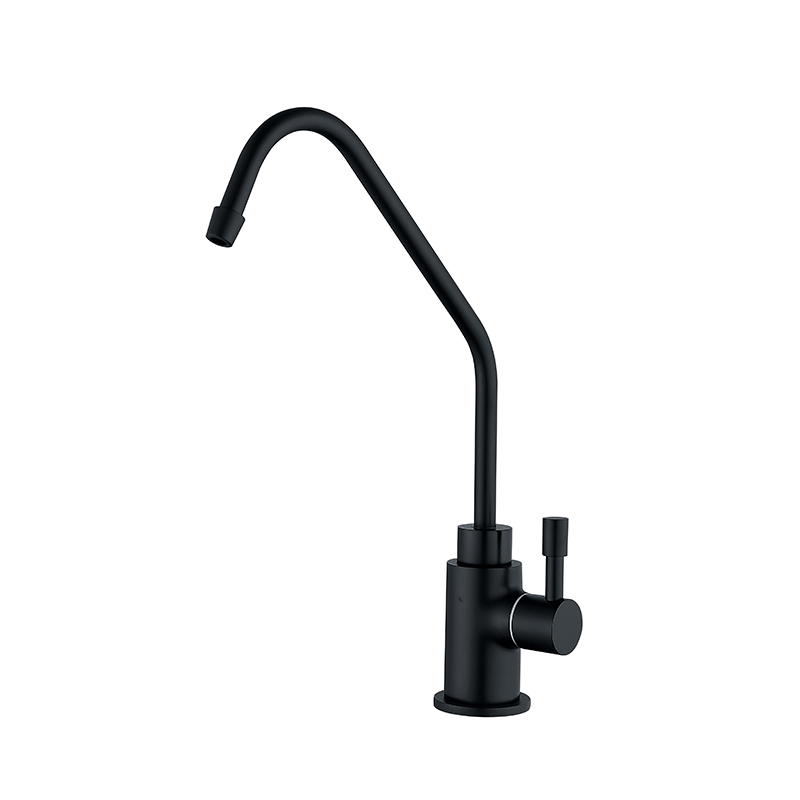
Material choice directly impacts product longevity and retail pricing. Buyers usually choose between stainless steel and brass alloys. You must evaluate regional water qualities before selecting your base materials. Highly purified Reverse Osmosis water is surprisingly corrosive. It strips minerals from standard metals over time.
Material Type | Corrosion Resistance | Best Application | Price Point |
|---|---|---|---|
304/316 Stainless Steel | Exceptionally High | Reverse Osmosis (RO) Systems | Premium |
DZR (Dezincification Resistant) Brass | High | Standard Carbon Filtration | Mid-to-High |
Standard Zinc Alloy | Low | Not Recommended for Drinking Water | Economy |
Stainless steel resists aggressive RO water perfectly. DZR brass prevents zinc leaching in standard municipal water environments. Selecting the correct metal prevents structural degradation and dangerous leaks.
The ceramic disc cartridge functions as the faucet engine. Sourcing unbranded cartridges leads directly to immediate drip complaints. You must specify extensively cycle-tested components for your orders. Brands like Sedal or Kerox provide excellent mechanical reliability. We recommend confirming a minimum lifespan of 500,000 operational cycles. This benchmark guarantees drip-free performance for many years. Skimping on cartridge quality guarantees high warranty replacement rates.
Older fixture models often utilized cheap PVC internal hosing. PVC breaks down and contaminates drinking water over time. Modern manufacturing has transitioned to PEX or high-grade food-safe silicone. These advanced synthetic materials prevent dangerous chemical leaching. They also improve internal pressure tolerance significantly. This structural upgrade reduces the risk of under-sink hose bursts. High-quality internal tubing remains essential for overall product safety.
Consumers care deeply about their modern kitchen aesthetics. Buyers want their secondary fixture to seamlessly complement existing hardware. They look for a drinking water faucet matching their primary sink setup perfectly. Aesthetic incompatibility causes many abandoned online shopping carts. Your product catalog must offer matching silhouettes and coordinated design languages. Stocking complementary styles increases average order values significantly.
You must stock the most popular finish options globally. Brushed Nickel, Matte Black, Brushed Gold, and Polished Chrome lead the market. You must evaluate the factory application method carefully. Physical Vapor Deposition (PVD) offers superior scratch resistance and longevity. Electroplating provides a cost-effective alternative but may wear faster over time. Always request independent salt spray test results. These tests verify finish durability against daily household wear and tear.
The consumer market remains split on preferred fixture types. Many homeowners prefer a dedicated secondary tap for filtered water. However, modern kitchens increasingly feature streamlined integrated designs. A 3-way integrated single handle kitchen faucet dispenses hot, cold, and filtered water. These multifunctional units save valuable counter space. They also eliminate the need to drill granite countertops. Assess your target demographic carefully to determine the ideal product mix.
Seamless compatibility drives highly positive user installation experiences. Verify your chosen fixture uses standard inlet sizes globally. Most major under-sink filtration systems require 1/4-inch or 3/8-inch quick-connect fittings. Reverse Osmosis and Carbon Block systems utilize these standardized dimensions universally. Non-standard proprietary fittings frustrate plumbers and increase return rates. Providing universally compatible adapters inside the box is a smart practice.
Filtration efficacy depends entirely on appropriate water velocity. A filter kitchen faucet must balance flow rate and contact time. Standard residential units should support 0.5 to 1.0 Gallons Per Minute (GPM). Exceeding this rate creates excessive backpressure on the RO membrane. It also reduces the filter housing's contaminant removal capability drastically. You must ensure the aerator regulates flow properly. Proper flow rates guarantee the filter media performs exactly as advertised.
Understanding structural differences prevents severe plumbing code violations. Air Gap faucets feature a built-in siphon break mechanism. This structural design prevents contaminated drain water from backing up. Reverse Osmosis systems often require Air Gap units by municipal law. Non-Air Gap models have a simpler design and much easier installation. Identify which regional plumbing codes dictate these specific requirements. Stocking both variations ensures you capture the widest possible market share.
A polished specification sheet rarely tells the entire story. You need to look deeply into daily factory operations. Ensure the manufacturing facility holds a valid ISO 9001 certification. A reliable kitchen faucet supplier provides traceable batch testing records immediately. Transparent documentation proves consistent and reliable manufacturing standards. You should also verify their raw material sourcing chain. Strong factories maintain tight control over their brass and steel suppliers.
Credible manufacturers never outsource their essential quality control checks. They must have dedicated on-site testing facilities operating daily. Key testing capabilities to look for include:
Salt Spray Testing: Verifies finish durability and corrosion resistance against harsh environments.
High-Pressure Pneumatic Testing: Subjects 100% of assembled units to air leak tests before shipping.
Hydrostatic Burst Testing: Ensures waterways can handle extreme pressure spikes safely.
Lifecycle Mechanical Testing: Simulates years of daily handle operation to test cartridge wear.
A factory lacking these in-house machines cannot guarantee consistent batch quality.
Market differentiation often requires unique product customization. Assess the manufacturer's ability to modify production tooling efficiently. You may need custom spout reaches or localized compliance adjustments eventually. Strong production partners offer excellent OEM and ODM flexibility. They accommodate specific handle designs without demanding exorbitant Minimum Order Quantities (MOQs). A flexible supplier scales alongside your growing business operations.
Successful importation relies entirely on looking past superficial aesthetics. You must verify internal component safety and factory-level quality control rigorously. Prioritize authentic NSF/ANSI certifications to protect your brand reputation. Select premium base materials to eliminate expensive warranty replacements. Always match trending finishes to meet modern consumer demands.
We advise importers to always request physical sample units first. Perform local, independent pressure and material teardown testing immediately. Do this before signing any mass-production contracts. We strongly encourage buyers to consult our engineering team today. Review our comprehensive compliance documentation online. Request a sample of our certified filtration faucets to experience true quality firsthand.
A: Air gap faucets feature a built-in physical siphon break. This design prevents dirty drain water from flowing backward into an RO system. Many local plumbing codes require air gaps for Reverse Osmosis units. Non-air gap faucets lack this siphon break. They connect directly to standard inline filters and offer a simpler, cleaner installation.
A: Never rely solely on provided PDF certificates. You should check the certification body’s official online directory directly. Visit the NSF, IAPMO, or CSA websites. Enter the factory's specific registration number into their database. This confirms the certificate remains active and covers your specific product model.
A: Yes, they require specific installation considerations. A 3-way faucet combines standard hot and cold water with a dedicated filtered waterway. It connects to three separate supply lines under the sink. You must ensure you have adequate clearance space below the counter. The system requires room for both standard valves and the bulky filtration housing.
A: Premium suppliers maintain an extremely low defect rate. An acceptable benchmark is typically less than 1-2%. Top-tier manufacturers achieve this by utilizing 100% pneumatic air testing post-assembly. If your supplier reports a higher defect rate, they likely lack proper in-line quality control processes.