Views: 0 Author: Site Editor Publish Time: 2026-10-02 Origin: Site


Transitioning from traditional center drains to linear systems solves distinct spatial and drainage problems in modern bathroom design. You instantly eliminate awkward tile cuts and simplify floor geometry. They also streamline water flow across your entire shower area. While aesthetic appeal drives initial interest, specifying a stainless steel linear floor drain requires evaluating flow rates, material durability, and waterproofing compatibility. Subpar materials degrade rapidly under daily exposure to harsh cleaners. Poor sizing often leads to flooded floors and water damage outside the shower enclosure. A beautiful metallic finish means nothing if the underlying plumbing integration fails. This guide provides a practical framework to evaluate technical specifications and mitigate common installation risks before procurement. You will learn about crucial material grades and gauge thickness requirements. We also explore sizing logic, strategic placement, and necessary grate selection criteria. By following these engineering principles, you ensure long-lasting performance and completely seamless design integration.
Material Baseline: 304 stainless steel offers the optimal balance of corrosion resistance and cost for standard bathrooms.
Structural Advantage: Linear shower drains require only a single-direction floor slope, enabling the use of large-format tiles and curbless (barrier-free) designs.
Flow Capacity: Drain size and outlet diameter must exceed the combined Gallons Per Minute (GPM) output of all showerheads.
Maintenance Reality: Long-term satisfaction depends heavily on the accessibility of hair strainers and the cleanability of the grate profile.
Traditional center square drains demand complex floor grading. Installers must pitch the mortar bed in four separate directions converging at the center. This compound slope forces tile setters to cut large tiles into pieced-together geometric shapes. Diagonal grout lines often look messy. Linear channels entirely eliminate this issue. You only need a simple, single-direction slope toward the channel. Installers can easily lay unbroken, large-format tiles across the entire floor. This unified surface visually expands the space and reduces grout maintenance.
Modern design strongly favors accessibility and universal utility. You can position the drain precisely at the shower threshold or against the rear wall. This strategic placement facilitates curbless, barrier-free entries. ADA-compliant showers rely on this seamless transition from dry floor to wet zone. Wheelchairs, walkers, and individuals experiencing mobility limitations can roll or step smoothly across the threshold. You remove hazardous tripping obstacles while maintaining a sleek, minimalist aesthetic.
Luxury showers frequently feature multiple water sources working simultaneously. Rain heads, handheld wands, and high-pressure body sprays generate massive water output. A standard center drain easily becomes overwhelmed by this sudden volume. A linear shower drain offers a significantly larger surface area for water capture. The extended channel collects water across the entire width of the enclosure. This high capacity prevents rapid pooling and prevents floods from breaching the bathroom threshold.
Material chemistry dictates the lifespan of your plumbing fixtures. The industry standard overwhelmingly points to the 304 grade family. This specific alloy contains high levels of chromium and nickel. It provides sufficient rust and corrosion resistance for 95% of residential and commercial indoor bathroom environments. It handles daily moisture, soap, and standard cleaners exceptionally well.
Alternatively, designers occasionally specify 316 grade. Professionals refer to this as marine-grade steel. It contains added molybdenum for extreme durability. You only need 316 grade for outdoor showers exposed to coastal salinity. Commercial facilities handling harsh industrial chemicals also require this upgrade. Standard residential projects do not require the premium expense of 316 steel.
Budget manufacturers often substitute premium metal for inferior materials. They heavily promote plastic channels made from PVC or ABS. While cheaper upfront, these plastics degrade rapidly. Constant exposure to hot water causes thermal expansion. Plastic channels warp, detach from waterproofing membranes, and eventually leak. Low-grade metal alloys present similar dangers. They frequently discolor, pit, or develop surface rust after just a few months of cleaning. We strongly advise investing in a genuine 304 stainless steel floor drain to guarantee decades of structural integrity.
Metal gauge determines the mechanical strength of the channel and grate. A lower gauge number indicates thicker steel. Thicker steel prevents the grate from deflecting or bending when you stand on it. Cheap, thin-gauge grates warp underfoot and pop out of their frames. Furthermore, thick channels maintain their precise rectangular shape during installation. Heavy wet concrete places immense lateral pressure on the channel body during the curing phase. Flimsy steel distorts under this pressure, compromising the final tile fit.
Material Type | Corrosion Resistance | Structural Integrity | Best Application Scenario |
|---|---|---|---|
304 Stainless Steel | High | Excellent (if heavy gauge) | Indoor residential and commercial bathrooms |
316 Stainless Steel | Maximum | Excellent | Outdoor coastal showers, industrial wet rooms |
PVC / ABS Plastic | Immune to rust | Poor (Prone to warping) | Temporary or ultra-low budget retrofits |
Cheap Metal Alloys | Low (Prone to pitting) | Moderate to Low | Not recommended for any permanent installation |
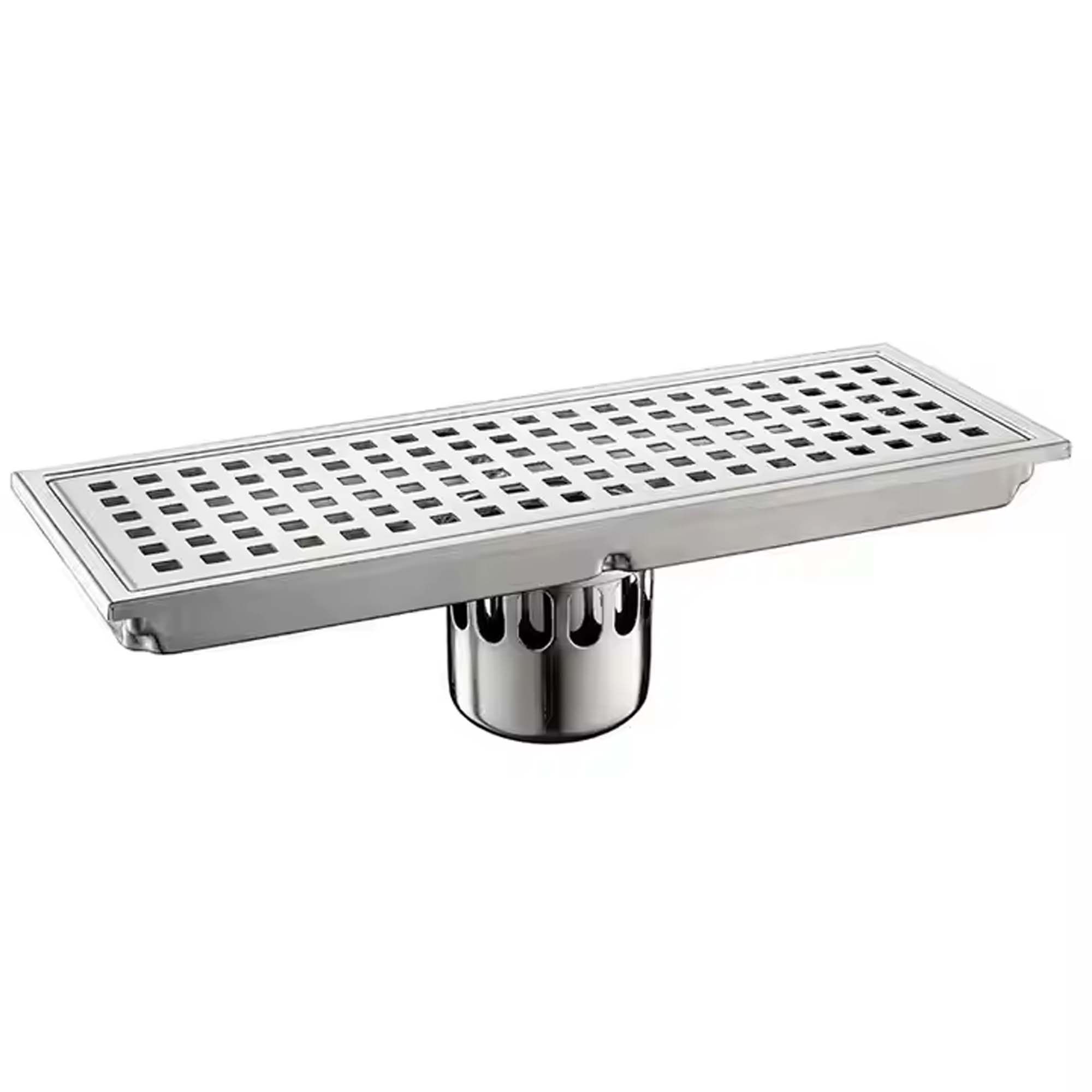
Proper specification requires careful mathematical planning rather than mere visual preference. You must match the drain outlet capacity to the shower fixture's maximum output. First, calculate the combined Gallons Per Minute (GPM). Add up the flow rates of every showerhead, wand, and body spray operating simultaneously. Standard 2-inch outlets typically handle 8 to 10 GPM safely. If your luxury setup generates 12 GPM, a standard outlet will fail to keep up. High-flow environments require larger 3-inch outlets. Sometimes, specialized designs incorporate dual outlets to manage extreme water volumes.
Your chosen placement dictates how the entire floor must be graded. You generally have two primary strategic options.
Against the Wall: This remains the simplest and most common floor grading method. Installers pitch the floor uniformly toward the back wall. Users never stand directly on the metal grate while showering. It hides the plumbing neatly at the edge of the visual field.
At the Threshold: This placement sits directly across the shower entrance. It creates a strict wet/dry zone boundary. Threshold placement proves ideal for curbless designs. It captures splash-out before water can enter the main bathroom area.
Choosing the correct length involves balancing aesthetics and water management. Wall-to-wall installation remains the premium choice. The channel spans exactly from the left wall to the right wall. This leaves no dead space for water to pool in the corners. It requires highly accurate measurements and custom ordering. Conversely, leaving standardized gaps on either end simplifies the ordering process. You buy a standard 36-inch unit for a 40-inch wide shower. The installer fills the remaining gaps with pitched tile. Standard sizes save money but require slightly more complex tile detailing at the edges.
Many interior designers favor a tile insert floor drain for ultra-modern renovations. The grate features a hollow tray instead of a solid metal top.
Pros: It creates an almost invisible, seamless floor design. Installers embed the surrounding bathroom tile directly into the metal tray. The drain virtually disappears into the floor pattern.
Cons: The design reduces the overall open area for water to enter. Water can only slip through a narrow perimeter gap. It handles slightly lower GPM than open grates. It also requires highly precise, chip-free tile cutting during installation.
Wedge wire grates consist of thick, triangular stainless steel bars welded together. They offer exceptional performance in high-traffic areas.
Pros: This design maximizes water flow capacity. The wide open slots swallow water rapidly. The heavy steel bars are highly durable. Furthermore, the smooth metal surface is significantly less prone to soap scum buildup.
Cons: They present a more visually prominent, industrial look. The bold metallic lines clash with softer, traditional bathroom aesthetics.
Manufacturers stamp geometric patterns (squares, waves, or floral shapes) out of a flat steel plate. These represent the most budget-friendly aesthetic options.
Pros: They offer diverse visual styles at a lower price point. They fit easily into transitional or traditional bathroom designs.
Cons: Intricate stamped patterns often trap hair and debris easily. The sharp internal corners of the cutouts grab onto lint. Cleaning a highly patterned grate takes more physical scrubbing.
Grate Design | Visual Impact | Flow Capacity (GPM) | Maintenance Difficulty |
|---|---|---|---|
Tile Insert | Minimal / Invisible | Moderate | Moderate (Requires lifting key) |
Wedge Wire | Prominent / Industrial | Maximum | Low (Easy wipe down) |
Punched Pattern | Decorative | Moderate to High | High (Debris traps in corners) |
Even the finest hardware fails catastrophically if improperly sealed. You must evaluate the drain’s flange design before purchasing. Traditional thick-bed mortar installations require a mechanical clamping ring. Modern thin-bed installations use a bonding flange. Ensure your chosen model explicitly supports your waterproofing strategy. The flange must bond perfectly with topical liquid membranes (like RedGard) or sheet membranes (such as Schluter or Kerdi systems). Mixing incompatible drain bases with unapproved membranes guarantees structural rot and lower-level ceiling leaks.
Linear channels demand specific height clearance inside the subfloor cavity. You must evaluate your joist layout early in the planning phase. The floor structure must accommodate both the linear channel depth and the associated P-trap assembly. You want to avoid raising the overall bathroom floor height unnecessarily. Raising the subfloor introduces steps, completely negating the barrier-free benefits of curbless design. If joists run parallel to your desired placement, installation is straightforward. If they run perpendicular, structural framing modifications become mandatory.
Daily usage introduces massive amounts of hair, soap residue, and environmental dirt. Long-term satisfaction depends entirely on routine maintenance ease. Prioritize models featuring an easily removable grate. High-quality kits include a specialized metal lifting key to pull the grate without scratching the surrounding tile.
Next, verify the inclusion of an accessible hair strainer basket. The basket should be made of stainless steel, not brittle plastic. Finally, inspect the internal channel body. Avoid designs with deep, inaccessible crevices or sharp right angles. These hidden pockets harbor mold and mildew aggressively. A premium bathroom floor drain features a sloped, internally smooth channel. This encourages debris to wash directly toward the trap rather than sticking to the walls.
Upgrading your drainage architecture fundamentally improves both room safety and aesthetic appeal. Base your final decision on three absolute non-negotiables. You must verify flow rate compatibility against your shower fixtures first. Next, ensure seamless integration with your chosen waterproofing membrane system. Finally, insist on true 304 or higher stainless steel construction to prevent structural degradation.
Take proactive steps before finalizing any plumbing orders. Consult with your tile setter and plumber simultaneously on-site. Have them review the subfloor clearance and joist directions. Confirm your selected channel matches their preferred waterproofing method exactly. Early collaboration prevents expensive mid-project modifications and ensures decades of leak-free performance.
A: Yes, but your chosen placement strictly dictates the floor slope direction. Installers must grade the entire wet area toward the channel. Wall and threshold placements are standard because they only require a simple, single-plane slope. Placing it in the center complicates tile work and requires multi-directional pitching.
A: Slightly. While the perimeter water channel is narrower, routine maintenance remains highly manageable. High-quality models always come with dedicated lifting keys. You use this tool to easily pop out the heavy tile tray. This instantly provides wide-open access to the debris basket and plumbing trap below.
A: While local building codes do not always mandate it, we highly recommend one. A secondary floor drain in the main bathroom area serves as a critical fail-safe. It effectively protects your home against sudden plumbing leaks, overflowing sinks, and general water escape in open wet-room designs.