Views: 0 Author: Site Editor Publish Time: 2026-09-10 Origin: Site


Designing a luxury bathroom often brings a frustrating clash of ideas. You want high-end, clean aesthetics. However, you also face strict, practical plumbing realities. Striking the right balance feels incredibly difficult for most homeowners. Your ultimate choice between a wall mount basin faucet and a traditional top-mount design goes beyond pure style. It represents a serious structural commitment for your property. This single fixture significantly impacts your project timelines. It alters labor budgets. It also dictates your long-term maintenance efforts. We will explore these two popular configurations in detail. You will discover a strict, evidence-based evaluation framework below. Homeowners, designers, and contractors can use this guide daily. They can confidently finalize their plumbing fixtures without facing future regrets.
Structural Impact: Wall-mounted configurations require in-wall plumbing (rough-in valves) and open-wall access, making them ideal for full guts but costly for simple retrofits.
Spatial Efficiency: Wall-mounted fixtures free up valuable vanity counter space, while top-mount models offer straightforward, accessible installation.
Sink Compatibility: Vessel sinks naturally pair with wall mounts to clear height restrictions, whereas standard undermount sinks work seamlessly with traditional top mounts.
Material Imperative: When plumbing is hidden behind drywall, investing in heavy-duty materials like a solid brass basin faucet is a non-negotiable risk mitigation strategy against hidden leaks.
Understanding the fundamental mechanics behind these fixtures is essential. A top mount basin faucet represents the industry standard. Most people know this as a deck-mount configuration. Plumbers install it directly into pre-drilled holes on the sink deck. They can also mount it directly on the vanity countertop. The setup relies on absolute simplicity. Plumbing supply lines connect easily within the vanity cabinet. The water valves remain completely accessible beneath the sink.
The wall-mounted infrastructure demands a totally different approach. It requires a specialized plumbing component called a rough-in valve. Plumbers anchor this solid metal valve directly to the wooden wall studs. They must complete this step behind the drywall or backer board. The spout and handles eventually protrude over the basin. This design completely detaches the water source from the vanity furniture. The vanity simply holds the sink basin.
Table 1: Structural Differences Between Faucet Configurations
Feature | Top-Mount Configuration | Wall-Mounted Configuration |
|---|---|---|
Installation Location | Sink deck or vanity countertop | Inside the wall cavity |
Valve Access | Underneath the vanity cabinet | Hidden behind drywall and tile |
Plumbing Complexity | Low (Basic hand tools required) | High (In-wall rough-in required) |
Ideal Sink Type | Undermount or drop-in sinks | Tall vessel or trough sinks |
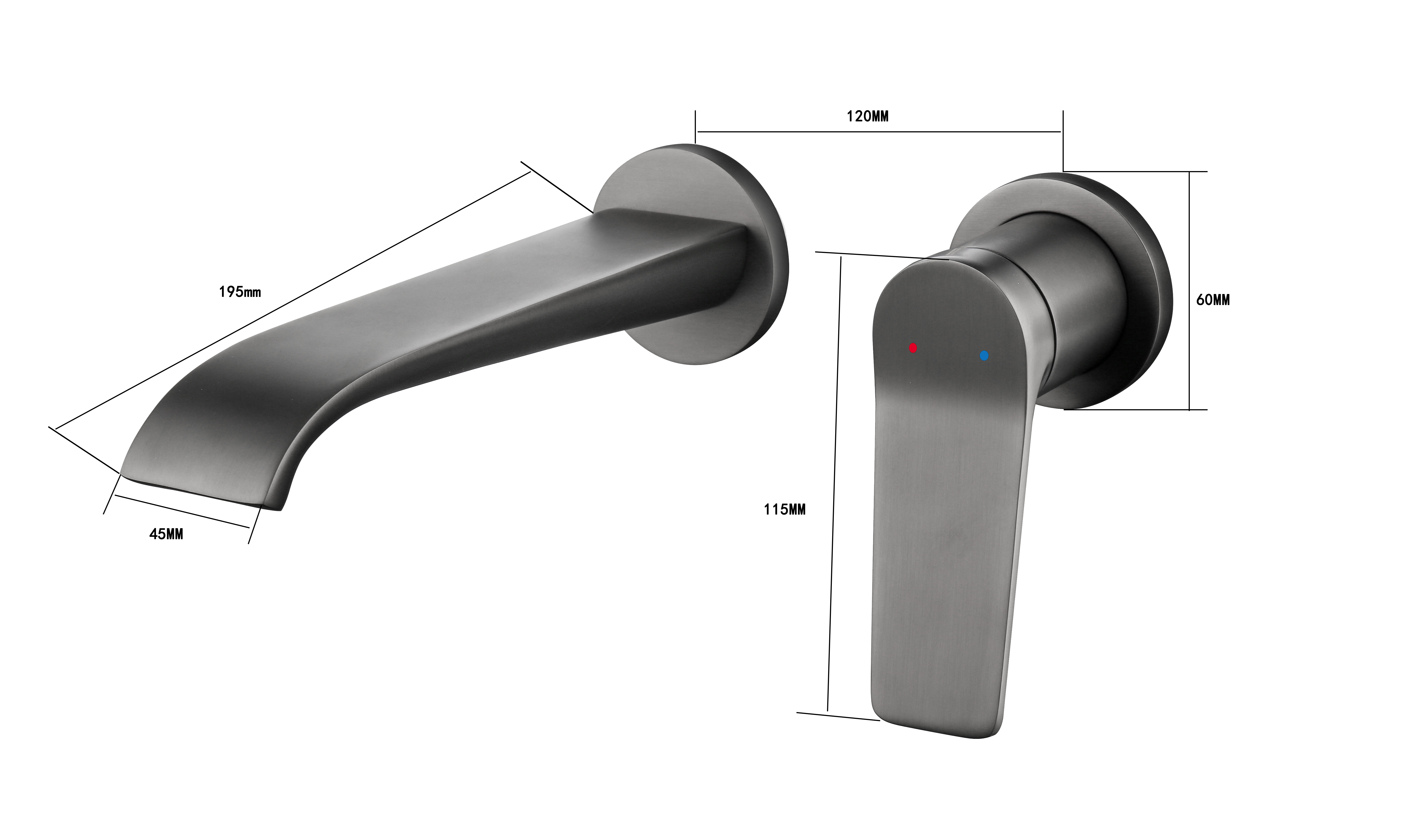
Homeowners often prefer a wall mounted basin faucet for its sleek appearance. It maximizes usable counter space immediately. This configuration entirely removes the base escutcheon from your countertop. You eliminate the physical obstacle sitting behind your sink. This simplifies countertop cleaning immensely. Hard-water buildup no longer accumulates around the faucet base. You just wipe a flat, uninterrupted stone surface.
These fixtures also offer superior ergonomics and reach. Designers rely on them to solve complex clearance issues. Tall vessel sinks often interfere with standard deck-mount spouts. You cannot comfortably wash your hands if the spout sits too low. In-wall fixtures offer highly customizable spout heights. You can position the water stream exactly where you need it.
You must acknowledge the severe implementation risks. The plumbing complexity increases drastically. Installers must calculate the exact finished wall depth beforehand. They must add the drywall thickness, thinset mortar, and tile depth together. Plumbers secure the rough-in valve based on this exact calculation. If the calculation fails, the exterior handles will not attach properly.
This complexity creates undeniable labor premiums. The project demands tighter coordination between various trades. The plumber installs the valve. The framer checks the studs. The tile setter finishes the wall. Then, the plumber returns to attach the trim kit. Any miscommunication delays the entire renovation.
Maintenance access poses the biggest challenge. Hard water can eventually degrade internal rubber seals. Fixing a faulty cartridge or an internal leak becomes a major event. You might need to cut into expensive backsplash tile. This turns a simple repair into a localized demolition project.
The standard deck-mount design dominates the plumbing industry for good reasons. It offers a reliable, plug-and-play installation process. It remains perfectly compatible with standardized one-hole or three-hole vanity tops. You face no wall demolition requirements during a simple bathroom refresh. You simply drop the fixture into the existing holes and tighten the mounting nuts.
Ease of servicing stands out as a massive benefit. Shut-off valves and braided supply lines remain immediately accessible. You open the vanity doors to inspect the plumbing connections. Anyone can swap a failing cartridge using basic hand tools. You never need to worry about ruining your expensive tile work.
Cost efficiency influences most homeowners. These fixtures feature much lower upfront material costs. Plumbers charge drastically lower installation fees for deck-mount designs. The entire installation usually takes less than an hour. You avoid the heavy labor premiums associated with opening up walls.
You must accept certain spatial compromises. A deck-mount fixture consumes valuable countertop real estate. It heavily clutters the area directly behind the sink basin. This becomes highly problematic in tight powder rooms. Every square inch of counter space matters in small bathrooms.
Cleaning friction is another daily annoyance. The area where the brass base meets the countertop traps moisture. It becomes highly prone to calcium and soap scum buildup. Sponges struggle to reach the tight gap behind the fixture body. Mold and mildew can develop if you neglect this hidden area.
You need a logical approach to finalize your basin faucet selection. We recommend using a strict evaluation framework. Follow these three critical steps before purchasing any plumbing fixtures.
Evaluate the Project Scope: Assess the scale of your current renovation. Is this a quick weekend refresh? You should strongly favor a top-mount design. It saves time and preserves your existing drywall. Are you executing a down-to-the-studs remodel? This presents the perfect opportunity for an in-wall configuration. Open walls make rough-in valve installation simple and fast.
Analyze Sink Pairing and Splash Dynamics: Faucet placement dictates water performance. You must evaluate the distance from the wall spout to the sink drain. Miscalculations always lead to excessive splashing. You must also assess the sink depth. An in-wall spout sits higher than a standard deck spout. The water drop gains more velocity. You require a deeper basin to catch this increased water velocity effectively.
Prioritize Material Reliability: Never compromise on internal component quality. Choosing a solid brass basin faucet is absolutely critical for in-wall installations. Heavy-duty brass resists internal corrosion for decades. Die-cast zinc or plastic internal parts remain completely unacceptable. You cannot risk casing cheap materials inside your walls. A hidden corrosion leak will quietly destroy your framing and drywall.
Building code considerations dictate where you can place plumbing fixtures. You must ensure local codes permit specific in-wall valve placements. Exterior walls pose a massive freezing risk in colder climates. City inspectors often forbid running water lines through uninsulated exterior walls. Always check your local plumbing codes before planning an in-wall design.
Future-proofing your bathroom saves immense frustration later. You should standardize your rough-in valve brand early in the project. Reputable manufacturers use universal internal valve bodies for their trim kits. This allows you to swap exterior handles and spouts in the future. You can update your bathroom style without tearing out the wall structure.
Leak mitigation requires strict job site discipline. You must emphasize the importance of pressure testing the rough-in valve. Plumbers should cap the lines and pressurize the system for twenty-four hours. They must monitor the pressure gauge for any subtle drops. This test ensures all solder joints hold securely. Always complete this critical step prior to closing the drywall.
Your plumbing configuration heavily defines your daily bathroom experience. Choose a top-mount design for budget-conscious, fast-turnaround updates. It delivers unmatched accessibility and easy maintenance. Commit to an in-wall setup for high-end, custom vanity setups. It provides an elevated aesthetic where space and style justify the plumbing labor.
You must take immediate action before buying fixtures. Measure your exact vanity depth today. Evaluate your sink dimensions carefully. Finally, consult with a licensed plumber to assess your specific wall stud placement. This preparation guarantees a flawless installation for your luxury bathroom project.
A: No, you cannot perform a simple swap. Upgrading requires a major renovation project. You must open the wall entirely to reroute the plumbing supply lines. Plumbers have to install a new rough-in valve directly into the framing studs. This process ruins the existing drywall and requires new tile installation.
A: Splashing is not caused by the faucet type itself. It results from poor spout-to-drain alignment. It also happens when you use an insufficient sink depth. The water stream must hit slightly behind the main drain. You will eliminate splashing if you measure the spout reach carefully before installation.
A: Vessel and deep trough sinks remain incredibly popular for these configurations. However, any sink without pre-drilled faucet holes works perfectly. The critical factor is alignment. The water stream must hit the basin surface smoothly. Always pair the spout length accurately with the basin center to guarantee proper drainage.