Views: 0 Author: Site Editor Publish Time: 2026-09-17 Origin: Site


Installing plumbing behind closed walls carries inherent risk. A system failure often requires breaking tile and enduring highly disruptive renovations. While stunning aesthetics usually drive the initial desire for a concealed setup, your long-term success relies entirely on the mechanical specifications. The material integrity of the hidden components dictates everything. A beautiful trim plate means absolutely nothing if the valve inside your wall corrodes or suddenly fails. We aim to provide a clinical, specification-driven framework for evaluating a concealed shower system. We will strip away confusing marketing jargon. Instead, you will learn to focus strictly on durability, plumbing compliance, and real-world maintenance realities. You will walk away knowing exactly how to inspect technical data sheets before you finalize your bathroom design.
Valve Architecture is Critical: Thermostatic valves offer superior temperature control and safety over standard pressure-balancing valves.
Material Authenticity: True longevity requires solid, dezincification-resistant (DZR) brass for rough-in components, not just brass-plated alloys.
Maintenance Accessibility: Always specify a system with an embedded rough-in box to allow future cartridge replacement without wall demolition.
Component Certifications: Verify that the core components (especially the cartridge) meet regional compliance standards (e.g., cUPC, CE) and use recognized internal parts.
The valve acts as the main engine of any concealed shower faucet. Its exact specification determines your daily user comfort. It also governs vital anti-scald safety parameters. You must understand the internal architecture before purchasing.
Pressure-balancing valves represent the industry baseline standard. They work adequately for basic, single-function shower setups. However, they remain highly limited regarding precise temperature control. If water pressure fluctuates elsewhere in the building, these valves struggle. A flushing toilet or a running dishwasher can easily disrupt your shower. You will feel a sudden temperature shift almost immediately.
Thermostatic valves serve as the premium, decision-stage requirement. They highlight independent controls for water volume and water temperature. You set your ideal temperature on the dial just once. The internal thermostatic wax element maintains it flawlessly. It reacts to pressure drops in milliseconds.
You must specify thermostatic cartridges for multi-function showers. Running a large rain head, a hand shower, and multiple body jets simultaneously demands heavy performance. Standard valves will suffer a severe temperature drop during simultaneous use. To guarantee consistent performance, look for recognized cartridge brands. Industry leaders like Vernet or Sedal provide verifiable reliability. They engineer their internal components to withstand decades of daily friction.
Follow this evaluation process when selecting your core valve:
Identify the exact brand of the internal mixing cartridge.
Confirm the presence of independent volume and temperature handles.
Verify the automatic safety stop mechanism prevents temperatures above 100 degrees Fahrenheit.
Ensure the flow capacity supports your desired number of spray outlets.
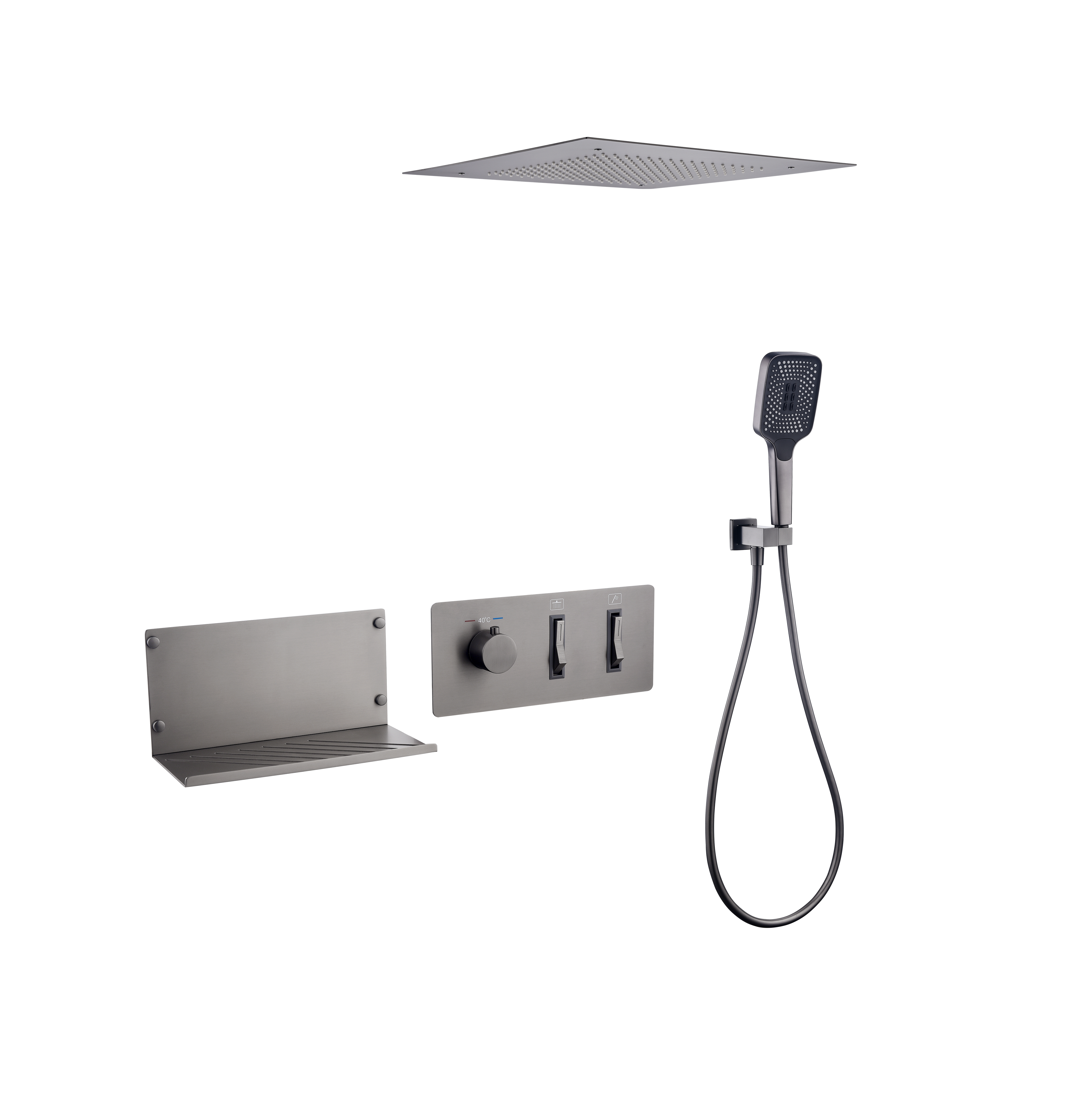
Marketing language often masks significant structural risks. Many plumbing products are heavily marketed as a premium brass shower system. However, they only feature brass finishing on the external trim pieces. Manufacturers frequently hide cheaper zinc alloys behind your wall. This substitution creates a massive liability for leaks.
You must adhere strictly to the "solid brass" standard. Define your requirement for heavy-duty, solid brass rough-in valves explicitly. The valve body handles constant water pressure and varying thermal expansions. Zinc alloys eventually warp or crack under these repetitive daily stresses.
Dezincification-Resistant (DZR) brass represents a crucial technical specification. Regions dealing with aggressive or hard water absolutely require this material. Standard brass alloys contain a high percentage of zinc. Over several years, hard water leaches the zinc inside the alloy out. Plumbers refer to this as dezincification. It leaves behind a porous, brittle copper shell. DZR brass prevents this chemical leaching process entirely. It stops structural valve failure before it starts.
Surface finish durability also dictates the lifespan of your fixtures. Physical Vapor Deposition (PVD) coatings offer unparalleled protection. PVD creates stunning finishes like brushed gold or matte black. Unlike traditional electroplating, PVD bonds at a molecular level. We strongly recommend evaluating PVD's resistance to daily corrosion. It easily withstands abrasive sponges and harsh chemical bathroom cleaners.
Valve Material Comparison Guide
Material Type | Corrosion Resistance | Hard Water Tolerance | Structural Lifespan |
|---|---|---|---|
Standard Zinc Alloy | Low | Poor | 3 to 5 Years |
Standard Yellow Brass | Medium | Moderate | 10 to 15 Years |
DZR Solid Brass | High | Excellent | 25+ Years |
A multi-function layout looks beautiful on paper. However, an ambitious shower design will fail to deliver in reality without proper planning. Your home's incoming water pressure and the valve's flow rate must match perfectly. We measure this flow rate in Gallons Per Minute (GPM).
Pipe sizing dictates your functional limitations directly. Standard 1/2-inch NPT inlets remain suitable for simple one or two-function setups. They typically max out around five or six GPM. High-flow layouts mandate larger plumbing. You must install high-flow 3/4-inch inlets for three or more functions. Massive, high-output ceiling rain heads also require 3/4-inch supply lines to function correctly.
Diverter logic requires careful mapping before installation begins. You must detail how your 2-way and 3-way diverter valves will operate.
Shared Functions: The diverter allows water to flow through two outlets at once. You can run the rain head and body jets simultaneously.
Isolated Functions: The diverter mechanism strictly isolates water flow. You must turn off the main shower head to use the hand wand.
Cartridge Compatibility: Ensure your specific diverter cartridge actually supports shared functionality if you want dual sprayers.
Flow rate compliance acts as a strict legal boundary. You must check local water restriction laws carefully. California’s Title 20 limits showerhead flow rates to just 1.8 GPM. You must compare these laws against the manufacturer's specified GPM. Installing non-compliant fixtures will cause you to fail municipal building inspections. It also wastes thousands of gallons of heated water annually.
The highest hidden risk of a concealed brass shower involves future maintenance. Repairing a buried, naked valve usually means destroying expensive custom tile. You then have to rebuild the wall entirely.
To avoid this scenario, the embedded box solution is absolutely non-negotiable. You must buy a system that includes a dedicated plastic or PVC rough-in housing box. This protective casing surrounds the brass valve body completely.
Accessibility defines the primary benefit of this embedded box. It creates a perfect waterproof seal inside the stud wall. Simultaneously, it leaves a precise, hollow cavity around the valve mechanisms. This ingenious design ensures plumbers can access the internals later. They can easily swap out faulty thermostatic cartridges years down the line. They execute this repair simply by removing the decorative front trim plate. Zero tile removal or wall demolition is required.
Depth tolerances matter heavily during the rough plumbing phase. Quality rough-in boxes highlight built-in, adjustable depth indicators. These visible markings guide your tile installer flawlessly. They accommodate varying thicknesses of porcelain tile, natural stone, and thin-set mortar. Without these precise guides, the final trim plate might not sit flush against your finished wall.
Hardware forums consistently warn buyers about cheap, white-label plumbing systems. These unbranded imports offer zero replacement part ecosystem. The right shower system supplier acts as a partner. They provide guaranteed long-term part availability.
Certifications protect you from dangerous plumbing failures. You must actively check for UPC, cUPC, or ASSE 1016 compliance marks. Independent laboratories issue these certifications after rigorous pressure and anti-scald testing. A supplier lacking these essential marks is a major liability. You cannot use uncertified fixtures in permitted, legally inspected renovation projects.
You must evaluate warranties intelligently. Always differentiate between mechanical coverage and superficial finish coverage. A lifetime warranty covering the solid brass body is an industry standard. However, you must look for at least five years of coverage on the thermostatic cartridge itself. Cartridges contain moving parts. They naturally wear out faster than solid metal bodies.
Execute this specific next-step action before finalizing any order. Request the supplier's digital installation manual first. Ask them to provide the exact replacement cartridge part numbers. If they cannot provide specific replacement part SKUs instantly, disqualify them. A brand that cannot sell you a replacement cartridge today will certainly abandon you tomorrow.
Finalizing a purchase requires looking far past the polished trim design. You must validate the hidden mechanical specs meticulously. True reliability stems directly from solid DZR brass construction and authentic thermostatic control mechanisms. You must ensure adequate GPM flow matches your household plumbing size. Furthermore, an accessible rough-in architecture protects your expensive tile work from future demolition.
We recommend prioritizing vendors who operate with total transparency. They should eagerly publish their valve schematics online. They must disclose their internal cartridge origins willingly. Always demand visible compliance certifications before transferring any funds. This disciplined approach guarantees a luxurious, hassle-free shower experience for decades.
A: Yes, provided the system was installed with a proper rough-in box and accessible trim plate. The protective box leaves a hollow cavity around the valve. A plumber simply removes the front handle and decorative plate. They can then pull the old cartridge out and insert the new one easily.
A: Not inherently, but running multiple functions simultaneously changes the requirements. You need a valve rated for higher GPM to power a rain head and body jets at once. This high-volume demand usually requires upgrading your plumbing to 3/4-inch supply lines to prevent pressure drops.
A: DZR brass resists the leaching of zinc in hard water environments. Standard brass loses its zinc content over time when exposed to aggressive water minerals. This leaves behind a porous, weak copper shell. DZR brass prevents the hidden valve from becoming brittle and cracking over time.
A: No. The rough-in valve behind the wall must strictly match the manufacturer. It also must match the specific trim kit series you select. Cartridge splines, screw placements, and depth requirements vary wildly between different plumbing brands. You cannot mix and match these components safely.