Views: 0 Author: Site Editor Publish Time: 2026-08-12 Origin: Site


Specifying bathroom fixtures for luxury suites carries exceptionally high stakes. Visual aesthetic impact must align perfectly alongside rigorous plumbing durability. A single catastrophic leak or wobbly fixture instantly compromises the entire guest experience. You need highly reliable solutions. A square freestanding bathtub faucet acts as a compelling focal point for high-end soaking tubs. Its sharp geometric contrast pairs beautifully alongside curved contemporary footprints. You gain a striking architectural anchor.
This guide directly bridges the gap between your initial design vision and final technical execution. We provide a clear, actionable framework to evaluate, select, and install these premium fixtures. You will learn how to properly specify floor-mounted tub fillers. Careful upfront planning ultimately eliminates downstream failure risks.
Material dictates lifespan: Solid brass construction is non-negotiable for commercial/luxury applications to prevent internal corrosion.
Pre-plumbing is the critical path: Floor-mounted installations require specialized rough-in valves (often set in concrete) long before the finishing stage.
Stability is a primary metric: Cheap fixtures wobble; premium models utilize rigid mounting brackets to ensure structural integrity.
Flow rate impacts experience: A luxury tub requires high Gallons Per Minute (GPM) to fill quickly and maintain water temperature.
Contemporary luxury suites demand intentional design choices. Architectural alignment plays a major role in creating a cohesive bathroom layout. Curved soaking tubs dominate modern spa-like environments. They project softness and relaxation. However, a room filled entirely by soft curves lacks visual tension. You need contrasting elements to anchor the space. Square profiles succeed beautifully in this context. They introduce sharp geometric lines. This contrast draws the eye immediately. It establishes order and structural elegance.
You must carefully evaluate finish selection. Trends move quickly, but fixture longevity matters more. A striking finish elevates the entire suite. However, it must withstand rigorous daily cleaning protocols. We categorize finishes by their visual impact and practical maintenance needs. You should align your choice with the expected traffic level of the suite.
Designers frequently specify a black freestanding faucet as a high-contrast statement piece. Matte and brushed black surfaces look incredibly sophisticated. They pair well alongside minimalist tile work. You must, however, acknowledge the maintenance reality. Dark finishes show hard water spotting more readily. They require prompt drying after use. You should avoid abrasive cleaners entirely on matte black surfaces.
Conversely, polished chrome and brushed nickel remain undisputed champions for high-traffic environments. Luxury commercial spaces favor them heavily. They offer brilliant reflections and resist aggressive cleaning agents better. You spend less time polishing water spots. They hide micro-scratches effectively.
Finish Type | Visual Impact | Maintenance Reality | Best Application |
|---|---|---|---|
Matte Black | High contrast, modern, dramatic statement. | Shows hard water spots. Requires gentle, non-abrasive cleaning. | Boutique suites, low-traffic luxury spaces. |
Polished Chrome | Classic, reflective, brightens the space. | Easy to clean. Resists harsh chemicals well. | High-traffic commercial luxury suites. |
Brushed Nickel | Warm tone, subtle elegance, industrial edge. | Hides fingerprints and water spots exceptionally well. | Frequent-use wellness spas and hospitality. |
Material composition dictates the entire lifespan of your plumbing fixtures. You cannot compromise on internal metals. Surface finishes often disguise cheap underlying materials. We strongly advise looking past the exterior plating. You must verify the core composition before approving any specification.
You can often assess build quality immediately through a simple physical evaluation. We call this the weight test. Heavier fixtures almost always indicate solid construction. Lighter models frequently hide cost-cutting measures. Instruct your procurement teams to handle the fixtures physically whenever possible.
Solid Brass: Feels dense and substantial. It carries significant weight in your hands.
Zinc Alloys: Noticeably lighter. Manufacturers often wrap these in a thin metallic or plastic shell.
Plastic Components: Extremely light. Escutcheon plates and hand shower wands sometimes use plastic to save money. You must avoid these for luxury applications.
Water constantly attacks internal metal surfaces. A true brass bathtub faucet stands as the undisputed industry standard. Brass naturally resists rust. It prevents internal scaling over a ten-year lifespan. Lesser metals corrode from the inside out. Zinc alloys degrade rapidly when exposed to hard water. This degradation leads to pinhole leaks. You mitigate these risks entirely by specifying solid brass bodies and internal waterways.
The internal cartridge controls water flow and temperature mixing. It acts as the mechanical heart of the fixture. You absolutely require ceramic disc cartridges. Traditional rubber washers degrade, compress, and ultimately drip. Ceramic discs slide over each other with pinpoint precision. They offer drip-free performance for hundreds of thousands of cycles.
Furthermore, ceramic cartridges simplify maintenance. You can replace a faulty cartridge from the top of the unit. You do not need to remove the entire fixture from the floor. This ease of replacement saves tremendous labor hours down the line.
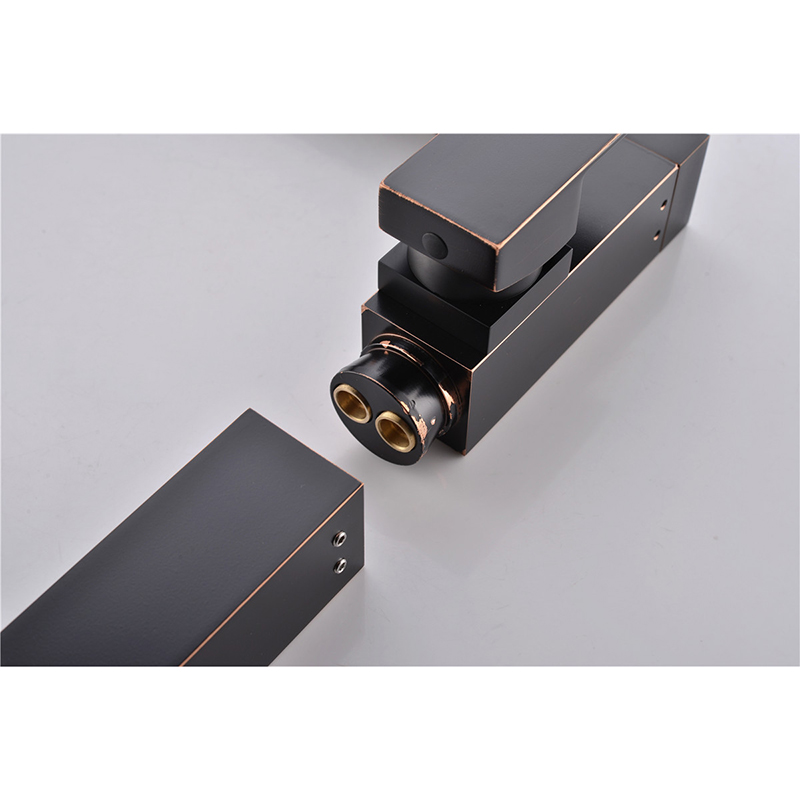
Beautiful exterior design relies entirely on invisible structural foundations. You cannot simply bolt these fixtures to finished flooring. Floor-mounted installations require intense upfront planning. You must coordinate plumbing rough-ins weeks or months before laying the final tile.
A floor mounted bathtub faucet demands a dedicated rough-in valve box. You install this component completely sub-floor. Think of it as a structural anchor block. It connects the hot and cold supply lines safely below grade. It provides a rigid mounting platform for the vertical spout. You cannot bypass this component. Attempting a direct pipe connection without a proprietary rough-in box guarantees structural failure.
Installation scenarios vary wildly based on the building structure. You must adapt your approach depending on the existing sub-floor.
Concrete slabs present significant challenges. You must trench the concrete to lay supply lines. You then set the rough-in valve box into the excavated cavity. Finally, you pour new concrete around the box to secure it. This process proves highly invasive. You must plan it during the initial construction phase.
Wood joists offer easier access but require different reinforcements. You mount the valve block directly to a cross-brace between the joists. You must ensure this cross-brace does not flex. Any movement in the sub-floor transfers directly up the height of the faucet. We recommend reinforcing the surrounding joists specifically for this load.
Precise placement determines user comfort and functional success. You should finalize the exact tub dimensions before drilling any floor holes. Follow these strategic positioning guidelines:
Distance from the tub lip: Position the vertical standpipe safely outside the tub. Avoid the immediate splash zone. Ensure the spout overhangs the interior lip by several inches. This prevents water from trickling down the outside of the tub.
Accessibility for the user: The guest should easily reach the control handle while fully reclined. Do not place the faucet behind their head. Position it near the middle of the tub or near the feet for optimal ergonomics.
Clearance for the hand shower: The flexible hose must hang freely. It should not kink against the tub wall. It should not drape across the floor where it becomes a tripping hazard. Leave adequate lateral space.
Freestanding units act like giant levers. A slight nudge at the top creates immense torque at the base. Wobbling represents the most common failure point. It damages the water seals over time. You mitigate this risk through robust floor-mounting hardware. Specify rigid base plates. Fasten them using heavy-duty masonry anchors or thick lag bolts. Never rely on the finished tile to support the fixture.
Visual appeal means little if the tub takes an hour to fill. Luxury suites utilize massive soaking tubs. You must match the water delivery system to the tub volume. Performance specifications require careful mathematical consideration.
Flow rate dictates the user experience. We measure this in Gallons Per Minute (GPM). A standard luxury tub holds roughly 60 to 70 gallons of water. Standard sink faucets deliver only 1.2 to 1.5 GPM. If you use a low-flow fixture, the water cools down before the tub ever fills.
You need a faucet delivering at least 6.0 to 10.0 GPM. High flow rates fill the basin rapidly. They maintain the desired water temperature perfectly. Always verify the GPM rating at the specific water pressure of your facility. A fixture rated for 8 GPM at 60 PSI might only deliver 5 GPM at 40 PSI.
An integrated hand shower adds tremendous functional value. Guests use it for targeted rinsing. Housekeeping staff rely on it heavily for cleaning the massive basin. We consider it a mandatory feature for commercial hospitality environments.
Pay close attention to the diverter mechanism. This switch transfers water from the main spout to the hand wand. You typically encounter two styles: pull-knobs and push-buttons.
Push-buttons offer a sleek aesthetic but often succumb to mineral buildup. Hard water calcifies the internal springs, causing the button to stick. Heavy-duty pull-knobs generally offer better longevity. They utilize simpler mechanical linkages. They resist calcification more effectively. You should prioritize mechanical simplicity when specifying diverters.
Procurement requires strict differentiation between consumer retail products and true commercial-grade fixtures. You cannot source equipment based on photographs alone. You must evaluate the manufacturer's engineering standards and post-sale support infrastructure.
Big-box retail stores sell visually similar products. However, these consumer-grade fixtures target light residential use. They assume a homeowner might fill the tub once a week. They utilize thinner brass walls and lighter protective coatings.
A true luxury hotel bathtub faucet anticipates continuous, daily abuse. Guests pull on the spouts. Cleaning staff use aggressive chemicals. The internal seals face constant pressure fluctuations. You must specify commercial-grade units built with thicker metal casings. They feature reinforced hose connections and heavier escutcheon plates. They withstand the rigors of hospitality environments without degrading.
Even the finest hardware eventually requires maintenance. Ceramic cartridges wear out. Hand shower hoses stretch or leak. The true test of a manufacturer lies in their parts availability decades later.
Emphasize the importance of buying from established manufacturers. You must ensure they guarantee replacement parts 5 to 10 years post-purchase. Fly-by-night overseas brands frequently change their internal dimensions. When a cartridge fails three years later, you cannot find a replacement. You then face ripping up the floor tile to replace the entire unit.
Demand documented warranty terms. Request a schematic of replacement parts before finalizing your purchase order. Keep extra cartridges and hand shower hoses in your facility's maintenance inventory. This proactive approach eliminates room downtime entirely.
Specifying the perfect bathroom fixture demands a balanced approach. You must harmonize visual appeal with invisible structural integrity. The sharp geometric aesthetic of a square profile elevates any contemporary suite. However, that beauty relies entirely on heavy-duty brass construction and rigorous sub-floor preparation. You must demand high flow rates and reliable ceramic disc cartridges.
Your next action is crucial. Finalize your exact tub dimensions and evaluate your floor composition immediately. Do this before ordering any plumbing fixtures. Secure the appropriate rough-in valve and coordinate with your installation team to trench or brace the floor. Careful upfront planning guarantees a flawless, wobble-free result.
A: Typically, you should install a freestanding tub faucet about 3 to 6 inches from the outside wall of the tub. This distance ensures the spout easily clears the interior lip without creating a splash hazard. It also allows adequate room for cleaning between the fixture and the acrylic basin.
A: Yes, but it requires trenching the concrete to set the rough-in valve and run supply lines. This proves highly invasive if not planned during new construction. You must embed the valve block securely in new concrete to prevent structural shifting.
A: Usually, this happens due to an unsecured rough-in valve, degraded sub-flooring, or a lack of a proper rigid mounting bracket at the base. Any flex in the floor translates into a massive wobble at the top of the tall spout.
A: Yes, almost all require a proprietary floor-mounted rough-in valve supplied by the manufacturer. This specialized brass block secures the plumbing connections below the floor level and provides a rigid mounting foundation for the visible fixture above.