Views: 0 Author: Site Editor Publish Time: 2026-05-27 Origin: Site


Purchasing a freestanding tub faucet is rarely just an aesthetic choice. It functions as a critical structural plumbing decision. Mistakes here often lead to inadequate water temperatures, devastating floor leaks, and expensive bathroom retrofits. You need fixtures built to handle massive water volumes safely. This guide strips away the usual marketing fluff. We evaluate the mechanical realities of freestanding systems instead. We focus on rough-in valve compatibility, optimal flow rates, and the practical utility of hand shower attachments. You will get a pragmatic, evidence-based breakdown of what truly matters when comparing different models. Read on to discover how to navigate plumbing standards and avoid contractor upcharges. This knowledge ensures you bypass post-installation regrets entirely.
Flow Rate is Critical: High-capacity tubs require 6.0 to 10.0+ GPM flow rates to prevent water from cooling before the tub fills.
Piping Standards Differ: Upgrading to a floor mounted tub faucet often requires 3/4-inch supply lines, unlike standard 1/2-inch sink lines.
Rough-In Realities: Floor stability and rough-in valve installation must be finalized *before* the bathroom floor is closed.
Hand Shower ROI: The hand sprayer attachment is a functional necessity for tub maintenance, child care, and pet washing, offsetting its initial premium.
Many buyers prioritize sleek designs when remodeling their bathrooms. They often assume a minimalist freestanding bath filler offers enough utility. However, a basic spout quickly falls short in daily use. You must look beyond aesthetics to understand the functional value of a sprayer. Large tubs hold significant water volumes. They also feature deep, expansive interior walls. Rinsing soapy residue off these walls using a cup or bucket becomes tedious. A sprayer attachment turns a frustrating chore into a quick thirty-second task.
Practical scenarios reveal the true worth of this upgrade. Tub maintenance stands out as the most common daily challenge. A directed spray effortlessly blasts away bubbles, bath bombs, and mineral films. Caregiver efficiency provides another compelling reason to upgrade. Parents know the difficulty of washing a child's hair under a fixed spout. A hand wand brings the water directly to them. This prevents soap in the eyes and reduces physical strain on your back. Pet owners experience similar benefits. Bathing mid-to-large-sized dogs in a deep basin proves challenging. A flexible hose lets you rinse thick coats thoroughly without wrestling the animal into awkward positions.
Contractors frequently charge a premium to install a hand shower bathtub faucet. You must weigh this upfront cost against long-term daily utility. This evaluation becomes critical if your primary bathroom lacks a separate walk-in shower. The wand effectively serves as your primary rinsing tool. The initial hardware cost might seem higher. Yet, the functional returns completely justify the upgrade. It transforms a beautiful fixture into a highly usable household tool.
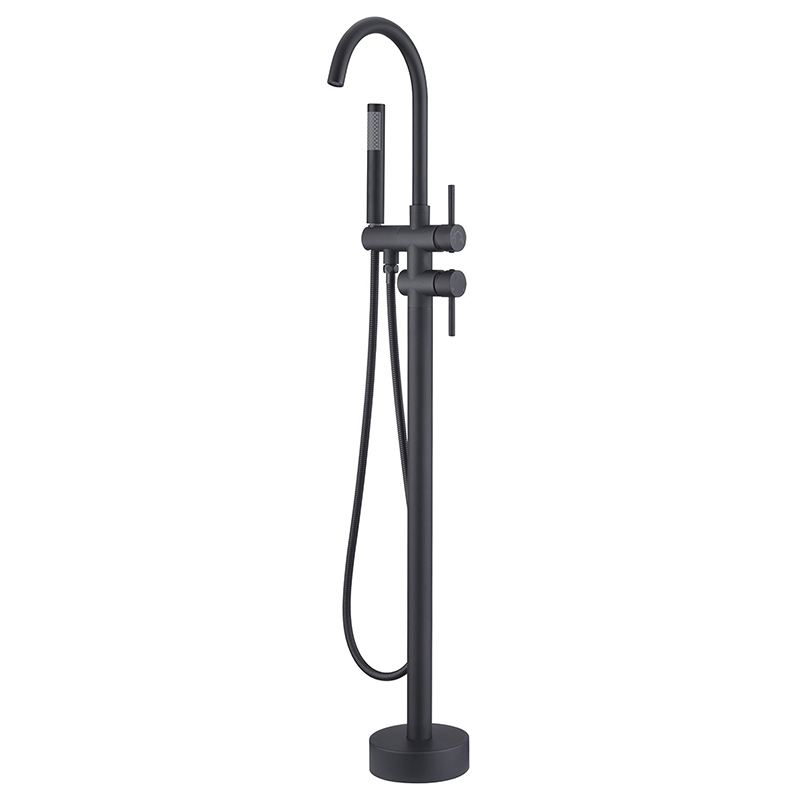
A beautiful faucet holds no value if it trickles water slowly. A standard soaking tub holds between 50 and 70 gallons. If your flow rate is too slow, you face a serious heat loss problem. The water at the bottom will cool down long before the tub reaches capacity. You must prioritize systems offering robust delivery speeds.
Gallons Per Minute (GPM) dictates how fast your tub fills. Look for main fillers offering 6.0 to 10.0+ GPM. This speed ensures hot, comfortable baths. Keep in mind the hand sprayer component operates differently. Manufacturers usually cap sprayers at lower rates, such as 1.6 to 2.5 GPM. This complies with environmental standards like WaterSense. The primary spout does the heavy lifting, while the wand handles targeted rinsing.
High flow demands require proper infrastructure. You cannot simply attach a high-capacity filler to standard household pipes. Most bathroom sinks utilize 1/2-inch supply lines. Upgrading to a floor mounted tub faucet makes a transition to 3/4-inch supply lines mandatory. Restricting a high-end fixture to 1/2-inch pipes chokes the flow and ruins performance.
Standard vs. High-Flow Plumbing Comparison | ||
Feature | Standard Sink Faucet | Freestanding Tub System |
|---|---|---|
Target Flow Rate (GPM) | 1.2 to 2.2 GPM | 6.0 to 10.0+ GPM |
Required Supply Line Size | 1/2-inch diameter | 3/4-inch diameter |
Valve Location | Inside the wall / cabinet | Secured to the subfloor |
Primary Function | Hand washing, low volume | Rapid basin filling, heat retention |
The concealed rough-in valve acts as the hidden hero of this entire system. Plumbers install this brass block directly into your floor framing. It manages the water mixing and anchors the entire unit. You must secure this valve directly to the subfloor. A standard fixture stands about 40 inches tall. This height creates massive structural leverage at the base. If someone leans on the spout, the force transfers downward. Subfloor stability is absolutely non-negotiable. Even minor wobbles will eventually cause micro-leaks in your plumbing joints.
Durability starts with body material verification. You should shortlist only solid brass or SUS304 stainless steel bodies. Brass resists corrosion naturally and handles extreme temperature shifts well. SUS304 stainless steel provides excellent strength and rust resistance. Many budget brands utilize hybrid plastics disguised by shiny metallic coatings. These plastic interiors routinely fail under high water pressure. You want a bathtub mixer tap built to last decades, not just a few years.
The internal valve cartridge serves as the engine of your fixture. Insist on a ceramic disc cartridge when comparing models. This technology represents the industry standard for modern plumbing. Ceramic discs slide against each other with flawless precision. They survive continuous friction and prevent annoying drips completely. Older rubber washer designs wear out quickly and require constant replacement. Ceramic components guarantee smooth handle operation over thousands of uses.
Temperature control mechanics separate good fixtures from great ones. You must choose between thermostatic and pressure-balancing valves. We strongly recommend anti-scald thermostatic options. These specialized valves monitor the actual water temperature directly. They prevent sudden scalding spikes if someone flushes a toilet elsewhere in the house. Pressure-balancing units merely react to water volume shifts. They work adequately but lack precise thermal control.
Older home renovations require special attention regarding pressure balancing. Follow these critical steps before finalizing your cartridge choice:
Conduct a water pressure test: Have a plumber measure your home's baseline PSI.
Inspect pipe health: Older galvanized pipes often suffer from internal corrosion.
Evaluate balancing efficiency: Corrosion restricts flow, making pressure-balancing valves sluggish or ineffective.
Upgrade if necessary: Switch to a thermostatic system if your pressure fluctuates wildly.
Daily usability hinges on smart ergonomic design. You interact with the handles every time you bathe. Compare lever, knob, and cross handle designs carefully. Single levers offer quick, intuitive temperature adjustments. Knobs look traditional but sometimes prove difficult to grip. Cross-handle designs actually offer superior grip for soapy hands. This represents a critical safety detail that buyers often overlook. A wet, soapy hand can turn a smooth knob into a frustrating obstacle.
Water quality plays a massive role in longevity. Homes with 200+ ppm water hardness face constant limescale battles. Hard water destroys cheap fixtures rapidly. You must evaluate the nozzle material before purchasing a freestanding bathtub faucet with hand shower. Look specifically for silicone nozzles on the wand. These pliable rubber tips allow users to break away mineral buildup instantly. A simple finger swipe dislodges calcium crust. Hard plastic nozzles trap these minerals permanently, eventually ruining the spray pattern.
Surface finishes demand equal scrutiny. Bathrooms generate intense humidity and frequent temperature swings. Prioritize PVD (Physical Vapor Deposition) finishes over standard electroplating. PVD utilizes a vacuum process to bond the finish at a molecular level. This technology offers superior scratch resistance compared to traditional painted coats. It effectively prevents tarnishing in high-humidity zones. PVD ensures your matte black or brushed gold fixture retains its factory appearance for years.
A flawless installation requires precise spatial planning. A modern tub faucet demands exact floor placement. You cannot simply eyeball the location. Plan for a minimum 4-inch clearance between the tub and the surrounding walls. This gap allows room for cleaning mops and future plumbing maintenance. Tucking the fixture too tightly against the drywall invites mold growth and structural damage.
Tub edge compatibility dictates your spout reach. You must ensure the spout projection easily clears the tub's rim. The water must hit the drain directly without splashing off the inner wall. Rolled rim tubs introduce specific challenges. You cannot drill into these classic designs. They strictly necessitate floor-mounted or wall-mounted configurations. Always cross-reference the spout reach dimensions with your tub's lip thickness.
Accessibility standards matter for long-term home value. If aging-in-place factors into your renovation, review ADA compliance. The Americans with Disabilities Act sets clear standards for operation force. Compliant controls require minimal grip strength to turn. They eliminate painful twisting motions. Checking ADA status ensures the fixture remains safe and operable for users of all mobility levels.
Selecting the right fixture requires disciplined decision-making. You must base your final choices on three fundamental pillars. First, guarantee subfloor plumbing compatibility by upgrading to 3/4-inch supply lines. Second, secure an adequate GPM rating that matches your tub's capacity to prevent heat loss. Third, insist on solid brass construction and ceramic disc cartridges for leak-proof durability.
Your next steps dictate the success of the project. Secure the technical specification sheet for your chosen model immediately. Consult a licensed plumber using this document before you finalize any flooring or tile work. They need to confirm the rough-in valve fits your specific joist layout. Handling these mechanical details early guarantees a flawless, high-performing bathroom upgrade.
A: Yes, but it requires trenching the concrete to install the rough-in valve and run the necessary 3/4-inch water lines. It is a major renovation step.
A: Deck-mounts sit directly on the rim of the tub (requiring pre-drilled holes in a flat tap deck). Freestanding units mount to the floor, making them compatible with any tub style, including rolled rims.
A: Plumb-wise, they use the same floor-mounted rough-in valve via a diverter built into the main faucet body, adding no extra behind-the-wall complexity while drastically improving usability.